
Water Leak Detection and Repair in Cleveland, TN —
Found First, Then Repaired
A leak you cannot see is still costing you money every hour, and around here it very often refuses to show itself at all. We find the leak before anybody opens a floor, a wall or a driveway, we show you what we found, and then we repair it. Slab leaks, buried service lines, leaks inside walls and commercial sites, any hour of the day.
- Located before anything opens
- Slab and buried line work
- You see what we found
- No after-hours surcharge
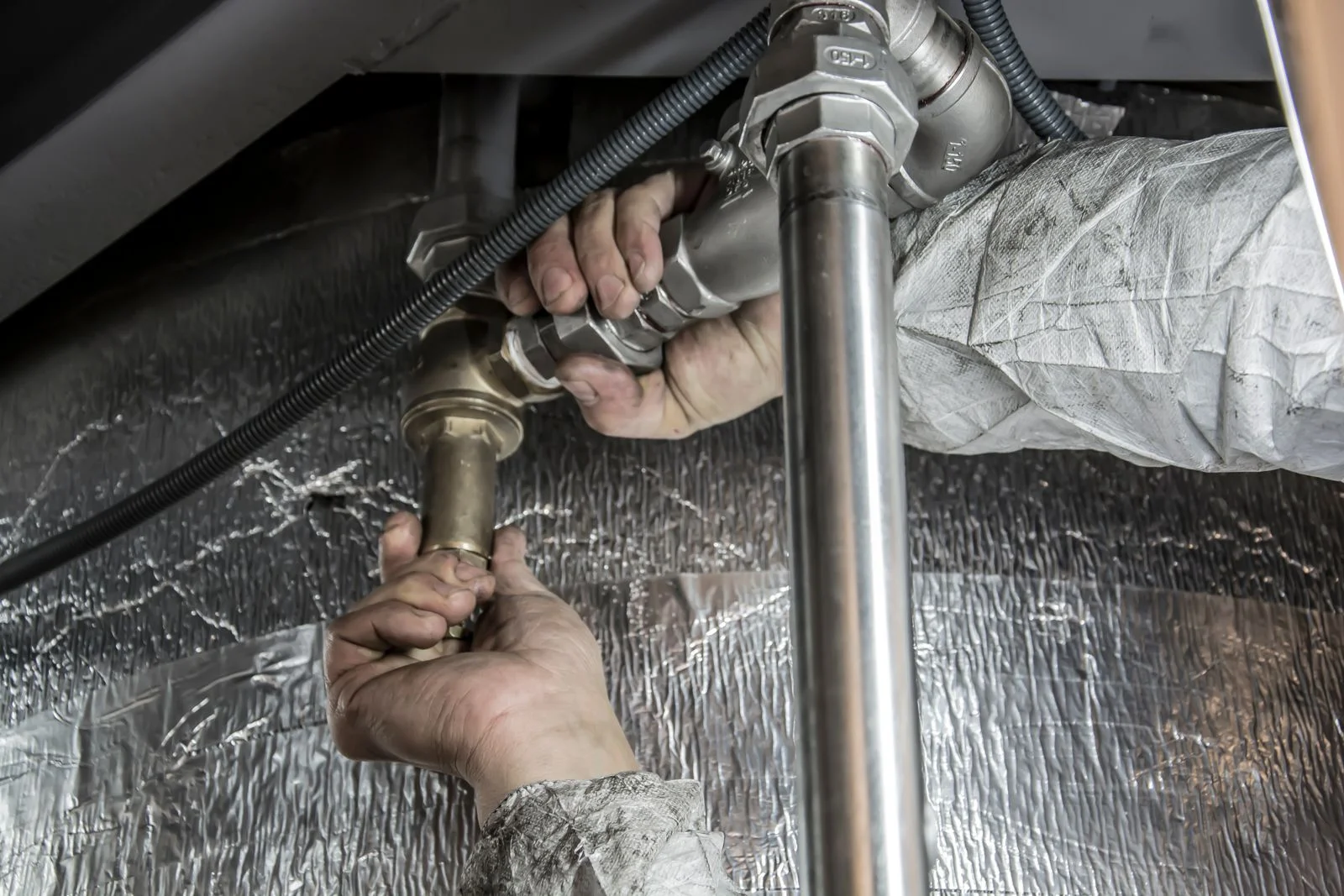
Water running with the taps off?
We answer at 3am
Nights and weekends cost the same
Finding the Leak Is the Job. Repairing It Is the Easy Part
Almost nobody calls us because they can see water. They call because the bill went up by a third, or the floor feels warm in one spot, or the meter is turning at two in the morning with every tap in the house shut off. That is the whole difficulty with a plumbing leak: by the time it is obvious, it has usually been running for months.
So we treat this as two separate pieces of work, and we price them that way. First we find it, using pressure, sound, temperature and process of elimination rather than a hammer. Then we tell you exactly where it is, what it will take to reach it, and what the repair costs, and you decide. Nobody should be asked to approve opening a floor on the strength of somebody's hunch about where the pipe probably runs.
Water leak detection and repair is one of the seven things listed on our main services page, and it is the one where the difference between a careful company and a careless one shows up in your floor. The vans start the day in Cleveland itself. If water is running now, call. If it is a bill you cannot explain, you can book an investigation here instead.
24/7
Live dispatch, weekends and holidays
1
Opening, in the one place the leak actually is
2
Stages priced apart: find it, then repair it
0
Surcharge for nights, Sundays or holidays
Everything past the meter belongs to you
This surprises people, so it is worth saying early. The State of Tennessee's own guidance is that the line between the meter and the house stays in the customer's possession, and that any leak after the meter is the consumer's responsibility. That whole stretch, from the meter box to the furthest fixture, is where we work.
Six Kinds of Leak, and They Are Not the Same Job
Every one of these starts with the same phone call and ends somewhere completely different. The dispatcher will ask what changed, whether you can hear anything, and what your meter is doing with the house shut down, because those three answers decide which equipment comes off the van and how long we need.
Water Leak Detection
The finding stage on its own. Meter verification, a pressure hold on the system, acoustic listening, thermal scanning and zone by zone elimination until the leak has one address rather than a general direction. Water leak detection near you, with the evidence shown to you before anything is opened.
Water Leak Repair
Once it has an address, it gets repaired properly. Copper, CPVC, PEX, PVC, galvanized and polybutylene all fail differently and all want a different answer. When pipes are leaking at more than one point on the same run, we will say so rather than sell you the first patch and then the second one a month later.
Slab Leak Detection and Repair
A supply line failing underneath a poured floor, with the concrete hiding every clue. We confirm it really is a slab leak, pinpoint it, then set out the three honest options: open and repair the one spot, re-route that run overhead, or repipe. Full detail in the slab section below.
Buried Service Line Leaks
The run between your meter box and your house, which is yours and is usually the longest unprotected pipe you own. An underground water leak detector in trained hands beats guesswork with a shovel every time, and on a long yard run that difference is measured in whole days of digging.
Leaks Inside Walls and Ceilings
A stain on a ceiling is almost never underneath the leak, because water runs along a joist before it drops. We trace it back to the fitting that is actually failing, so the drywall comes out once, in the right room, instead of three times while somebody works their way along the run.
Commercial Water Leak Detection
Commercial water leak detection services for buildings that cannot simply be shut down while somebody investigates. Zone by zone testing, out of hours where it has to be, and a written finding your facilities team or your landlord can actually act on.
Water coming in faster than you can mop it
Shut the main valve where the line enters the house, and if you cannot find it or it will not turn, the meter box at the street has a valve too. Then call. A real dispatcher picks up, talks you through making it safe, and gives you a straight arrival window rather than a comforting one. The rate at two in the morning is the rate at two in the afternoon.
The Ground Under Bradley County Drinks It
In a lot of the country, a buried water leak eventually announces itself as a soft patch of lawn. That advice travels badly to East Tennessee. We sit in the Ridge and Valley, on folded and faulted limestone and dolomite, and the US Geological Survey describes the result plainly: joints and bedding planes enlarged by dissolution, carrying water through open pathways rather than seeping through soil. A leak that would pond somewhere else can simply drain away here and give you nothing you can see, for a very long time.
Limestone that takes water away
Cleveland sits along a set of parallel ridges of soluble rock, and the same dissolution that makes caves and the occasional bit of subsidence around here also makes tidy underground routes for your leaking water to disappear down. This is the single biggest reason that looking for a wet patch is such poor advice locally, and why we start at the meter and work inwards with instruments instead of walking the yard hoping to find mud.
Clay that swells in March and shrinks in August
The red clay everybody around here complains about when they try to plant something takes on water and expands, then dries out and pulls back. A pipe cast into a floor or buried in a yard sits inside that movement for decades. It rarely breaks a pipe on its own. What it does is work joints, bends and old compression fittings very slowly loose, which is why so many leaks here appear in a house where nothing has changed and nobody has touched the plumbing.
Standing pressure nobody ever measured
Ridges mean elevation, and elevation means the pressure at the bottom of a run can be a great deal higher than the pressure at the top. A house sitting low on a main can carry more pressure than the plumbing code wants it to, all day, every day, and the first symptom is usually not a burst. It is a toilet fill valve that keeps failing, a water heater relief valve that weeps, and a run of pipe quietly working towards a pinhole. We put a gauge on it as a matter of routine, because a leak repaired without checking the pressure is a leak you will be calling about again.
Pipe that was fine right up until it was not
The housing stock here spans a lot of decades and a lot of materials. Galvanized steel closes up from the inside and then weeps at the threads. Copper of a certain age develops pinholes, and when it does it tends to produce several rather than one. Polybutylene, common in houses put up between the late seventies and the mid nineties, fails at the fittings with no warning at all. Knowing which of those is in your wall changes the entire conversation about whether to patch or to replace the run.
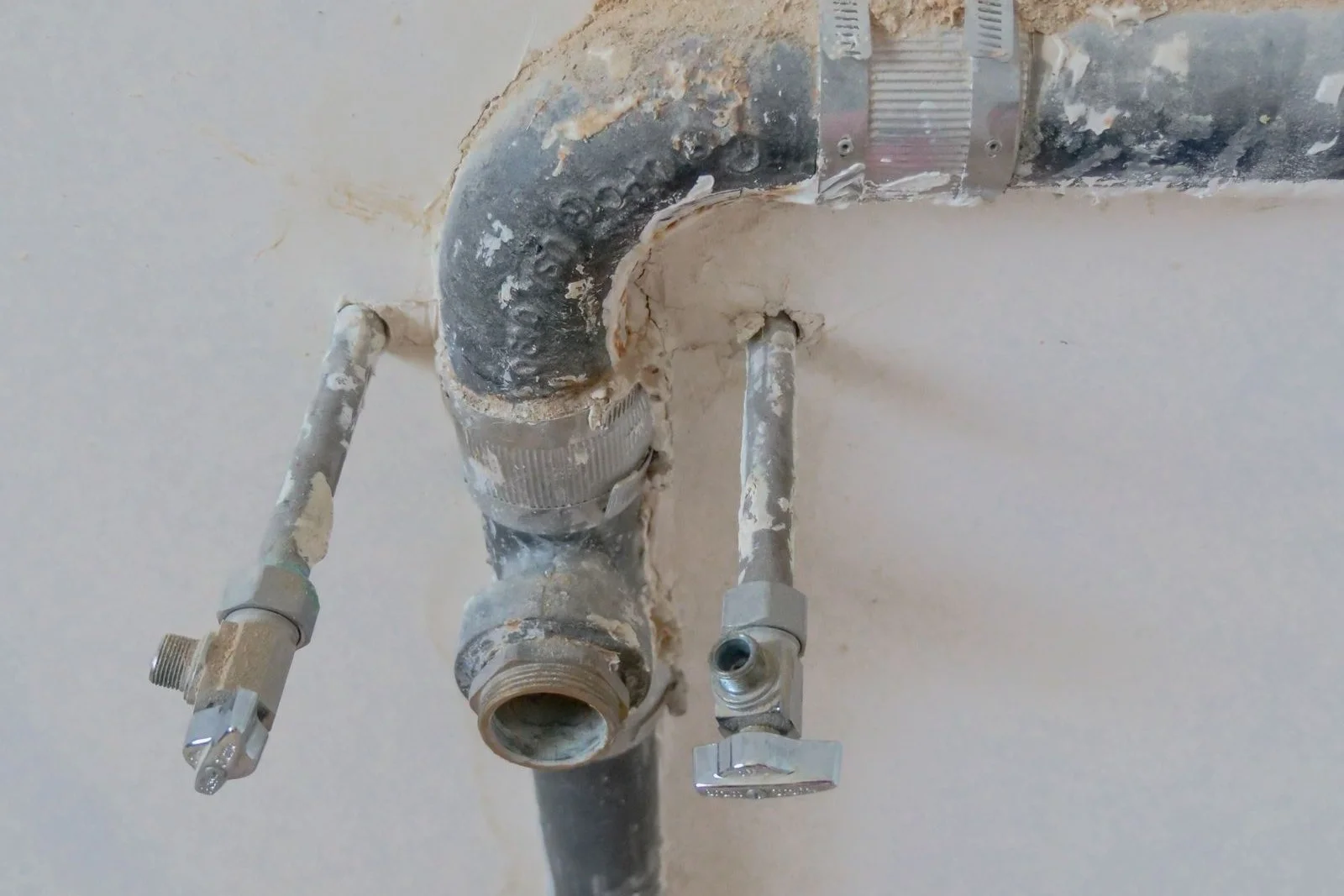
What causes slab leaks, in one paragraph
Three things, usually working together. Abrasion, where a line rubs against the concrete or the gravel it was laid in every time hot water makes it expand. Corrosion, where soil chemistry or the water itself eats copper from one side or the other. And pressure, which turns a weak spot into a hole years earlier than it would have happened otherwise. Movement in the ground underneath supplies the rest.
Slab Leak Detection and Repair, Starting With Whether You Have One
Here is the first thing an honest slab leak repair company should tell you, and it costs us work to say it: a good share of the calls that come in as slab leaks are not slab leaks. Plenty of houses around Cleveland sit over a crawl space, not a poured floor, and a dripping line under a crawl space is an afternoon with a torch and a fitting rather than a day with a concrete saw. Before anybody quotes you for breaking a floor, somebody should establish that there is a floor to break.
When it genuinely is one, plumbing slab leak detection is a process of narrowing down. We shut the house off at the main and watch the meter to prove water is still moving. We split hot from cold, because a warm patch on the floor and a water heater that never rests point hard at the hot side. We put the system under a pressure hold and watch what it does. Then we listen, with equipment that hears water escaping under concrete, and cross-check that against a thermal scan of the floor until two independent methods agree on the same square foot.
Only then does anything get opened, and only in that one place. A slab leak plumber who opens a trench across your living room and works along it has skipped the part you were actually paying for.
Signs of a slab leak
- A warm spot on the floor
- Running water with everything off
- Pressure that has dropped
- Flooring lifting or cupping
- A musty smell near one wall
- Damp carpet with no source
- A water heater that never rests
- A bill that jumped for no reason
Spot
Open the one place, repair the pipe, close it. Cheapest when the rest of the run is sound
Re-route
Abandon that run and take a new line overhead. The floor stays whole
Repipe
For a system that has already failed more than once. Ends the argument for good
You get all three, with what each would cost and what we would do in your position, and the recommendation in writing. A second failure within a year on the same run is the clearest signal there is that a spot repair was the wrong answer, and we would rather say that at the start than come back and say it afterwards.
Ask what a slab leak would take at your addressWhy Is My Water Bill Suddenly High When Nothing Looks Wrong?
A bill that has jumped without a house guest, a new hot tub or a dry spell of watering the lawn is the most reliable leak symptom there is, and it is the one people argue with for longest. The instinct is to assume the meter is wrong. Meters do fail, and when they do they almost always read low, because a worn meter under-registers. A bill that doubled is far more likely to be water you genuinely used and never saw.
The rest of the symptoms are quieter. A faint running or hissing sound in the house at night when the refrigerator has stopped. Pressure that has fallen off at the shower over months rather than overnight. A patch of lawn that stays green in August while the rest of it gives up. Water leak inside wall signs are their own small vocabulary: paint that has started to bubble, a skirting board that has darkened, a smell of damp in one room only, or a wall that is noticeably cooler to the back of your hand than the wall opposite.
None of those is proof on its own. Two of them together, on a bill that has moved, is usually enough to justify an hour of somebody's time with the proper equipment, and an hour spent now is a great deal cheaper than the alternative.
A hidden leak now costs you on both halves of the bill
This is new, and it matters. Cleveland Utilities used to cap the residential wastewater charge at fourteen units through the April to November months, which quietly softened the blow of a summer leak: the water side climbed, the sewer side stopped. That cap was removed from the first of July 2026, and the wastewater charge is now tied to what the meter actually recorded. A leak that used to cost you once now costs you twice, in the months when outdoor leaks are most likely to go unnoticed. If your bill has changed shape this summer and you assumed it was the new billing, it is worth ruling out a leak underneath it.
Ask about the Water Loss Protection Program before you pay
Cleveland Utilities runs a water loss programme aimed at exactly this situation. There is a basic tier that customers are enrolled in automatically unless they have opted out, and an enhanced tier you can opt into. It is worth ringing them to find out which one you are on before you settle a shock bill, because the position is different for a customer who opted out years ago and has forgotten. It helps with the bill; the repair on your side of the meter is still yours, and that is the part we do. We are not connected with the utility and we do not get a fee for mentioning it.
Both halves
Water and wastewater now move together on a residential bill
Your side
Everything past the meter is the customer's, under Tennessee guidance
How to Find a Water Leak Yourself, in Half an Hour
This is the test we would run first anyway, and you can do the whole of it without touching a pipe. Work down it in order. If it comes out clean, you have saved yourself a call-out; if it does not, you will hand the dispatcher a far better description than most people manage and we will arrive knowing roughly where to start.
The leak indicator is smaller than you expect
On most meters it is a little triangle, a star or a toothed wheel set off to one side of the digits, and it is designed to turn on a flow far too small to hear. People look at the big sweep hand, see it motionless and conclude there is no leak. The sweep hand needs real flow to move. The small one is the one that tells you the truth.
-
1
Shut the house down, properly
Every tap off, the washing machine and dishwasher not mid-cycle, and the ice maker switched off, because an ice maker filling on a timer has ruined more of these tests than anything else. If you have irrigation on a controller, put it in the off position rather than trusting that it is not due to run.
-
2
Find your meter and look for the leak indicator
It is in a box at ground level, usually near the street edge of the property. Lift the lid with a screwdriver rather than your fingers, and look before you reach in, because they are popular with wasps and the occasional snake. Most meters carry a small triangle, star or dial that spins on very low flow. With the whole house off, that indicator should be completely still.
-
3
Photograph the reading, then walk away for two hours
A slow leak will not move the indicator enough to see. Take a photograph of every digit, use nothing at all for two hours, then photograph it again. Any change is a leak, and you now have proof rather than a suspicion. Do not skip this even if the indicator looked still, because it is the step that catches the leaks worth finding early.
-
4
Split the yard from the house
Shut the main valve where the line comes into the house, then repeat the meter check. Still moving means the leak is outside, between the meter and the wall, and that is a buried line. Stopped means it is somewhere inside. That one piece of information halves the search area before anybody arrives, and it is the single most useful thing you can tell us on the phone.
-
5
Rule out the toilets, because it is often the toilets
A flapper that no longer seats will pass water silently into the bowl around the clock and can account for an astonishing share of a bill on its own. Put a few drops of food colouring in the cistern of each toilet, leave it thirty minutes without flushing, and look in the bowl. Colour in the bowl is your leak, it is a part that costs very little, and you have just found it for free.
Please do not start digging, and please do not open the floor
Every so often we arrive at a house where somebody has already taken up two rooms of tile or dug a trench along the line of a yard pipe, working from a damp patch or a guess about where the pipe runs. It is completely understandable and it almost never lands on the leak, because water travels a long way along the outside of a pipe and along the underside of a floor before it appears. What it does do is turn a contained repair into a contained repair plus a floor, plus a yard, and none of that is covered by finding the leak afterwards. Call before the first tile comes up, not after.
Commercial Water Leak Detection, Without Closing the Building
On a commercial site the leak is rarely the expensive part. The expensive part is the hours the building cannot trade, cannot run a line, or cannot let staff through a corridor, which is why commercial leak detection is a scheduling problem as much as a plumbing one. Cleveland and Bradley County carry a lot of manufacturing, warehousing and multi-tenant retail, and those three want quite different things from us.
Tested out of hours, on purpose
A pressure hold is only meaningful when nothing else in the building is drawing water, so most commercial work happens after closing or before opening. We would rather come at four in the morning and get a clean result than come at noon and give you a maybe.
Shut off zone by zone, not floor by floor
Most buildings have more isolation valves than anybody remembers, and half of them no longer hold. Working through them in order tells us which branch is losing water and gives you a valve schedule you did not have before, which is useful long after we leave.
A written finding, not a phone call
Where the loss is, how it was established, what it will take to repair and what it is costing per day until it is. Written so a facilities manager can approve it, or so a tenant can put it in front of a landlord without it turning into an argument.
It is usually make-up water, irrigation or a slab
Three places account for most of the commercial water that goes missing around here. Make-up water on a closed heating or cooling system, where a system that should need topping up twice a year is being fed continuously and nobody has noticed because it is automatic. Irrigation, which runs at night, on a controller, on a line nobody looks at from October to April. And supply lines under a poured floor in a building put up in the sixties or seventies, where the run was cast in and has been quietly grinding against concrete ever since. We check all three before we start taking anything apart.
Worth asking about an irrigation meter
Water that goes onto landscaping never reaches the sewer, and a separate irrigation meter is how you stop paying a wastewater charge on it. Cleveland Utilities dropped the price of an irrigation meter to the same as a standard residential meter from September 2025, which changes the arithmetic for anybody with a lot of ground to water.
It is not our meter and not our fee, so ask them directly and use their own break-even calculator. We mention it because a site with heavy irrigation and no separate meter is the one place where a big bill may not be a leak at all, and we would rather you found that out before booking us.
Water Leak Repair Near You, Across Six Towns
Cleveland is home and where the vans start, but the same rate and the same equipment reach every town below. Each has its own page, because who supplies the water and what the ground is doing genuinely change how a leak behaves — a leak on a hillside and a leak on river bottom land are two different searches.
Cleveland, TN
City meters, older downtown pipework, and the bulk of our slab leak work.
Cleveland plumberMcDonald, TN
Long private yard runs, where a buried leak can hide for a whole season.
McDonald plumberAthens, TN
McMinn County, and a good many houses old enough for galvanized pipe.
Athens plumberOoltewah, TN
Hillside pressure that punishes fittings, and newer slabs reaching an awkward age.
Ooltewah plumberCharleston, TN
Low ground by the Hiwassee, where wet is normal and a leak hides in it.
Charleston plumberDayton, TN
Rhea County, and lake properties where a leak runs for months unwitnessed.
Dayton plumberWhile we are there: a leak is often found alongside something else that has been quietly putting up with it. We also do drain cleaning and water heater services, and a heater that has been running non-stop to feed a slab leak usually wants looking at once the leak is repaired. Not certain you are inside that footprint? Give us the address. Nobody is charged for asking.
What a Leak Detection Company Should Do, and Usually Does Not
Two methods have to agree
We do not open anything on one reading. Sound and thermal, or pressure and sound, have to point at the same place before a tool touches your floor.
You see the evidence
Photographs of the reading, the thermal image, the gauge on the hold. You should never have to take a contractor's word for something buried in your own house.
Licensed, bonded and insured
Tennessee-licensed plumbers and background-checked technicians, and the insurance that matters when the work involves opening a structure.
Finding and repairing priced apart
You are told what the trace costs before it starts and what the repair costs before it starts. Neither one is a surprise discovered halfway through.
A real person, at any hour
Not an answering service taking a message for the morning. Somebody who can tell you which valve to shut while a van is on its way.
We say when there is nothing to find
Sometimes a bill is irrigation, a pool or a meter change. Telling you that costs us the repair and keeps you from paying for one you never needed.
Hidden Leaks, Slab Leaks, Bills and What Moves the Price
The five questions people actually ask before they book, answered at the length they deserve rather than in one reassuring line.
Ask us directly
01
How do I detect a hidden water leak when there is nothing to see?
You prove it at the meter before you go looking for it in the house, because the meter is the one thing that cannot be argued with. Turn everything off, including the ice maker and any irrigation controller, then lift the meter lid and watch the small triangle or star that spins on low flow. If it is turning with the house shut down, water is moving and you have a leak. If it looks still, photograph every digit, use nothing for two hours and photograph it again, because a slow leak will not move that indicator enough to see but it will absolutely move the numbers. The next step is to shut the main valve where the line enters the house and repeat the test: still running means the leak is in the buried line between the meter and the wall, and stopped means it is inside. Those two tests take half an hour, cost nothing, and halve the search before anybody arrives. What they cannot do is tell you which foot of pipe it is, and that is where sound, thermal imaging and a pressure hold come in.
02
How do I know if I have a slab leak, and what causes them?
The signature sign is a patch of floor that is warm underfoot when the rest of the room is not, because the majority of slab leaks happen on the hot side where the pipe expands and contracts every time somebody runs a bath. After that: the sound of water moving when the house is silent, pressure that has fallen off, flooring that has started to lift or cup in one area, a musty smell along a single wall, carpet that is damp with nothing above it, and a water heater that seems to run far more than it used to. As for what causes them, it is three things acting together. The line rubs against concrete or gravel every time it moves with temperature, which thins it. Corrosion works on it from the soil side or the water side. And pressure turns the resulting weak spot into a hole years earlier than it would otherwise have happened, with ground movement in clay soil supplying the rest. One honest caution: a good share of the calls we take as slab leaks turn out to be leaks under a crawl space, which is a far cheaper afternoon. Nobody should quote you for breaking a floor before establishing that the pipe is actually in one.
03
How much does water leak detection or slab leak repair cost?
They are two different numbers and we quote them separately, which is the first thing worth knowing. Detection is broadly predictable, because it is a defined piece of work with a defined end: we either find it or we tell you we cannot and why. The repair is where the range lives, and five things move it. What the pipe is made of, since copper, polybutylene and galvanized all want different answers. Where it is, because a line under a garage slab and a line under a tiled kitchen island are not comparable jobs. How far down and under what, which is the difference between lifting a slab edge and cutting through finished flooring. Whether the rest of that run is worth saving, because a second failure on the same line within a year makes a spot repair poor value. And which of the three routes you choose: spot repair, re-route overhead, or repipe. We will not quote any of it down the phone from a description, because the honest answer before somebody has looked is that we do not know, and a number given at that stage is only ever the start of a conversation about why it went up.
04
My PVC pipe is leaking at a joint. How do I fix a PVC pipe leak?
The honest answer is that a solvent-welded PVC joint cannot really be repaired in place, and most of what is sold for the purpose is a delaying tactic rather than a repair. Tape, epoxy putty and wrap-around bandages will hold a weeping joint for a while, and they are genuinely useful if it is a Sunday night and you need to get to Monday, but they are not a finished job and they tend to fail at the worst possible moment. The proper repair is to cut the failed section out and put a new piece in with a coupling at each end, which on an accessible run is quick and cheap. Two things are worth adding. First, if a joint has failed, look hard at the ones either side of it, because a joint that let go usually did so for a reason that applies to the whole run, such as a dry fit that never got enough cement or a pipe under strain from something that moved. Second, if the pipe is carrying hot water, check what it actually is, because ordinary white PVC is not rated for hot supply and finding it on a hot line is a sign that something was done wrong originally and wants putting right properly rather than patched.
05
The leak is between the meter and my house. Is that still mine?
Yes, and it catches people out every time. The State of Tennessee's guidance for utility customers puts it plainly: the line between the meter and the house remains in the customer's possession, so any leak after the meter is the consumer's responsibility. Tennessee law allows a utility to offer help with a bill run up by a leak, but nothing obliges one to. Cleveland Utilities does run a water loss programme with a basic tier customers are enrolled in unless they opted out and an enhanced tier you can opt into, so it is worth a phone call to find out where you stand before you settle a shock bill. What none of that changes is who repairs the pipe. That buried run from the meter box to your wall is often the longest single length of pipe you own, it is the one nobody ever inspects, and it is yours. We locate the failure along it before anybody digs, which on a long yard run is the difference between one careful hole and a trench down the whole driveway.
Think You Have a Leak? Let Us Find It Before It Finds You
One number reaches a leak detection plumber in Cleveland TN at any hour, any day of the year. No answering service, no callback queue, and no surcharge because it happens to be a Sunday — just somebody who can tell you which valve to shut while the van is on its way.