
Toilet, Faucet and Shower Repairs in Cleveland, TN —
Parts on the Van, Not on Order
A toilet that runs all night, a faucet that drips whatever you do to it, a shower that has gone lukewarm or will not turn off cleanly. None of it is dramatic and all of it is maddening. We carry the cartridges, fill valves, flappers, seals and supply connectors that these jobs actually need, so the ordinary ones are done while we are standing there rather than booked in again for next week.
- Most repairs in one visit
- Repair quoted against replacement
- Licensed Tennessee plumbers
- No after-hours surcharge
Toilet running since Friday?
We answer at 3am
Nights and weekends cost the same
The Jobs Too Small to Wait a Week For, and Too Annoying to Live With
Bathroom plumbing repair is the least glamorous work we do and quietly the most common. Nobody photographs a new fill valve. But a toilet that keeps cycling is pouring water away around the clock, a shower cartridge that has stiffened is one bad twist from scalding somebody, and a bathroom sink that empties slowly gets lived with for a year before anyone rings. These are small jobs that behave like big ones if they are left.
What makes them frustrating is rarely the plumbing. It is the second visit. A cartridge is a twenty-dollar part in a hundred different shapes, and a plumber who arrives without the right one has to go away and come back. So our vans carry the fill valves, flappers, flush valve seals, faucet cartridges and stems, pop-up assemblies, traps, tailpieces, supply connectors and angle stops that cover the large majority of what we are called to. That is the whole promise on this page, and it is a stocking decision rather than a clever one.
Toilet, faucet and shower work is one of the seven things on our main services page, and the vans start the day in Cleveland itself. If water is going somewhere it should not be right now, call. If it can wait until Tuesday, you can book it here and pick a time that suits you.
24/7
Live dispatch, weekends and holidays
1
Visit, for most ordinary fixture repairs
2
Numbers every time: repair it, or replace it
0
Surcharge for nights, Sundays or holidays
A running toilet is the most expensive quiet noise in the house
A flapper that no longer seats passes water into the bowl silently and continuously, and it will do it for months while everybody in the house stops hearing it. It is routinely the largest single item on a water bill that has climbed for no obvious reason, and the part that cures it is one of the cheapest things in plumbing.
Six Fixtures, and Every One of Them Fails in Its Own Way
Describe what the fixture is doing rather than what you think is wrong with it, and the dispatcher can usually work out which parts want loading before anybody sets off. Is it running, dripping, slow, loose, cold, or wet underneath? Those six words route almost every call on this page.
Toilet Repair and Installation
Toilet plumbing repair from the cheapest end to the most involved: flappers, fill valves, flush valves, tank-to-bowl kits, loose or rocking pans, and the wax seal and closet flange underneath when water has started appearing at the base. Toilet installation too, with the old one taken away.
Faucet Repair and Replacement
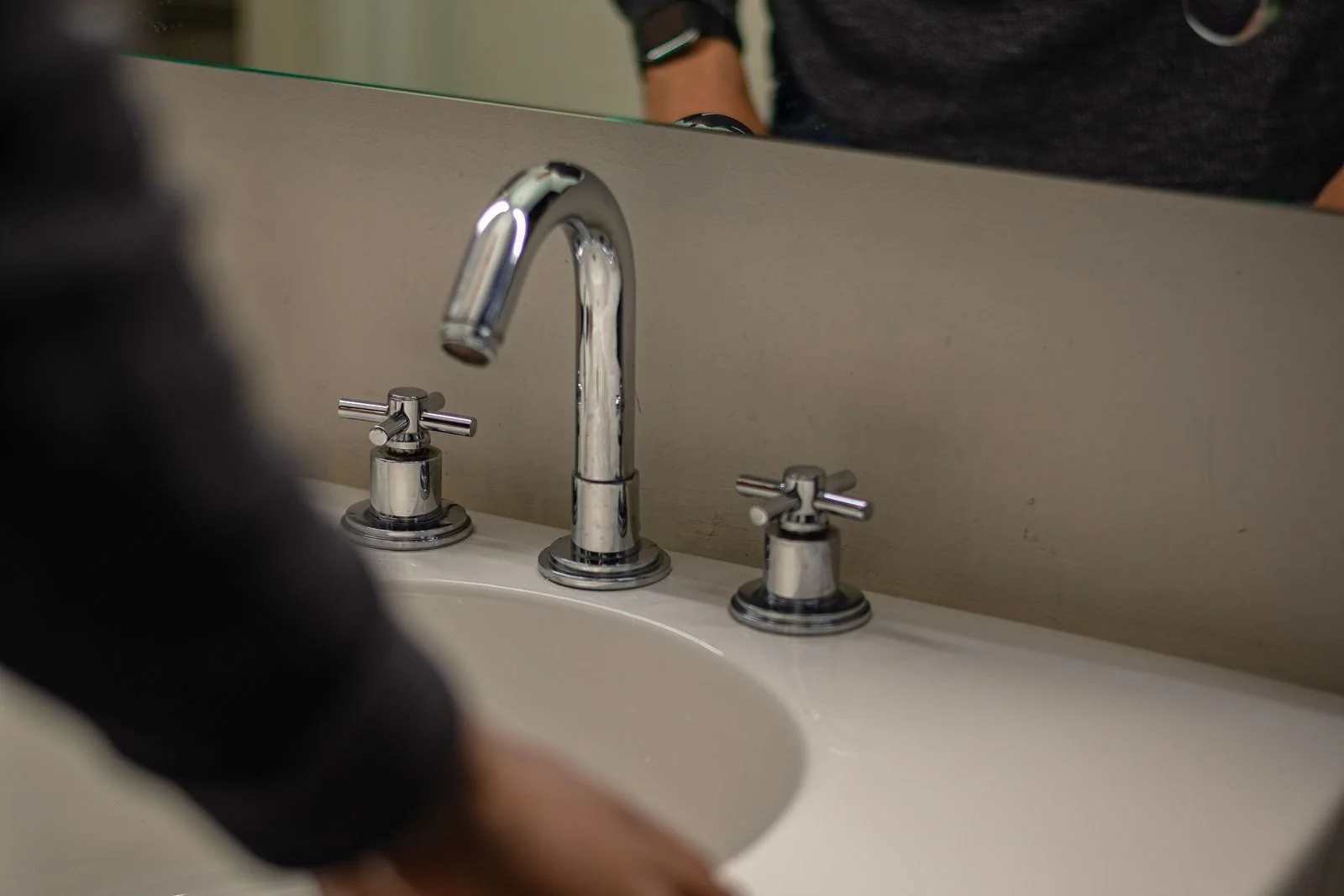
Bathroom and kitchen both. A drip is a cartridge, a stem, a seat or a worn O-ring, and it is almost always worth repairing on a decent faucet. Weak flow from one tap alone is usually nothing more than a scaled aerator. We will tell you which of those it is before anybody talks about a new one.
Shower Plumbing Repair
Shower faucet repair and shower faucet replacement, which on a modern valve means the cartridge and the balancing spool behind it. Temperature that swings when somebody flushes, a handle that has stiffened, a diverter that will not send water up to the head, and heads that have scaled to a trickle.
Bathtub Plumbing Repair
Bathtub faucet repair, tub spouts and diverters, and the bathtub drain repair nobody wants to think about: the waste and overflow assembly behind the tub wall, where a perished gasket puts water into the ceiling below instead of down the pipe. Trip levers and pop-ups that no longer hold water, too.
Bathroom Sink Repair and Drain Replacement
Bathroom sink repair from the tap down: pop-up linkages that have let go, a bathroom sink drain replacement when the flange has corroded through, new traps and tailpieces, and the basin itself reseated and sealed. Bathroom sink installation as well, on a vanity or a pedestal.
Bathroom Leak Repair
Bathroom water leak repair where the source is in plain sight: a weeping angle stop, a perished braided connector, a trap joint, a failed tub waste, a toilet base that has started staining the floor. If it turns out there is nothing to see and the water is coming from inside the structure, that is a different job and we will say so.
A toilet filling up with nowhere to go
Take the lid off the tank and push the flapper down by hand, which stops it immediately, then close the little oval valve on the wall behind the pan. If that valve will not turn, shut the main where the line enters the house. Then call. A real dispatcher picks up, talks you through making it safe, and gives you a straight arrival window rather than a comforting one. The rate at two in the morning is the rate at two in the afternoon.
What Is Actually Behind the Wall, in Plain English
People come to a bathroom plumbing diagram looking for one of two things: either they want to know why a fixture is misbehaving, or they want to know whether a change they are planning is going to be simple or expensive. Both questions are answered by the same four facts, so here they are without the exploded drawing. Everything below describes a normal house on the codes Tennessee uses.
Two pipes in, one pipe out, and a shut-off for each
Every fixture in the room is fed by a hot line and a cold line, each ending at a small shut-off valve called an angle stop, usually just below the basin or behind the pan. From there a braided connector runs up to the faucet or the tank. That angle stop is the most useful thing in your bathroom and the one most likely to have seized, because nobody has turned it since the house was built. Anything that goes wrong at a single fixture can be isolated there without shutting down the whole house, which is why we exercise them and replace the dead ones as a matter of course.
The trap holds water, the vent lets it move
The U-bend under a basin is not there to catch rings. It holds a plug of water that keeps sewer gas out of the room, and it only works if air can get in behind the draining water to replace it. That air comes from the vent pipe going up through your roof. A basin that gurgles, empties in surges, or smells faintly of drains is nearly always a venting problem rather than a blocked one, and the code puts a firm limit on how far a trap may sit from its vent. That limit is the single reason moving a sink four feet along a wall is a real job rather than a morning's work.
The sizes, since that is what everybody looks up
A bathroom sink drain size is one and a quarter inches at the trap, which is why a lavatory clogs long before a kitchen sink does. A bathtub is one and a half. A shower drain size is commonly two inches, and this is where the codes part company: the residential code used here allows one and a half for a single ordinary head, while the pan and drain body you can actually buy are made for two, and a multi-head or body-spray arrangement pushes you to two or larger on flow alone. A toilet is three inches and needs no trap of its own, because the trap is moulded into the china. We fit two-inch shower drains as standard for exactly the reason above.
Shower valves are a safety device, not just a tap
Tennessee's residential code requires that a shower or tub-shower valve be a pressure-balancing, thermostatic-mixing or combination type, with a high limit stop set so the water cannot exceed 120°F. That is why the temperature no longer lurches when somebody flushes downstairs, and it is also why an old valve that has begun swinging hot and cold is not merely irritating. The balancing element inside has stopped doing its job. On most makes that is a cartridge, and it is a repair rather than a rebuild of the wall.
None of this replaces a drawing for a rough-in, and if you are planning a remodel we would rather come and look at what is there than have you work from a generic diagram. Houses in Bradley County span about a century of plumbing practice, and what is behind your wall depends heavily on which decade put it there.
Toilet water leak causes, shortest possible version
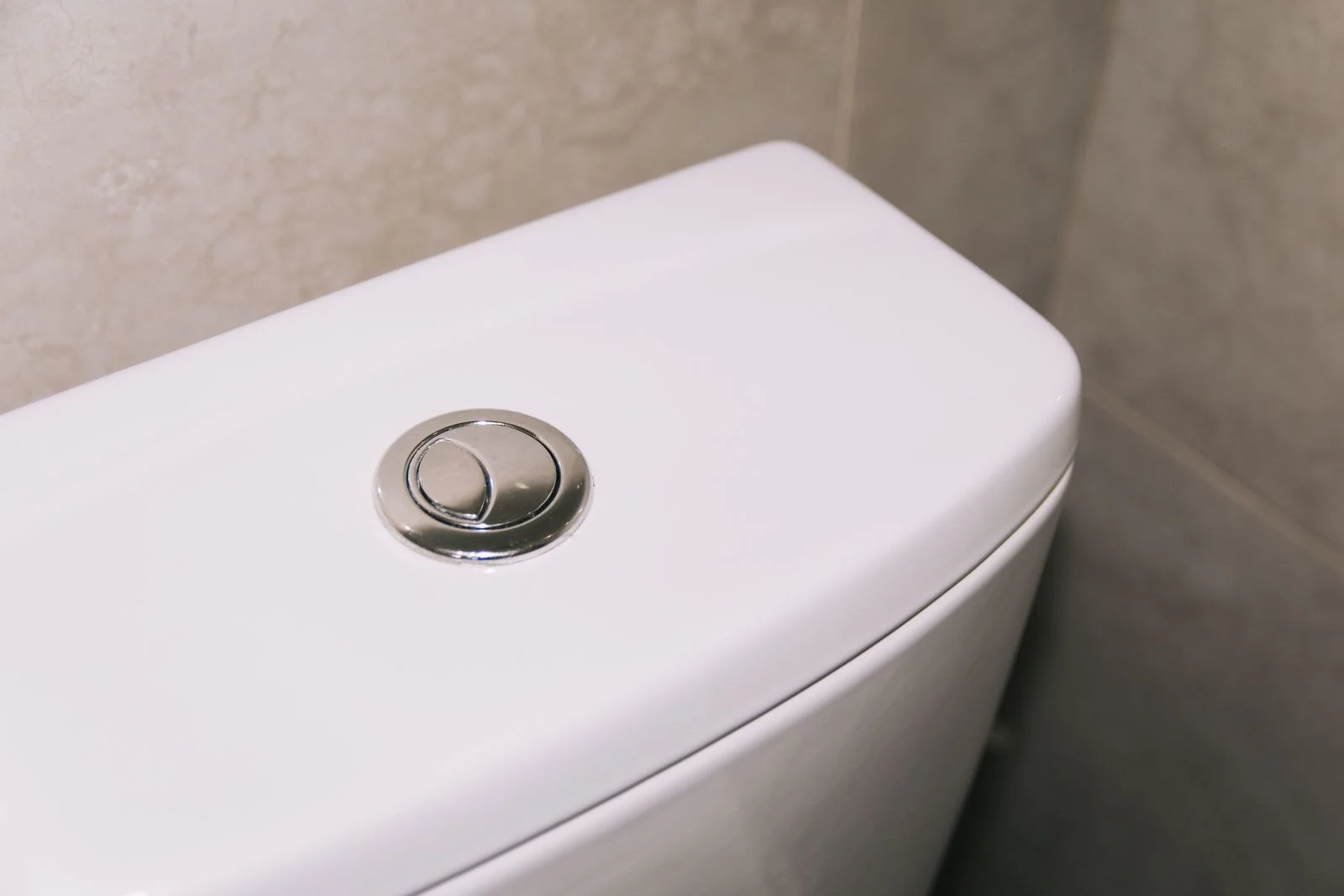
Water inside the bowl with nobody flushing is the flapper or the flush valve seat. Water on the floor at the back is the supply connector or the tank-to-bowl bolts. Water appearing at the base only when it is flushed is the wax seal, and that one is genuinely urgent because the subfloor is taking it. Water on the outside of the tank on a humid morning is condensation and is not a leak at all.
Toilet Plumbing Repair, and Why It Is Not Flushing Properly
A toilet that will not clear the bowl is one of three completely different problems, and they get confused constantly. It may not be getting enough water, because the fill valve is stopping short or somebody adjusted the level down. It may be getting the water but releasing it too slowly, because the flapper is closing early or the flush valve is partly scaled. Or the water may be leaving the bowl perfectly well and meeting a restriction further along, which is not a toilet problem at all.
Telling those apart takes a couple of minutes. If the tank is not filling to within about an inch of the overflow tube, it is the fill valve. If it fills properly but the flush is lazy, watch the flapper: it should stay up until the tank is nearly empty. And if the bowl fills and drains away slowly with no force at all, that is a drain problem rather than a fixture one and belongs on our drain cleaning page.
One more thing worth knowing locally. Anything installed in this country from 1994 onwards had to flush on a gallon and six tenths, and the first generation of those toilets were genuinely poor at it. Plenty are still in service in houses around Cleveland that were built or refitted in the mid nineties. If yours needs two flushes and always has, no part in the tank is going to cure it, and that is a replacement conversation rather than a repair one. Modern pans move the same gallon and six tenths far better.
What we get called out to
- Runs on and off all night
- Handle needs holding down
- Rocks when you sit on it
- Damp ring on the floor
- Weak or lazy flush
- Whistles while it fills
- Tank sweats in summer
- Smells near the base
Parts
Flapper, fill valve or flush valve seal. The cheapest answer and usually the right one
Reset
Pan lifted, new wax seal, flange repaired and the whole thing bedded down square
Replace
For cracked china, a rotten flange, or a nineties pan that never flushed well
When we lift a pan we check the closet flange underneath before setting it back down, because a flange that has corroded or broken away from the floor is the actual cause of most toilets that rock, and bolting a new pan onto a bad flange simply restarts the clock. Measure before you buy one, too: the distance from the wall to the bolts is usually twelve inches, but ten and fourteen both exist and both turn up in older Cleveland houses.
Ask a toilet plumber what yours needsHow to Fix a Dripping Faucet, and When to Stop Trying
A drip is a seal that no longer seals, and which seal depends entirely on what kind of faucet you have. A cartridge faucet wants a new cartridge, which on most makes is a five-minute job once the handle is off and the retaining clip is out. An older two-handle compression faucet wants new washers and, more often than people expect, the brass seats they close against reground or replaced, because a pitted seat chews through a new washer in months. A ball faucet wants the whole small kit of springs, seats and O-rings.
The judgement call is not really about the drip. It is about the body. A solid brass faucet is worth repairing more or less indefinitely and we will happily do it. A thin zinc-bodied one from a builder's package is worth repairing once, and if it drips again within the year you are throwing good money at it. We will tell you honestly which you own, and if it is the second kind we will say so even though the repair is the smaller invoice.
While we are under there, the same trip usually takes care of the rest of the assembly. A bathroom sink drain replacement, a pop-up rod that has come adrift so the stopper no longer lifts, a trap that has been weeping onto the cabinet floor for long enough to swell the chipboard, and the angle stops mentioned earlier. It is worth noting that if you want a kitchen faucet dealt with at the same time, we do those on the same visit and the mechanism is identical even if the reach is longer.
Weak flow at one tap is almost never the plumbing
If the pressure has fallen off at a single faucet while everything else in the house is fine, unscrew the aerator at the end of the spout and look at the little screen inside. In limestone country it fills up with mineral, and rinsing or replacing a part that costs a couple of dollars restores the flow completely. If the whole house has gone weak, that is a different problem and it lives on our Cleveland page instead.
The connector under the sink is the one to watch
The braided connectors running from the angle stops to the faucet have a working life, and when they let go they do not weep, they open. A burst one at the back of a vanity puts out water at full main pressure for as long as it takes somebody to come home. If yours are original to a house that is twenty years old and you have never looked at them, they are worth changing while we are there for something else.
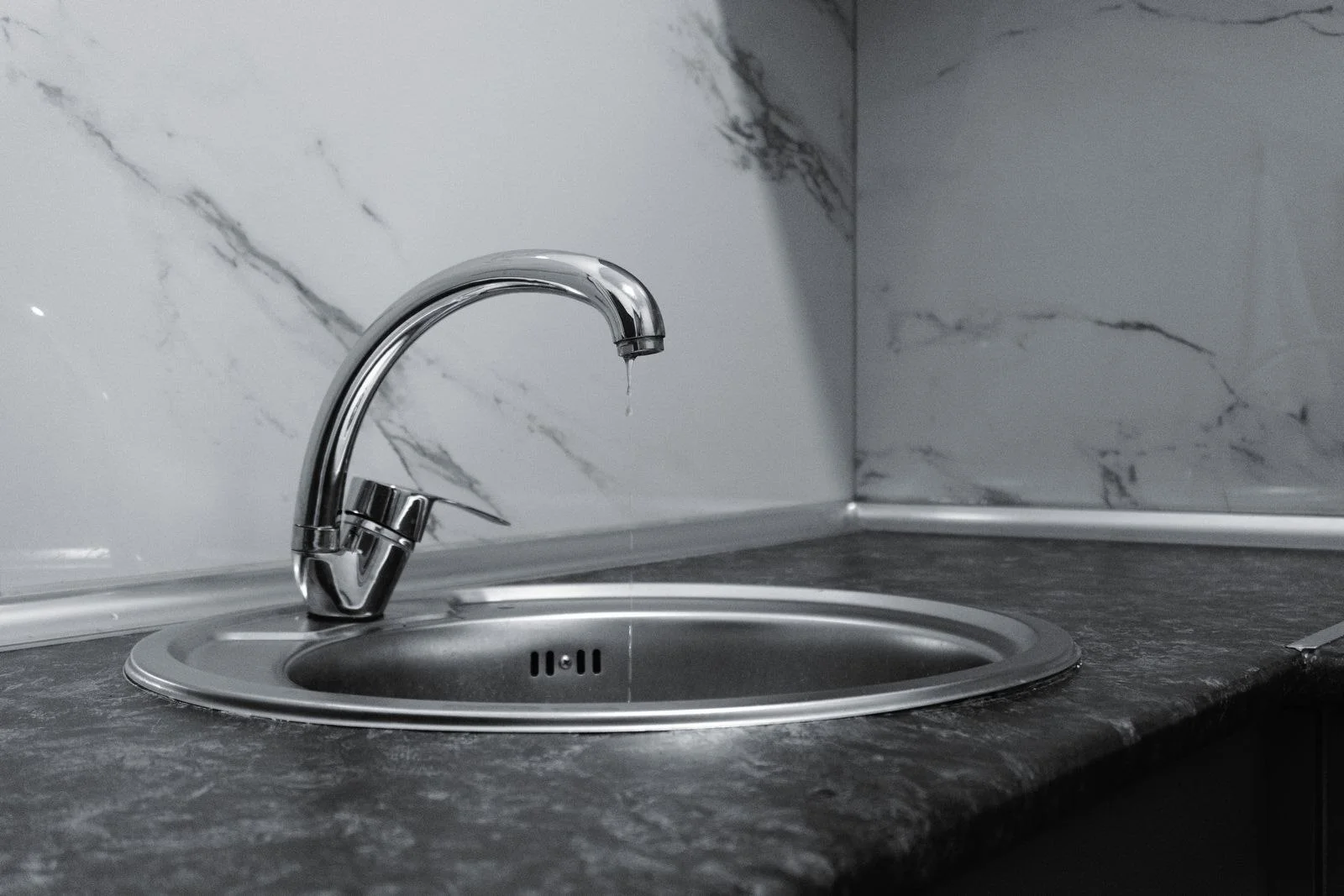
Cartridge
One moving part carries most single-lever faucets, and most drips
Seat
On older two-handle taps, a new washer on a pitted seat will not last
Shower and Bathtub Plumbing, From the Head Down to the Waste
Shower complaints sort themselves into three groups, and each one points at a different part of the installation. Temperature trouble is the valve. Flow trouble is the head, the arm or the cartridge. Water where it should not be is the waste, the pan or the seal around them. Nearly every shower plumbing repair we do starts by working out which of those three you have, because the wrong guess means opening a wall for nothing.
Temperature first, because it is the one that matters most. If the shower swings hot when a toilet flushes or cold when the washing machine fills, the balancing element in the valve has stopped compensating. On almost every modern make that is a cartridge and the repair happens from the front, through the escutcheon, with no tiling disturbed. If the water simply never gets hot anywhere in the house, that is not this valve, and our water heater page is the right place to start.
Then the waste. A shower drain repair usually means the strainer body, the compression or caulked joint where the drain meets the pan, or the trap below it. A bathtub drain repair more often means the waste and overflow assembly running up the back of the tub, where the overflow gasket perishes and water escapes into the joist space every time somebody fills the bath high. The giveaway is a stain on a ceiling under the bathroom that only appears after a bath and never after a shower.
And the awkward one. If your shower drain is clogged and keeps coming back, the cause is usually hair bound up in soap at the strainer or in the trap, and pulling it out is straightforward. If it clears and returns within weeks, or more than one fixture in the room is slow at the same time, the restriction is further down the line and that is drain cleaning work rather than fixture work. We would rather send you to the right page than sell you the wrong visit.
Shower and tub symptoms
- Goes cold when a toilet flushes
- Handle has stiffened up
- Drips from the head hours later
- Diverter will not hold up top
- Standing water in the pan
- Ceiling stain only after a bath
- Tub will not hold water
- Head has gone to a trickle
A new handle rarely means a new valve
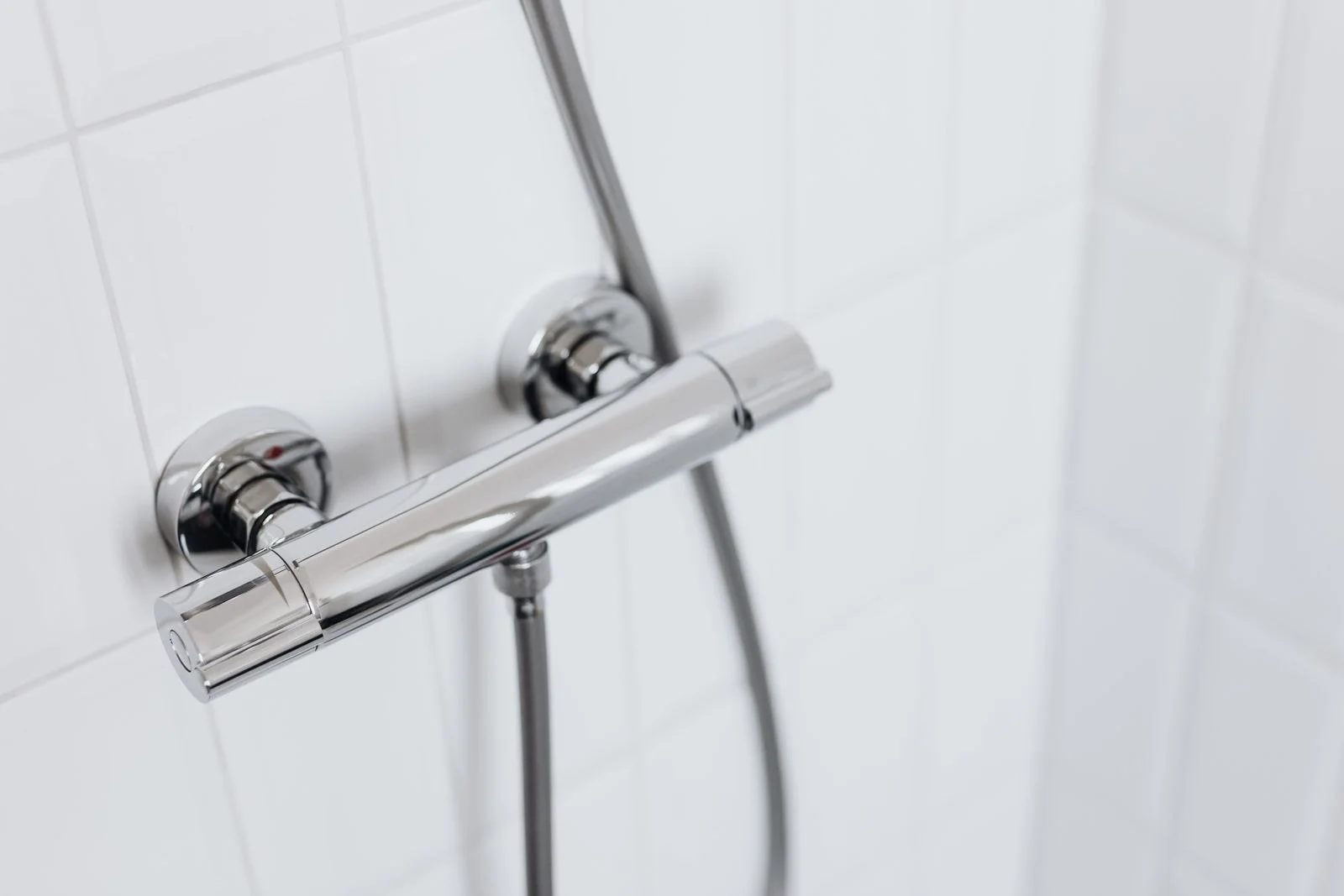
People often assume that changing the look of a shower means opening the wall. In most cases it does not. Trim kits, handles, escutcheons, arms and heads all come off the front of an existing valve body, and as long as the body is a make still supported you can change the entire appearance of the shower without touching a single tile. It is only when the body itself is obsolete, corroded or leaking behind the wall that the tiling has to come off, and we will tell you which of those you are looking at before anything is ordered.
Tub or shower, if you are choosing
Swapping a tub for a walk-in shower is the most common bathroom change we are asked about, and the plumbing question behind it is the drain. A tub waste sits at one end at a set height; a shower drain sits in the middle of the pan and generally wants the larger pipe described earlier. That usually means work underneath the floor, so it is worth having somebody look at what is under there before the tiler is booked.
Five Checks That Take Ten Minutes and Sometimes Save the Call-Out
Two of these fix the problem outright often enough to be worth your ten minutes. The other three do not fix anything, but they tell you and us which fixture and which part is at fault, which means the right thing comes off the van the first time. Nobody is charged for ringing to ask what a result means.
Please do not force a seized shut-off
An angle stop that has not moved in twenty years can snap off in your hand, and what was a dripping faucet becomes water across the floor at main pressure with no local valve left to close. If it does not turn with gentle pressure, stop, and leave it to somebody who has arrived with a replacement and knows where your main is.
-
1
Find out whether the toilet is the one costing you money
Take the lid off, put a few drops of food colouring into the tank, and leave it for half an hour without flushing. Colour in the bowl means the flapper is passing water and that toilet has been running quietly for as long as it has looked fine. Do every toilet in the house, because the one you suspect is often not the guilty one.
-
2
Unscrew the aerator before you blame the pressure
On a single slow faucet, unwind the fitting at the tip of the spout by hand or with tape-wrapped pliers, and look at the screen. If it is furred up, rinse it, soak it in vinegar and put it back. This genuinely resolves a large share of weak-flow calls in limestone country, and it costs you nothing to try. Keep the little parts in order as they come out.
-
3
Work out whether it is one fixture or the whole room
Run the basin, the tub and the shower one at a time and watch each one drain. One slow fixture with the others fine is a fixture problem and ours. Two or more slow at once, or a basin that gurgles when the tub empties, means the shared line is restricted and the job is drain cleaning. Tell us which you saw and we will send the right van.
-
4
Dry it, then look again in an hour
For anything damp, wipe every surface completely dry and lay a sheet of kitchen paper underneath. Come back in an hour and see where the paper is wet first. That single observation separates a weeping connector from a trap joint from a tub overflow, and it is worth more to us than any description over the phone. If the paper stays dry and the damp returns anyway, the water is coming from inside the structure and the job belongs with leak detection.
-
5
Photograph the maker's name, and the handle off if you can
Cartridges are make-specific and often model-specific. A photograph of the brand on the escutcheon or the underside of the faucet, and of the valve itself with the handle removed, lets the dispatcher put the correct part on the van before anybody sets off. This one step is the difference between a repair finished today and a repair finished on Thursday, and it takes about a minute.
New Fixtures, Fitted so the Next Person Can Service Them
Replacement is the other half of this work, and most of it arrives one of two ways: either something has failed for the last time, or somebody is changing a bathroom and wants the plumbing done properly around the tiler and the joiner. Both are ordinary weeks for us. What they have in common is that the decisions that matter are made before anything is bought.
Like for like, done in a morning
A toilet installation, a bathroom sink installation on an existing vanity, a new faucet or a new shower trim, all going back where the old one was. Nothing moves, so nothing needs opening, and we take the old fixture away with us rather than leaving it on your drive.
Remodels, roughed in to the drawing
Where fixtures are moving, the supply and waste get set out first and everything else is built around them. Trap arms kept inside their allowed run to the vent, drains sized for what is going on top of them, and shut-offs put somewhere a person can actually reach.
Permits, when the job actually needs one
The City of Cleveland treats routine maintenance of a plumbing system as work that typically needs no permit, while plumbing takes its own separate permit on real alterations. Swapping a faucet is not the same as moving a drain, and we tell you which side of that line your job falls on.
Three things that are cheap now and expensive later
First, put a shut-off on everything. Fixtures installed without their own angle stops mean the whole house goes off for every future repair, and it is a couple of dollars at rough-in against an afternoon of disruption later. Second, if a wall is open, think about access: an access panel behind a tub waste costs almost nothing while the framing is exposed and saves cutting into a ceiling one day. Third, choose fixtures whose parts are still made. A beautiful faucet from a defunct brand is a beautiful faucet you cannot get a cartridge for, and that decision is made in a showroom rather than by a plumber.
Rentals and turnovers
A good deal of this work is for landlords and property managers between tenancies, where the requirement is a whole bathroom brought up to standard inside a set window rather than one repair. We will walk a unit, list what has to be done against what can wait another year, and price the two separately so you can decide.
It is the same on commercial washrooms, where the fixtures are harder used and the valves are often a different type altogether. Tell us how many, and when the building can spare them.
Send us the scopeA Bathroom Plumber Near You, Across Six Towns
Cleveland is home and where the vans start, but the same rate and the same stocked parts reach every town below. Each has its own page, because the age of the housing changes what we find behind the escutcheon — a fixture in a nineties subdivision and a fixture in a house from the twenties want quite different parts on the van.
Cleveland, TN
City water, a century of housing stock, and most of our bathroom work.
Cleveland plumberMcDonald, TN
Where what goes down a bathroom drain matters more, because of the tank.
McDonald plumberAthens, TN
McMinn County, and older bathrooms where two-handle taps are still the norm.
Athens plumberOoltewah, TN
Hillside pressure that is hard on cartridges and fill valves alike.
Ooltewah plumberCharleston, TN
Low ground by the Hiwassee, where a damp bathroom floor is worth checking early.
Charleston plumberDayton, TN
Rhea County, and lake properties where a running toilet goes unheard for months.
Dayton plumberWhile we are there: bathroom fixtures rarely fail alone. We also do drain cleaning, water heater services and leak detection and repair, and the three of them between them cover almost everything a bathroom repair turns out to really be. Not certain you are inside that footprint? Give us the address. Nobody is charged for asking.
Small Jobs Deserve the Same Discipline as Large Ones
The parts are already with us
Cartridges, fill valves, flappers, seals, stops and connectors ride on the van. Most ordinary fixture repairs are finished the day you call rather than booked in again.
Two numbers, always
What the repair costs and what replacing it costs, side by side, before either one starts. On a cheap fixture we will say when repairing it is throwing money away.
Licensed, bonded and insured
Tennessee-licensed plumbers and background-checked technicians, which on bathroom work mostly matters because somebody is in your house with the water off.
We leave the bathroom usable
Covers down, the old fixture taken away, silicone cleaned off and the water back on before we go. A bathroom is the one room a household cannot do without for a day.
A real person, at any hour
Not an answering service taking a message for the morning. Somebody who can tell you which valve to close while a van is on its way.
We send you elsewhere when it is not us
If the fixture is fine and the line is blocked, or the water is coming from inside a wall, we say so and point you at the right job rather than the one we are standing next to.
Toilets, Drips, Shower Drains and Who Is Allowed to Do the Work
The five questions people actually ask before they book, answered at the length they deserve rather than in one reassuring line.
Ask us directly
01
Why is my toilet leaking, and where is the water actually coming from?
Where the water shows up tells you almost everything. If it is inside the bowl, with nothing on the floor, the flapper or the flush valve seat is passing water from the tank and the toilet is refilling every so often to make up for it. That is the common one, it is silent, and it is the cheapest to cure. If the floor is wet behind the pan, look at the supply connector, the shut-off valve it screws onto and the bolts holding the tank to the bowl, because all three sit in that spot and all three have rubber in them. If water only appears around the base when somebody flushes, the wax seal under the toilet has failed, and that one wants dealing with quickly because the water is going into the subfloor rather than across it. If the whole tank is beaded with water on a humid morning and the floor is damp underneath, nothing is leaking at all, you have condensation on cold china in a warm room. The test that settles it is food colouring in the tank: colour in the bowl after half an hour without flushing proves it is the flapper, and no colour sends you looking at the joints instead.
02
How do I fix a dripping faucet, and is it worth repairing or replacing?
Start by closing both shut-off valves under the sink and opening the faucet to drain it, then put the plug in so nothing small disappears down the waste. What comes next depends on the type. A single-lever faucet has a cartridge behind the handle, held by a small clip or a retaining nut, and swapping it cures the drip on most makes. A two-handle faucet of the older kind has a rubber washer on the end of each stem, and changing the washer alone is why people end up doing the job twice, because the brass seat the washer closes against is usually pitted and will cut a new washer apart within months. That seat wants regrinding or replacing at the same time. The part itself is rarely the problem; matching it is, because cartridges are specific to the maker and often the model, which is why a photograph of the brand and of the valve with the handle off is genuinely useful before anybody sets off. As for whether to repair or replace, the honest rule is that it depends on the body rather than the drip. A solid brass faucet is worth repairing over and over. A light zinc-bodied one out of a builder's package is worth repairing once, and if it drips again inside a year you are better off putting the money towards a better faucet than paying twice to nurse that one along.
03
My toilet is not flushing properly. Is that the flush valve or the drain?
Watch the tank rather than the bowl and it answers itself. Take the lid off and flush. If the water level before you start is not within about an inch of the top of the overflow tube, the toilet is simply not storing enough water to flush with and the fill valve or its adjustment is at fault. If the level is right but the flapper drops back down before the tank has nearly emptied, the flush is being cut short and the flapper or its chain length is the culprit. A flush valve that has scaled up or a worn seat gives the same lazy result. Now look at the bowl: if the water rises and then drains away slowly and quietly rather than clearing with a proper pull, nothing in the tank is at fault at all and the restriction is downstream, which makes it drain work rather than a repair to the toilet. One last possibility that no part will cure. Toilets sold in this country since 1994 have had to work on a gallon and six tenths, and the earliest of those were genuinely bad at it. If your toilet has always needed two flushes and it dates from the mid nineties, it is doing what it has always done, and a modern pan moving the same amount of water is the only real answer.
04
Why is my shower drain clogged again, and what size should it be?
A shower deals with hair and soap every single day, and the two combine into something that grips the inside of the pipe rather than washing through it. That is why it comes back: clearing the pan strainer takes away what you can reach, while the mat further along stays where it is and starts collecting again immediately. The same is true of a bathroom sink, where the pop-up stopper is usually the thing holding it all. Pulling the stopper out and cleaning the linkage underneath is the single most effective thing you can do yourself, and it is unpleasant rather than difficult. On size, the number most people are looking for is two inches, which is what a shower drain generally is and what the pans and drain bodies on sale are built around. The residential code used in Tennessee will allow one and a half inches for a single ordinary head, but a multi-head or body-spray arrangement moves enough water to require two or more, and we fit two as standard because the extra capacity is what stops exactly the problem in this question. If clearing the strainer buys you only a few weeks, or the basin and the tub are slow at the same time, the restriction is beyond the fixture and it wants proper drain cleaning rather than another go with a hook.
05
Is bathroom work a handyman job, or does it need a licensed plumber?
Tennessee draws the line with money rather than with the type of work. The state issues a Limited Licensed Plumber licence through the Department of Commerce and Insurance for plumbing projects under twenty-five thousand dollars, and above that figure the job needs a contractor licence carrying a plumbing classification. So a person turning up to change a faucet is not necessarily doing anything improper, and we are not going to pretend otherwise. What you are buying with a plumbing company is narrower and more practical than a certificate. It is somebody who will not overtighten a ceramic tank bolt and crack a tank that then has to be replaced, who knows that a new washer on an old seat is a repair that will not last, who checks the closet flange before setting a toilet back down, who will not put ordinary white plastic on a hot line, and who carries insurance covering your house if the shut-off snaps off in their hand. It is also somebody who is accountable in six months. Our honest advice is that swapping a like-for-like faucet or a flapper is fair game for a capable person with an afternoon, anything involving the waste side, a shower valve, a wax seal or a pipe that has to be cut is worth a plumber, and anything at all that is moving where a fixture sits should be permitted and done by a licensed one.
Stop Living With It. Most of These Take Us an Hour
One number reaches a bathroom plumber in Cleveland TN at any hour, any day of the year. No answering service, no callback queue, and no surcharge because it happens to be a Sunday — just somebody with the right cartridge already on the van.