
Pipe Repair and Repiping in Cleveland, TN —
We Cut Out the Pipe and Show It to You
Nobody should be asked to pay for a whole house repiping on the strength of somebody else's opinion. When we say a run of pipe is finished, we take a length of it out, put it in your hand, and let you look down the middle of it. If the inside is open and sound we say so and repair the one spot instead. Burst, split and frozen pipes answered around the clock, at the same rate at two in the morning as at two in the afternoon.
- A sample of the pipe, in your hand
- Access holes planned, patched and agreed first
- Water back on every night
- No after-hours surcharge
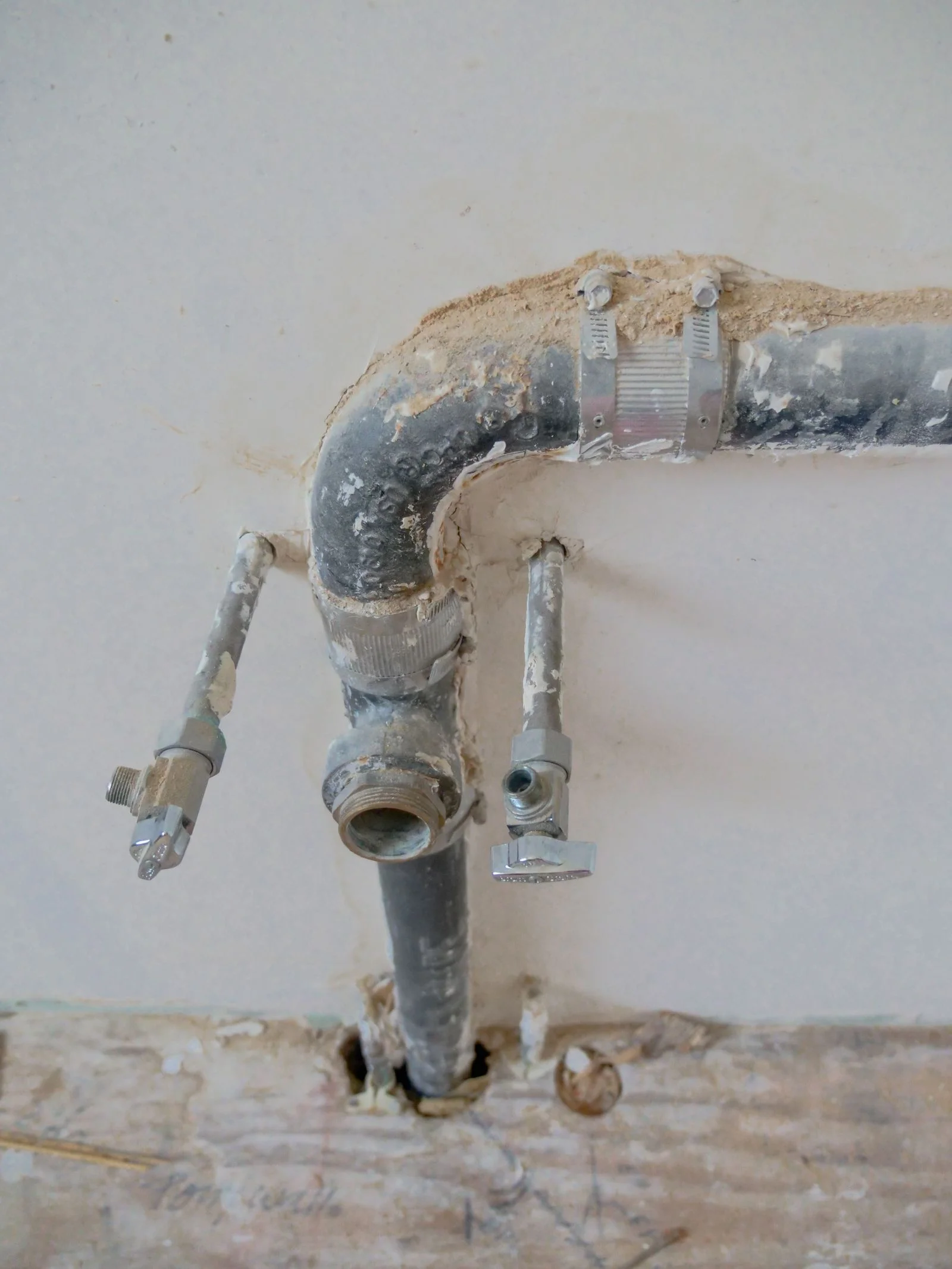
Water coming through?
We answer at 3am
Nights and weekends cost the same
You Own a Few Hundred Feet of Pipe You Have Never Once Looked At
Every ordinary house holds somewhere between a hundred and three hundred feet of water supply pipe. It leaves the meter at the kerb, comes in under the slab or through the crawl space, climbs into walls, splits at every branch and finishes at the back of each tap and appliance. It is under pressure every second of every day, whether anybody is home or not, and unlike almost everything else in the building, you have never seen it.
That is why plumbing pipe repair gets left later than it should. A drain announces itself. A water heater announces itself. Supply pipe just carries on, quietly getting thinner or more brittle from the inside, until a fitting lets go behind a wall at two in the morning or an unusually cold night finds the one length nobody thought about. This page is about that network as a whole — repairing it, replacing lengths of it, and where it comes to it, repiping the house completely.
It helps to be clear about which of us you actually want. If water is turning up somewhere and nobody can say where it is coming from — a damp patch, a meter that keeps turning with everything shut off — then that is a leak to be found before anybody opens anything, and it lives on our leak page. This page begins once the source is known and the argument has moved on to what the pipe needs. Piping and fixture installation is one of the seven things we do on our main services page, and the vans start the day in Cleveland itself.
24/7
Burst pipes answered by a person, any hour
1
Length of your own pipe, cut out and handed over
0
Surcharge for nights, Sundays or holidays
6
Towns covered at the same rate
One pinhole is bad luck. The third one is a decision.
A single failure on an old run can genuinely be a one-off, and patching it is the right answer. Three of them in two years, in different rooms, is the material telling you what it intends to do next. The cost of going on patching is not the patches. It is the plaster, the paint and the flooring underneath each one, and that is the part nobody adds up until afterwards.
Six Kinds of Pipe Work, From One Fitting to the Whole House
They run from a morning's work to the better part of a week, and the honest answer is usually further down the list than people fear and further up it than they hope. What decides it is the material, the number of failures so far and where they have been.
Plumbing Pipe Repair
A failed length cut out and a new piece put in properly, with the run supported either side so the next fitting along is not taking the strain. Pipe repair in Cleveland TN is most often a single accessible section, and we will tell you when that is genuinely all it is.
Whole House Repiping
Every supply run in the building taken out and replaced, in copper or in PEX, with new shutoffs at each fixture. Whole house repiping in Cleveland TN is the answer when the material itself has come to the end rather than one piece of it, and it resets the clock for a lifetime.
Burst and Broken Pipe Repair
The one that cannot wait for Monday. Burst pipe repair in Cleveland TN, day or night: water shut off at the main, the split length taken out, a proper repair rather than a wrap, and an honest word about whether the rest of that run is going to do the same thing.
Water Line Repair and Replacement
The single run between the meter at the kerb and the point it enters the building. That length is yours to maintain, it is usually the oldest pipe on the property, and replacing it is a different job from repiping water lines inside the walls.
Fixture Installation and New Pipework
Running supply and waste to somewhere that never had it: a new sink in a laundry, a second bathroom, an outside tap, a line to an ice maker, a laundry box, or a full rough-in for a remodel. New pipe, correctly sized and properly supported.
Pressure, Valves and Shutoffs
Pressure measured at the hose bib and brought back inside the limit if it is over, a main shutoff that actually turns, angle stops under every fixture, hammer arrestors, and an outside tap that will survive a cold snap. The unglamorous work that prevents the other five.
Shut the main off first. Then call.
Find the main shutoff and close it before you do anything else — it will be where the line enters the building, or at the meter by the kerb. Then open the lowest tap in the house to drain what is left in the pipes so it stops arriving through the ceiling. Kill power to any circuit the water has reached, at the breaker, and only if you can get to the panel dry. Then ring us. A real dispatcher picks up, at any hour, and the rate at two in the morning is the rate at two in the afternoon.
Four Things Worth More Than Any Opinion About Your Plumbing
None of these on its own proves a house needs repiping. Two of them together usually means the conversation is worth having properly, with somebody cutting a piece of pipe out rather than guessing from the outside.
Failures in more than one place
This is the one that actually settles it. A pipe that fails once may have been unlucky: something struck it, a fitting was strained when it went in, an offcut had a flaw. A pipe that fails in the kitchen wall this spring and behind the bathroom next winter is not unlucky, because those two pieces have nothing in common except the material they are made of and the years they have both been sitting there. When the only thing the failures share is the pipe itself, the pipe is the fault.
What comes out of the tap first thing
Run a cold tap that has been standing all night and look at the first glassful. Rusty or brown water that clears after a few seconds is coming off the inside of the pipe, not out of the main, and on steel pipe that is corrosion working its way through the wall from the inside. Grit or flakes behind a tap strainer are the same story. And watch the hot side separately: on old steel, the hot runs usually give up first, because heat speeds everything up.
Flow that has quietly gone away
Corrosion does not just eat outward, it builds inward, and a steel pipe can close up to a fraction of its bore without ever leaking a drop. The test is not how one tap behaves but how two behave together: if running the kitchen tap while somebody is in the shower is a problem now and was not five years ago, and nothing else about the house has changed, the pipe has less room inside it than it used to. Pressure measured at the hose bib will often be perfectly normal, which is why people are told nothing is wrong.
What it is made of, and when it went in
Some materials have a known ending and a known date, and that turns guesswork into arithmetic. Galvanised steel was standard from the nineteen twenties to the nineteen sixties and is generally reckoned to give forty to sixty years. Polybutylene went into houses between 1978 and the middle of 1995 and is a different case again, serious enough that it has its own section below. If you know roughly when the house was plumbed, you already know most of what a plumber knows.
Notice what is not on this list: one damp patch, one wet ceiling, or a water bill that has jumped for no reason anybody can point at. Those mean something is getting out somewhere and the first job is finding it, which belongs with leak detection and repair rather than with this page. And if what is misbehaving is a tap, a shower valve or a cistern while the rest of the house is perfectly happy, then the trouble is in the fitting rather than the pipe, which is a much smaller morning.
The Year the House Was Plumbed Tells You More Than Any Inspection
Supply pipe does not wear out evenly like a roof. Each material has its own way of ending, and the way it ends is what decides whether you are looking at a repair or a repiping job. Four materials account for almost everything we open up around here.
Polybutylene, 1978 to the middle of 1995
Grey plastic, usually around half an inch or an inch, joined with plastic fittings and crimp rings. It went into millions of American houses because it was cheap and quick, and it failed because chlorine and other oxidants in ordinary treated water attack the plastic and its fittings over years, so the pipe goes brittle and cracks from the inside out. There is no reliable repair for that, because the degradation is happening along the whole length, not at the point that happened to fail first. This is not a fringe opinion: the class action over it, Cox versus Shell Oil, was filed in the Chancery Court for the Twenty-Seventh Judicial District here in Tennessee in June 1995, and the manufacturers agreed to put at least nine hundred and fifty million dollars toward putting people's houses right. That claims programme closed a very long time ago, so a homeowner finding grey polybutylene today is paying for the repipe themselves, and it is still worth doing before the material decides the timing.
Galvanised steel, roughly the 1920s to the 1960s
Heavy grey threaded pipe, magnetic, and the material behind almost every rusty-water complaint in an older part of town. The zinc coating protects the steel until it does not, and then the steel corrodes from the water side, building up inside and thinning outward at the same time. Forty to sixty years is the usual reckoning, with fifty about average, which means essentially every galvanised system still in service is past its expected life. It rarely bursts dramatically. It closes up, discolours the water and then starts weeping at the threads.
Copper, and what shortens it
Fifty to seventy years and often a good deal more, which is why nobody regrets copper. When it does fail early there is usually a reason worth finding rather than just a bad batch: standing pressure running above what the code allows, water velocity too high through undersized pipe, a poor solder joint, or pipe rubbing where it passes through framing. Pinholes that keep appearing in copper are a symptom of a condition, and replacing the pipe without settling what that condition is buys a shorter life second time round.
PEX and CPVC, the modern answer
What almost every repipe goes back in as today. PEX is a cross-linked plastic tubing that bends around corners, needs far fewer joints, tolerates a freeze better than rigid pipe because it can stretch a little, and is commonly reckoned on a twenty-five to fifty year life. CPVC is a rigid plastic rated for hot water and is still widely used. Both are accepted materials under the plumbing code the city enforces. What matters more than which one you pick is how few joints end up buried where nobody can reach them.
The one material you can look up rather than guess at
Cleveland Utilities has published a service line material inventory, address by address, under the federal lead rule. The utility states that it has not installed any lead piping on its system since 1971 and possibly earlier, and that there remains a slight possibility of lead on some customer service lines in houses built before 1988. If your house predates that and you have never known what the incoming line is made of, the utility's own record is the place to start, and it costs nothing to look.
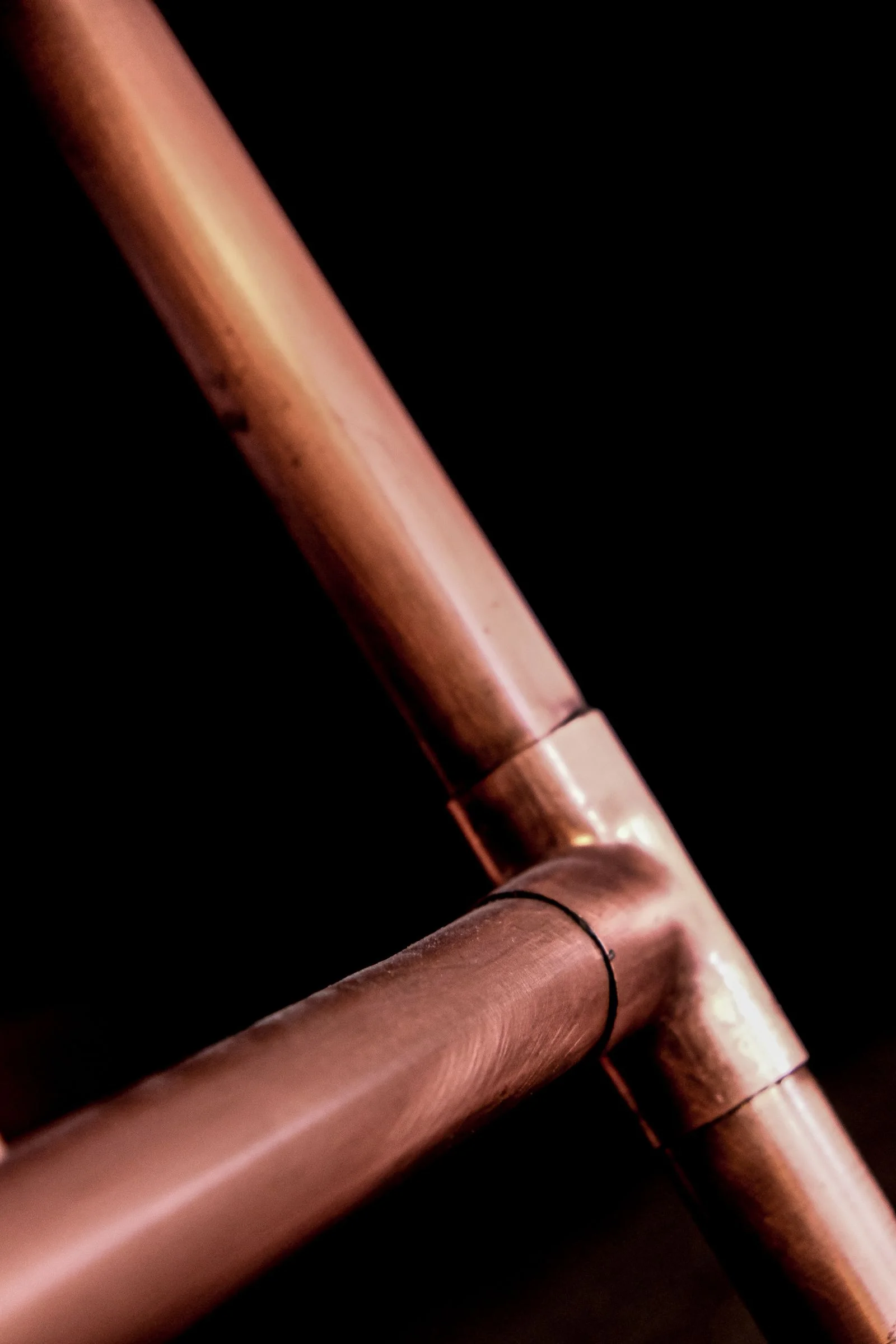
How to tell what you have, in two minutes
Look where the pipe is already out in the open — under a sink, at the water heater, in the crawl space or where it comes through a basement wall. Grey plastic with crimp rings is polybutylene. Dull grey metal that a magnet sticks to is galvanised steel. Brown metal a magnet ignores is copper. Cream or beige rigid plastic is CPVC, and coloured bendy tubing is PEX. One photograph on your phone is usually enough for us to tell you what you are dealing with before anybody visits.
How Far to Go, and What Actually Moves the Number
There is a middle option most people are never offered, and it is very often the right one. Below is how we choose between the three, and then the honest answer to what a whole house repiping cost is made of, given that nobody sensible will quote one down the telephone.
Repair the section
Right when one length has failed on a system that is otherwise sound, and when the pipe we cut out looks healthy inside. Smallest hole, smallest number, done in a morning. Wrong when it is the third one, or when the sample says the material has gone.
Best for: an accessible split, a strained fitting, an impact
Repipe one zone
The option people are rarely told about. Replace one branch or one floor — the hot runs only, or everything serving the two bathrooms — and leave sound pipe alone. Right when the trouble is genuinely concentrated. Wrong when it is only being used to put off a decision.
Best for: hot runs failing first, or one wing of a house
Repipe the whole house
Right when the material is the problem rather than any one piece of it, and that is the usual verdict on polybutylene and on steel well past its years. The largest job, the one that ends the subject, and the only one that comes with a warranty covering everything rather than one patch.
Best for: polybutylene, spent galvanised steel, repeat failures
Because the house is the variable
Two houses of the same square footage on the same street can be three days apart. How many fixtures there are, how many floors the pipe has to climb, whether it runs through an open crawl space or is buried in a slab, and how much wall has to be opened and made good afterwards all change the answer completely, and none of them can be settled over the telephone.
So we do not publish a figure we would only have to walk back. What we do instead is come and look, cut a piece of pipe out where we can reach one, and put the repair and the repipe in front of you as written numbers with the reasoning attached. You decide with the same information we have.
Get it in writingWhat a whole house repiping cost is actually made of
How many fixtures
Not floor area. Every tap, shower, toilet, machine and outside hose bib is a run that has to be reached, routed and finished with its own shutoff.
Slab, crawl space or basement
The single biggest driver. A crawl space you can move around in is straightforward. Pipe cast into a slab usually means rerouting overhead instead, which is a different job entirely.
Floors, and what is above them
Getting pipe from the ground floor to an upstairs bathroom means finding a route that does not wreck a ceiling. A single storey and a two storey are not the same day's work.
Wall repair afterwards
Where the access holes go, how many there are and who closes them. This is the item most often left out of a quote, and it is the one customers notice most.
Material
Copper and PEX carry different material costs and different labour. Neither is the right answer everywhere, and we will tell you which we would put in our own house and why.
Permit and inspection
A separate plumbing permit and an inspection, which apply more widely here than people expect. It belongs inside the quoted price rather than turning up later as an extra.
One more thing worth knowing about pressure, because it sits underneath several of the others. The plumbing code the City of Cleveland has adopted caps standing water pressure in a building at eighty pounds per square inch, and requires an approved pressure-reducing valve with a strainer where it comes in above that. High pressure shortens the life of every joint, every supply hose and every appliance valve in the house at once, so when we are asked why pipe failed sooner than it should have, the gauge on the hose bib is the first thing we look at. It is a cheap reading and it occasionally changes the whole plan.
What a Repipe Actually Looks Like From Inside the House
The fear is always the same and it is never really about the pipe. It is about living in a building site, about not knowing how many holes are going to appear, and about who is supposed to close them again. So here is the sequence, and the answer to that last question is agreed in writing before anybody starts.
-
1
We walk the route and mark the holes
Before a price exists, we work out where the new runs will go and where we have to open the wall to get them there. Every one of those places gets marked, counted and written down, so the number of access holes is something you agree to rather than something you discover. Where a route through a closet or an attic saves a hole in a finished room, we take it.
-
2
Permit first, then protection
The plumbing permit is taken out before the work begins, not afterwards. On the first morning, floors get covered, furniture gets moved clear of the walls we are opening, and dust protection goes up. This part is not decoration. A repipe is a dusty job and the difference between a tolerable week and a miserable one is almost entirely down to what happens in the first hour.
-
3
New pipe goes in alongside the old
The new system is installed while the old one is still carrying water, which is how you keep a family in the house. Runs are sized for the fixtures they serve rather than copied from whatever was there, supported at proper intervals, sleeved where they pass through framing, and kept out of exterior walls and unheated voids wherever the building allows it. That last decision is the one that matters in January.
-
4
Changeover, pressure test and inspection
The switch from old to new is the only part with the water off, and we plan it for a single working day rather than letting it drift. The system is pressure tested before anything is closed up, every line is flushed through, and the inspector sees the pipe while it is still open to look at. The old runs are left dead in the walls or taken out where they are in the way.
-
5
The walls get closed and made good
Every access hole is patched, taped, floated and sanded ready for paint, to the scope written down on day one. We do not colour-match paint and we say so at the start rather than at the end, because a wall patched ready for a roller is an honest promise and a repair nobody can pick out in a twenty-year-old paint finish is not.
On an ordinary single-storey house with a crawl space, that whole sequence is commonly a few working days rather than a fortnight, and the water is back on every single night. Two storeys, a slab, or a house somebody is living in with small children all stretch it, and we would rather tell you that at the quote than halfway through the week.
Water on nightly
Except for the changeover day, you finish every evening with taps, a shower and a working toilet. Nobody is asked to move out.
Holes counted first
Marked and agreed before the quote is signed, and the patching scope is written into it. No surprise openings, no argument at the end.
New shutoffs throughout
Every fixture gets a new angle stop that turns, so the next small job never needs the whole house shut down again.
Inspected and signed off
Permit pulled, inspection passed, paperwork handed over. It matters again the day you come to sell.
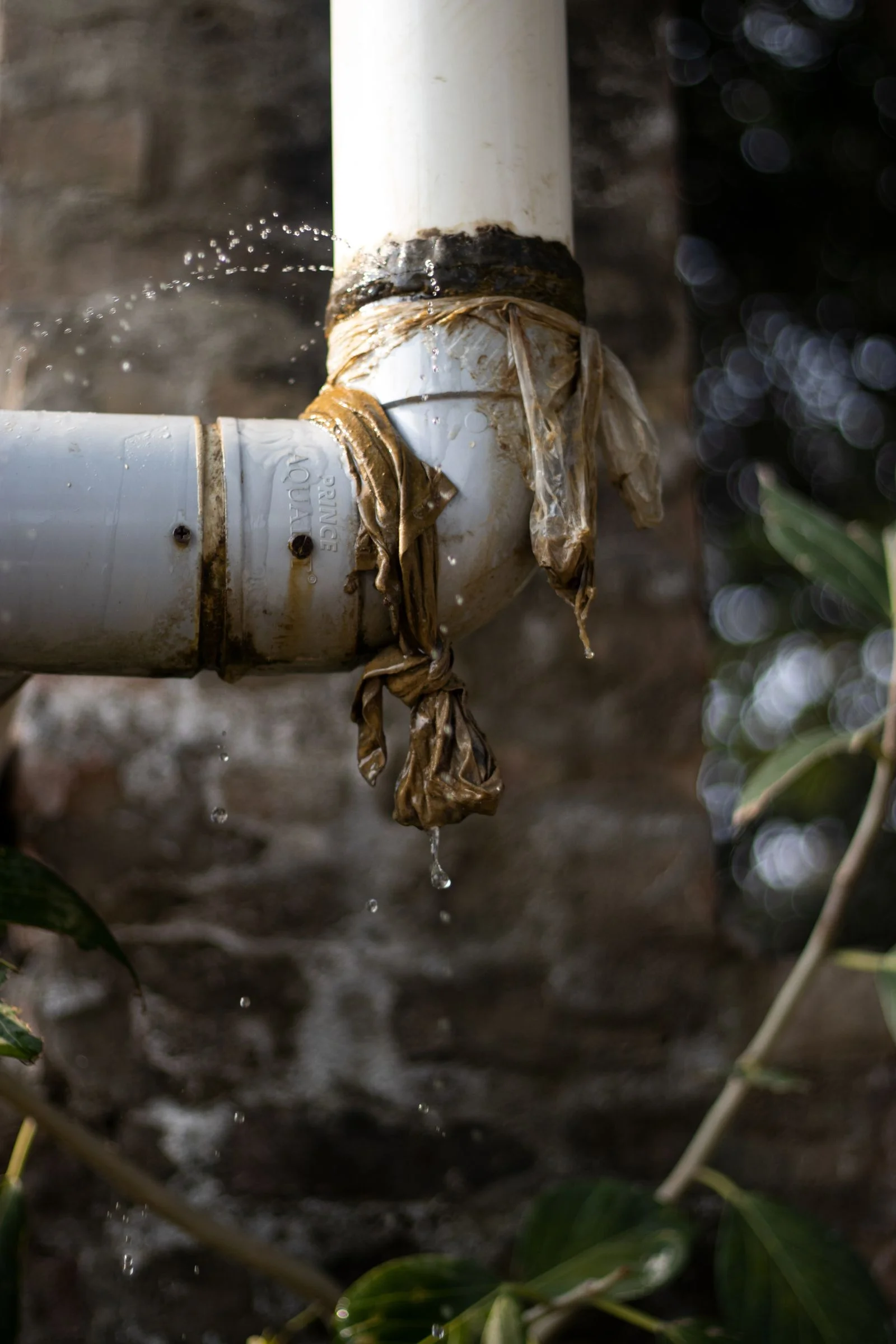
A wrap gets you to morning. It is not a repair.
Tape, a rubber sleeve and a jubilee clip are genuinely useful things to own, and if one buys you six hours until somebody can get to you, it has earned its keep. What it has not done is repair anything. It is holding back mains pressure with friction, it tends to let go without warning, and it lets go at the moment the household has stopped thinking about it. Get through the night with it by all means, then have the length taken out properly.
What to Do if a Pipe Bursts, in the Order That Matters
A burst supply pipe is one of the few plumbing problems where the first five minutes genuinely change the size of the bill, because everything that happens after the water stops is repair work and everything that happens while it is still running is damage. Half an inch of pipe at household pressure will put out more water in an hour than most people imagine.
The first five minutes
1. Close the main
Not the tap nearest the water. The main, where the line enters the building or out at the meter. Turn it clockwise until it stops. If you do not know where yours is, find out now rather than in the dark.
2. Open the lowest tap
With the main shut, everything still standing in the pipes upstairs will keep coming out of the break unless you give it somewhere easier to go. Open the lowest cold tap in the house and let it drain there instead.
3. Deal with the electrics
If water has reached lights, sockets or anything live, switch that circuit off at the breaker — but only if you can reach the panel standing somewhere dry. If you cannot, leave it, get everybody clear and say so when you ring.
4. Then start moving water out
Towels, buckets, a wet vacuum, and lift anything off a wet floor before it wicks. Photograph everything before you clear it up, because that is the evidence any insurance claim will turn on.
When we arrive, broken pipe repair follows the same order every time: shut off the section, open up enough to see the whole failure rather than just the wet part, take out the damaged length, and put in new pipe with proper fittings and support. Then the part that matters more than the repair itself — we look at why that piece went. A pipe break repair in Cleveland TN caused by a freeze, by a strained fitting or by an impact is a one-off and we will say so. One caused by the material giving up means the rest of that run is on the same clock, and you deserve to hear it while the wall is still open.
One distinction worth making before you ring anyone. If you can see the break, this page is the right one. If you cannot — if the sign is a damp patch, a warm spot on a floor, a sound of running water with everything shut off, or a bill that has climbed for no reason — then the job is finding it before anybody opens a wall or a floor, and that is a different visit with different equipment. And if the water arriving is not clean, it is coming from a line carrying waste away rather than water in, which belongs with drain cleaning or with sewer line services instead.
Our Winter Is the Reason This Happens, Not the Reason It Does Not
People assume frozen pipes are a northern problem. The opposite is closer to the truth, and the reason is in the climate figures for this town. An average January night in Cleveland only just reaches freezing, and the average January afternoon is up around fifty degrees. A winter like that does not freeze anything, which is exactly why houses here were not built as though it would.
So supply pipe around here runs through open crawl spaces, up the inside of exterior walls, along the back of an unheated garage and out to a hose bib with no frost-proof valve on it. All of that is perfectly fine for the nine winters out of ten when nothing drops below the middle twenties. Then an Arctic outbreak arrives, the kind that took water systems out across Tennessee in January 2024, the temperature sits below freezing for two or three days and nights together, and every one of those compromises is found on the same night. That is also why it is hard to get a plumber that week. The whole town breaks at once.
How to unfreeze pipes without making it worse
The American Red Cross publishes the standard guidance and it is worth following exactly. If you turn a tap and get only a trickle, suspect a freeze upstream of it. Leave that tap open: as the ice starts to give, the water needs somewhere to go, and the flow itself helps clear the rest. Then warm the affected length with an electric heating pad wrapped round it, a hair dryer, a portable space heater kept well away from anything that burns, or towels soaked in hot water. Work from the tap end back toward the frozen part rather than starting in the middle, so the melt has an escape route the whole time.
Never use an open flame on a frozen pipe
The Red Cross is explicit about this and so are we: no blowtorch, no kerosene or propane heater, no charcoal stove, nothing with a flame. People set houses alight doing this every winter, a torch on a plastic pipe destroys it outright, and on metal pipe the heat travels far enough along the run to damage joints you cannot see. If the frozen section is out of reach or you cannot find it, stop and ring us instead. That call is cheaper than the alternative by an enormous margin.
Before the next cold snap
- Know where the main shutoff is
- Disconnect the garden hose
- Insulate the crawl space runs
- Let an exposed tap drip cold
- Open cabinet doors under sinks
- Heat no lower than 55°F if away
- Close crawl space vents
- Fit frost-proof hose bibs
Two of those are worth singling out. Leaving a hose screwed on over winter traps water in the hose bib where it will freeze and split the valve body inside the wall, and nobody finds out until spring. And the reason the Red Cross says to keep a vacant house at fifty-five degrees rather than switching the heat off is that an empty house is the worst case there is: nobody is running water, nobody notices the trickle, and nobody is there when it lets go.
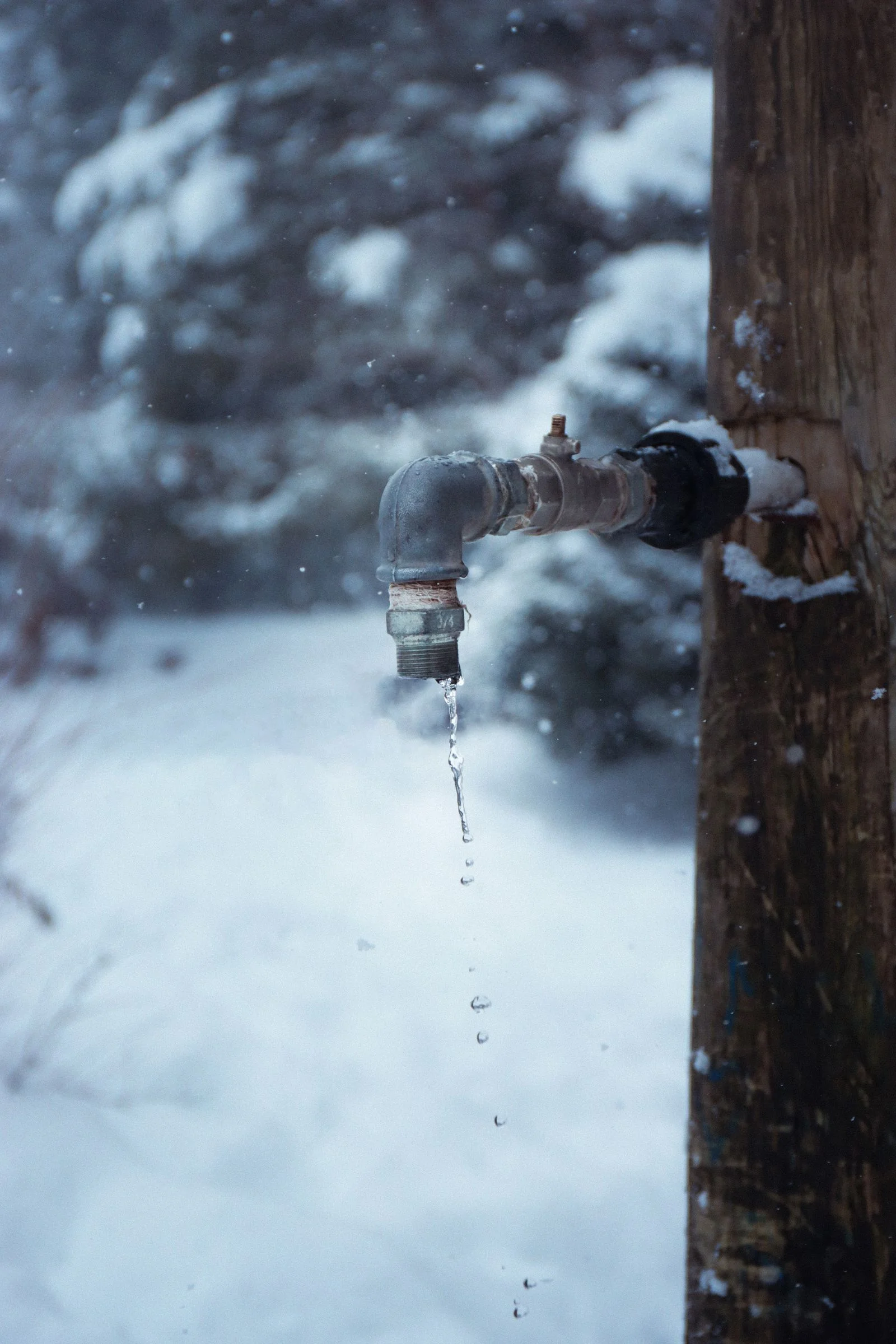
Why a dripping tap works
It is not the warmth of the water, which is negligible. It is that a pipe with something moving in it takes far longer to freeze than one holding still, and that an open tap gives expanding ice somewhere to push. What actually splits a pipe is almost never the ice at the point it formed — it is the pressure trapped between that plug of ice and a closed tap further along, which has nowhere to go and finds the weakest inch of pipe in the run.
Putting Water Where There Has Never Been Any
The other half of piping work, and the cheerful half. Not something broken, but something being added: a fixture in a room that never had one, a line out to where you actually want it, or a rough-in ahead of a remodel. The pipe is the job here. The thing on the end of it is the easy part.
A new bathroom or laundry
Hot and cold run to where the fixtures are going, waste and vent worked out properly rather than improvised, a laundry box let into the wall, and shutoffs everywhere they belong. The rough-in is where a remodel is won or lost.
Outside taps and yard lines
A frost-proof hose bib where you keep dragging a hose to, a line out to a shed or a garden, or an existing tap replaced with one that will survive a January. Fitted with its own shutoff inside, so next winter it can be drained down in a minute.
Appliance connections
A line to a fridge ice maker, a dishwasher where there was none, a water softener or a filtration unit tied in correctly. Done in proper pipe with a real shutoff, not a saddle clamp on a cold line, which is one of the commonest slow failures we get called to.
Moving a line, not just adding one
Relocating a sink, shifting a washer to the other wall, or getting a run out of an exterior wall where it keeps freezing. Often the most valuable thing we do in an older house, and almost never as disruptive as people expect.
Shutoffs, stops and the main valve
A main shutoff that turns when you need it, and an angle stop under every fixture that does the same. If the only way to change a tap washer in your house is to shut the whole building down, that is worth putting right on its own.
Commercial fit-outs and tenant work
Break rooms, restrooms, mop sinks, equipment connections and the pipe to serve them, in shops, offices and small industrial units. Scheduled around your opening hours rather than ours.
A boundary worth stating plainly, because it saves people a wasted call. Installing a fixture and the pipe that feeds it is this page. Repairing the fixture you already have — a tap that drips, a shower valve that will not hold temperature, a toilet that keeps running — is toilet, faucet and shower repairs, where the parts are already on the van. And if the complaint is that no hot water reaches anywhere in the building, the pipe is almost certainly innocent and the answer is on water heater services.
Repiping Specialists Near You, Across Six Towns
Cleveland is home and where the vans start, but the same rate and the same crews reach every town below. Each has its own page, because when a house was built and what it was plumbed with varies a great deal from one of these places to the next — and so does who you need a permit from.
Cleveland, TN
A century of housing stock, every pipe material in it, and the codes office in town.
Cleveland plumberMcDonald, TN
Long private runs from a well or a meter at the road, and plenty of exposed crawl space.
McDonald plumberAthens, TN
McMinn County, its own utility board, and older streets full of older supply pipe.
Athens plumberOoltewah, TN
Hillside pressure that runs high enough to shorten pipe, and three possible permit offices.
Ooltewah plumberCharleston, TN
Low ground by the Hiwassee, older cottages, and pipe run through damp crawl space.
Charleston plumberDayton, TN
Rhea County, a city that runs its own water and issues its own plumbing permits.
Dayton plumberWhile we are there: pipe is rarely the only thing an older house wants looking at. We also do drain cleaning, leak detection and repair, water heater services, sewer line services and toilet, faucet and shower repairs. Not certain you are inside that footprint? Give us the address. Nobody is charged for asking.
A Repipe Is the Easiest Job in This Trade to Oversell
A piece of your pipe, in your hand
Wherever we can reach a run, we cut a length out and give it to you to look down. It is the one piece of evidence nobody can argue with, and it settles the question in about four seconds.
The repair quoted next to the repipe
Both written down, side by side, with the reasoning for each — including all the times the honest recommendation is the small one. You should never have to take the bigger number on trust.
Holes counted and patching in writing
Where we open the wall, how many places, and who closes them again, all agreed before the quote is signed. This is the single commonest complaint about repiping work anywhere, and it is entirely avoidable.
Permit pulled, inspection passed
Tennessee-licensed plumbers, the plumbing permit taken out before the work starts, and the inspector seeing the pipe while it is still open. It is your paperwork afterwards, not ours.
A real person, at any hour
A burst pipe does not wait for opening time, and a hard freeze never arrives on a Tuesday morning. Somebody picks up at three in the morning and the rate does not change because of the hour.
We say when the pipe is fine
Plenty of calls that land here turn out to be a fixture, a water heater or a leak that wants finding first. We tell you, charge for what we did, and point you at the right job instead.
How Long They Last, What It Costs You, and Who Signs It Off
The five questions people actually ask before they book, answered at the length they deserve rather than in one reassuring line.
Ask us directly
01
How long do plumbing pipes last, and what are the signs mine need replacing?
It depends almost entirely on the material, which is why the useful question is not how old the house is but what it was plumbed with. Galvanised steel, standard from roughly the nineteen twenties to the nineteen sixties, is generally reckoned at forty to sixty years with fifty about average, so nearly every galvanised system still in service is living on borrowed time. Copper is usually good for fifty to seventy years and frequently longer. PEX is commonly reckoned on twenty-five to fifty. Polybutylene, the grey plastic fitted between 1978 and the middle of 1995, is the exception to all of this, because it does not so much wear out as degrade, and it should be planned out of a house rather than waited on. As for the signs, four of them are worth more than any opinion. Failures in two different parts of the house, because the only thing those two pieces of pipe share is the material. Rusty or gritty water from a cold tap that has stood all night, which is coming off the inside of your own pipe rather than out of the main. Flow that has quietly dropped when two fixtures run at once, which is corrosion closing the bore rather than any change in supply. And the material and date themselves. None of those is proof on its own, but two together is worth having somebody cut a piece out and look.
02
Pipe repair vs replacement: how do I know which one I actually need?
The test we use is simple and you can apply it yourself. Ask what the failures have in common. If they share a cause you can point at, repair is the right answer and anybody telling you otherwise is selling. A length that froze, a fitting that was strained when it went in, a run somebody put a nail through, a pipe rubbing where it passes through a joist: those are events, they explain themselves, and replacing the whole system because of one would be absurd. If on the other hand the only thing the failures have in common is the pipe itself, in different rooms, on different branches, months or years apart, then the material is the cause and patching it is renting time at a very poor rate. Between those two sits an option most people are never offered, which is repiping one zone. Hot runs very often fail years before cold ones because heat accelerates everything, and replacing just the hot side of an older house is a real and much cheaper answer where the survey supports it. What settles all three is evidence rather than opinion, so wherever we can reach a run we cut a length out and hand it to you. If the inside is open and sound, you do not need a repipe and we will say so in writing. If it is closed down to a fraction of its bore, or brittle enough to crack in your fingers, that is not a matter of opinion any more.
03
What does whole house repiping cost, how long does it take, and will I have water?
Taking those in reverse order, because the third one is what people are really asking. Yes, you have water. The new system goes in alongside the old one while that is still running, so the only period with the supply off is the changeover, which we plan for a single working day. Every other evening of the job you finish with taps, a shower and a working toilet, and nobody has to move out. On timing, an ordinary single-storey house over a crawl space is commonly a few working days rather than the fortnight people brace for. Two storeys take longer because every run has to find a route upstairs that does not wreck a ceiling, and a slab-built house is different again, since pipe cast into concrete is usually abandoned and rerouted overhead rather than dug out. On the money, we will not print a figure because the honest one does not exist until somebody has seen the house. What moves it is the number of fixtures rather than the square footage, whether the pipe sits in a crawl space or a slab, how many floors it has to climb, the material you choose, the permit and inspection, and above all how much wall has to be opened and who closes it again afterwards. That last item is the one most often quietly left out of a cheap-looking quote, so ask every contractor you speak to whether patching is included and get the answer in writing. Ours is written into the quote along with the number of access holes, both agreed before anybody starts.
04
What should I do if a pipe bursts, and how do I unfreeze pipes safely?
If a pipe has burst, the order matters more than the speed. Close the main shutoff first, which is where the line enters the building or out at the meter, not the nearest tap. Then open the lowest cold tap in the house so everything still standing in the pipes drains there instead of through your ceiling. If water has reached anything electrical, switch that circuit off at the breaker, but only if you can stand somewhere dry to do it. Then start moving water out with towels, buckets or a wet vacuum, and photograph the damage before you clear it, because that is what an insurance claim turns on. If instead a pipe is frozen but has not yet split, which you will notice as a tap giving only a trickle, the American Red Cross guidance is the one to follow. Leave that tap open, because melting ice needs somewhere to go and the flow itself helps clear the rest. Warm the pipe with an electric heating pad, a hair dryer, a portable space heater kept away from anything that burns, or towels soaked in hot water, working from the tap end back toward the ice so the melt always has an escape route. The one thing never to do is apply a flame. No blowtorch, no kerosene or propane heater, no charcoal stove. People burn houses down this way every winter, a torch ruins plastic pipe outright, and on metal pipe the heat runs far enough along to damage joints out of sight inside the wall. If you cannot reach the frozen length or cannot find it, stop and ring us.
05
Do I need a permit to repipe, even if I am outside the Cleveland city limits?
Yes, and the second half of that question catches people out far more often than the first. The City of Cleveland Building Division states that plumbing inspections are coordinated through its office for all plumbing systems throughout Bradley County that are connected to Cleveland Utilities, whether or not they are within the city limits. So a house out on a county road that takes its water from Cleveland Utilities is very likely inside the same inspection regime as one three streets from the courthouse, which is not what most people assume. The division works to the 2018 International Plumbing Code along with the other 2018 international codes, and the office is at 185 2nd Street NE in Cleveland. Two things follow from that and both are worth knowing. First, a repipe is not a job to have done informally by somebody without a licence, because an uninspected system is exactly the sort of thing that surfaces during a sale and has to be opened up again to prove. Second, the permit and inspection belong inside the price you are quoted rather than appearing afterwards as an extra, and we write them in. We take the permit out before the work starts and the inspector sees the pipe while it is still open, which is the only point at which it can actually be looked at. Outside Bradley County the office changes, and we will tell you which one applies to your address before we quote.
Find Out What Your Pipe Is Really Doing Inside
One number reaches a repiping specialist in Cleveland TN at any hour, any day of the year. No answering service, no callback queue, and no surcharge because it happens to be a Sunday — just a length of your own pipe in your hand and an honest number written down next to a smaller one.