
Water Heater Services in Cleveland, TN —
Repair, Replacement and Installation
Cold showers on a Monday morning are not a plumbing emergency to anybody except the household living through one. We repair what is worth repairing, say so plainly when a tank has reached the end, and quote the replacement before we touch a wrench. Tank, tankless, gas, electric and hot water boilers, every day of the year.
- Repair quoted before replacement
- Tank, tankless and boilers
- Permits pulled, code work done
- No after-hours surcharge
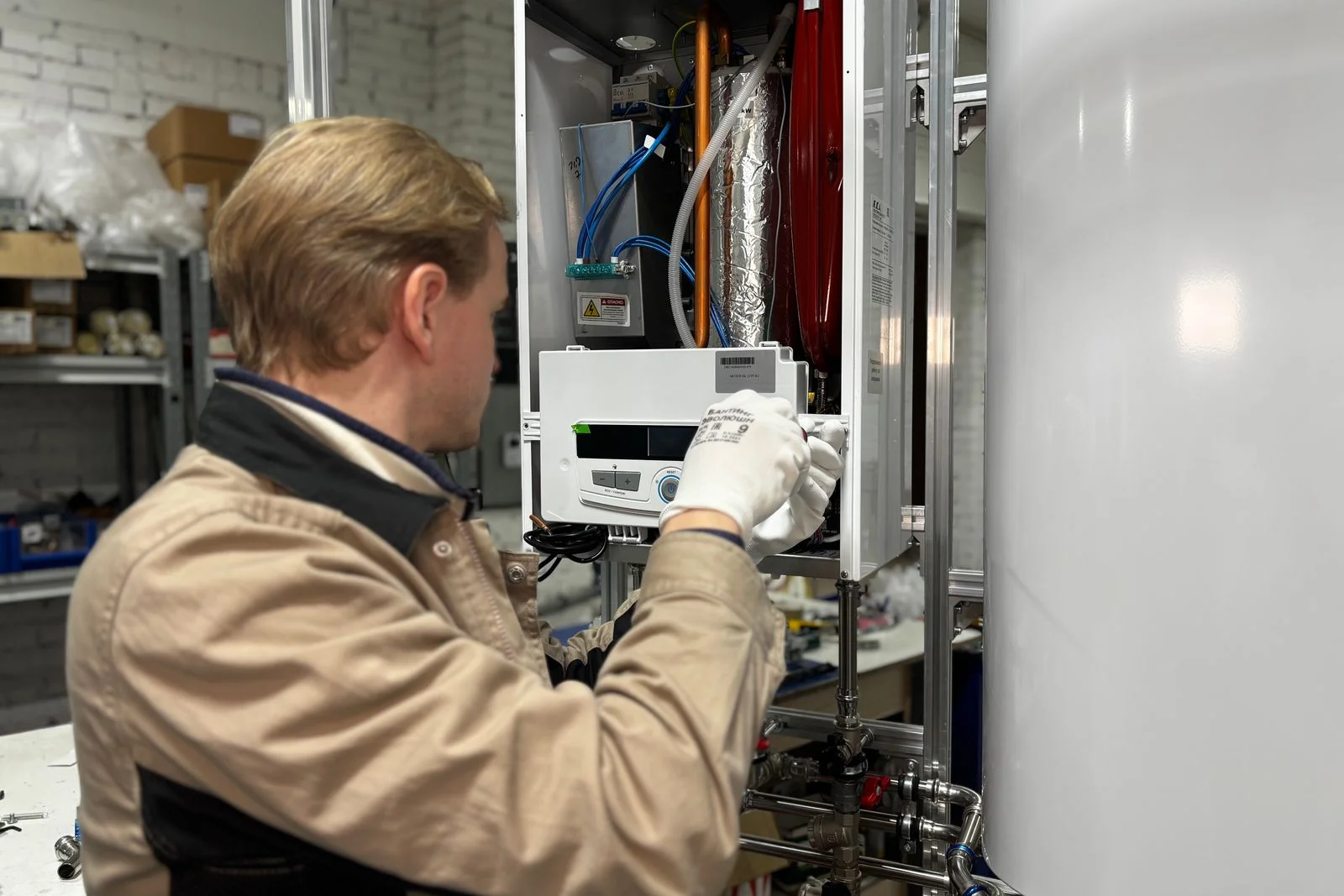
No hot water this morning?
We answer at 3am
Nights and weekends cost the same
Water Heater Repair, Replacement and Installation
Almost every water heater call starts the same way, with somebody standing in a cooling shower wondering whether this is a small problem or a two-thousand-dollar one. The honest answer is that it is usually one of about six things, and only two of them mean the heater has to go. A thermostat, a heating element, a thermocouple or a gas valve are all parts, and parts are a morning's work. A tank that has rusted through from the inside is not a repair at any price.
So that is the order we work in. We find out which of the six it is, tell you what the repair would cost and what a replacement would cost, and let you pick with both numbers in front of you. Nobody gets talked into changing out a water heater that had four good years left in it, and nobody gets sold a heating element for a cylinder that is going to weep through the floor by Christmas.
We cover hot water heater repair, replacement and installation across the whole footprint listed on our main services page, with the vans starting the day in Cleveland itself. If the hot water is gone right now, call. If it is a planned replacement or an annual service, you can book a visit here instead.
24/7
Live dispatch, weekends and holidays
8–12
Years a storage tank typically lasts
2
Numbers you get: repair it, or replace it
0
Surcharge for nights, Sundays or holidays
The permit and the code work are ours, not yours
The City of Cleveland enforces the 2018 International Plumbing Code, and plumbing takes its own separate permit from the Building Division on 2nd Street NE. We deal with that, and with the expansion tank, pan, drain, shut-off and venting details that a like-for-like swap is supposed to bring up to standard.
Six Jobs That Cover Almost Every Hot Water Call
Whether you searched for water heater repair near me at six in the morning or you have known for a year that the tank is on borrowed time, the work falls into one of these. The dispatcher will ask how old it is, whether it is gas or electric, and what exactly is happening, because those three answers decide what comes off the van.
Water Heater Repair
Elements, thermostats, high-limit switches, thermocouples, gas valves, dip tubes, drain valves and relief valves. Most hot water heater repair calls are one part and an hour, and the van carries the common ones for the makes we see here.
Water Heater Replacement
When the cylinder itself has gone, changing out a water heater is a half-day job done properly: old unit drained and carried out, new one set, piped, strapped, vented and tested, and the packaging taken away rather than left in your garage.
New Water Heater Installation
A first install, a relocation, or a move from one fuel to another. Water heater installation in a new spot means new supply, new drain, new venting and often new electrical, so it is a design job before it is a plumbing one.
Tankless Water Heater Service
Tankless water heater installation, repair and descaling. These units are excellent when they are sized, gassed and vented correctly and thoroughly miserable when they are not, so most of our tankless work is fixing somebody else's shortcut.
Flushing and Annual Maintenance
A hot water heater flush service, an anode rod check, a relief valve test and a look at the expansion tank. It is the cheapest hour anybody spends on a water heater and it is the one almost nobody books until the second time a tank fails early.
Hot Water Boilers and Indirect Tanks
The water side of a hot water boiler: circulators, expansion vessels, pressure relief, indirect cylinders and the pipework that connects them. Where a boiler makes the hot water for the taps as well as the heat, that is plumbing work.
Water spreading across the floor?
Shut the cold supply valve on top of the heater, and on an electric unit switch off its breaker before you go near standing water. Then call. A real dispatcher picks up, walks you through making it safe, and gives you a straight arrival window rather than a comforting one. The rate at two in the morning is the rate at two in the afternoon.
Four Choices, and What Each One Really Asks of Your House
There is a local wrinkle worth knowing before you read any of this. Cleveland Utilities sells you electricity, water and wastewater but not gas — natural gas here comes from Chattanooga Gas, a separate company serving roughly sixty-six thousand customers across Hamilton and Bradley counties. So "should I switch to gas" is partly a question about whether there is a gas main in your street at all, and that is the first thing we check.
Gas storage tank — the default, and usually the right one
A forty or fifty gallon gas tank recovers quickly, keeps working when the power goes out, and costs the least to put in. In the gas versus electric water heater argument it wins on running cost for most households here and loses on efficiency compared with a heat pump. The things that actually go wrong are the thermocouple, the gas valve and the venting, and the venting is the one nobody checks. If the flue is shared with anything else, it needs looking at every time either appliance changes.
Electric storage tank — simplest, and about to change
No flue, no gas line, two heating elements and two thermostats, and it will go almost anywhere there is a 240-volt circuit and a drain. Recovery is slower, so sizing matters more. Worth knowing: the Department of Energy finalised new standards in 2024 under which the most common sizes of electric storage heater will have to reach the efficiency of an entry-level heat pump model, with compliance required from 2029. That is a rule about what manufacturers may build, not about your existing heater, and it does not oblige anybody to replace anything. It does mean a heat pump unit is worth pricing now rather than being surprised by it later.
Gas tankless — the version that genuinely works
If you are weighing a tankless gas water heater vs electric, gas is the one that heats a whole house without an argument. The catch is that a tankless burner is several times the size of a tank burner, so the gas line and often the meter have to be capable of feeding it, and the old chimney is not its vent — it needs its own sealed venting. Both are ordinary work when they are priced in at the start. Both are a nasty surprise when somebody quoted you for the box on the wall and nothing else.
Electric tankless — read the amperage first
Are electric tankless water heaters good? At a single sink, yes, and they are a tidy answer for a workshop or a far-away bathroom. For a whole house, do the arithmetic before you fall in love with one. A 27 kilowatt whole-house unit on 240 volts draws 112.5 amps, typically across three separate circuits and six slots in the panel, which is more than half of a 200-amp service before the air conditioning wakes up. Plenty of houses here simply cannot feed one without a service upgrade, and that upgrade usually costs more than the difference between electric and gas ever saves.
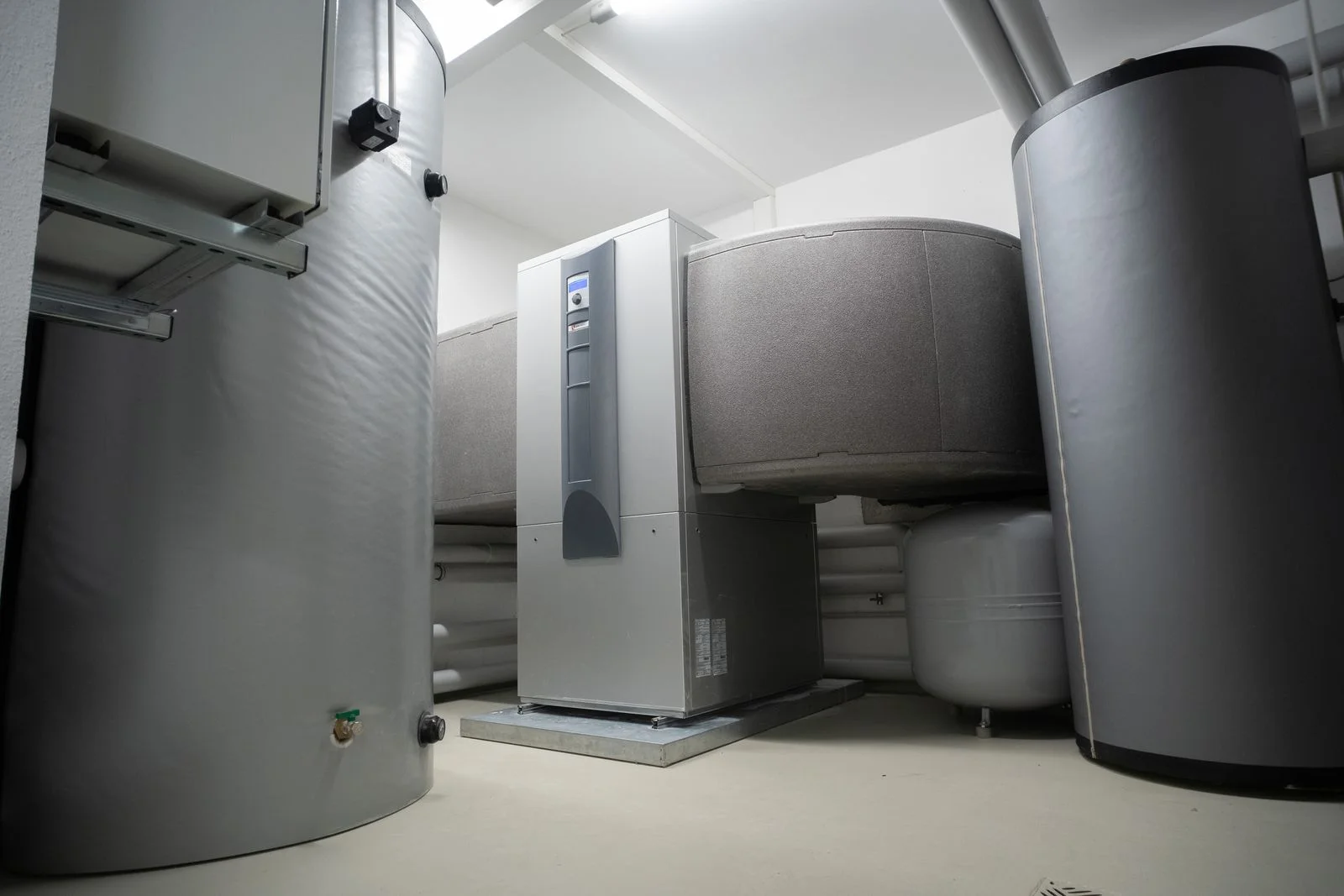
Sizing is done on temperature rise, not on a headline number
The flow rate printed on the box assumes a certain rise between incoming and outgoing water. Mains water arriving in February is a good deal colder than the same water in August, so the honest figure for a Tennessee winter is lower than the brochure figure. We size for the cold month, not the warm one.
Tankless Water Heater Installation, Repair and Descaling
A tankless unit makes hot water on demand rather than keeping forty gallons warm around the clock, which is why it uses less energy and why it can run a bath for as long as you like. It also asks more of the house. Tankless water heater installation in Cleveland TN is a gas sizing job, a venting job and a condensate job before it is a plumbing one, and the units that disappoint people are almost always the ones where two of those three were treated as optional.
The other half of our tankless work is service. These are heat exchangers with narrow waterways, so scale matters far more to them than it does to a tank, and a unit that has never been descaled will start short-cycling, throwing error codes and running warm instead of hot. Tankless water heater repair in Cleveland TN is very often nothing more than a proper descale, a cleaned inlet screen and a flame sensor wiped down.
What a tankless visit covers
- Sizing for winter rise
- Gas line and meter capacity
- Sealed venting
- Condensate drainage
- Service valves fitted
- Annual descaling
- Error code diagnosis
- Point-of-use units
Valved
Service valves on every install, so descaling never means cutting pipe
Sized
Fixture count and winter rise worked out before a model is chosen
Honest
We will tell you when a tank is the better answer for your house
The Flush Service That Decides Whether You Get Eight Years or Fifteen
Everything that comes out of a tap arrives with a little mineral in it, and inside a storage heater that mineral settles out and stays. On a gas unit it builds up on the bottom of the tank, directly between the burner flame and the water it is supposed to be heating, so the burner runs longer and the steel underneath it runs hotter than it was meant to. On an electric unit it slowly buries the lower element until that element is heating sludge instead of water. Either way you get less hot water, a higher bill and a tank that ages faster than the one next door.
A proper water heater flushing service is more than opening the drain valve for a minute. We shut off the fuel or the breaker, let the temperature drop, drain and agitate until the water runs clear rather than until it runs, and then check the three things that actually determine the life of the tank while we are standing there.
The first is the anode rod, a sacrificial length of magnesium or aluminium whose entire job is to corrode so that the steel tank does not. Once it has been eaten away the tank starts being the sacrifice instead, and that is the point at which a heater quietly begins counting down. The second is the temperature and pressure relief valve, which nobody thinks about until it is the only thing standing between a tank and a serious accident. The third is the expansion tank, if there is one.
If the relief valve keeps dripping, the heater is not the problem
Water expands when it is heated, and it has to go somewhere. Where the cold supply passes through a check valve, a pressure reducing valve or a backflow preventer, the house becomes a closed system and the plumbing code calls for a thermal expansion control device on the cold side downstream of it. A relief valve that weeps every time the burner runs is very often a missing or waterlogged expansion tank being blamed on the heater.
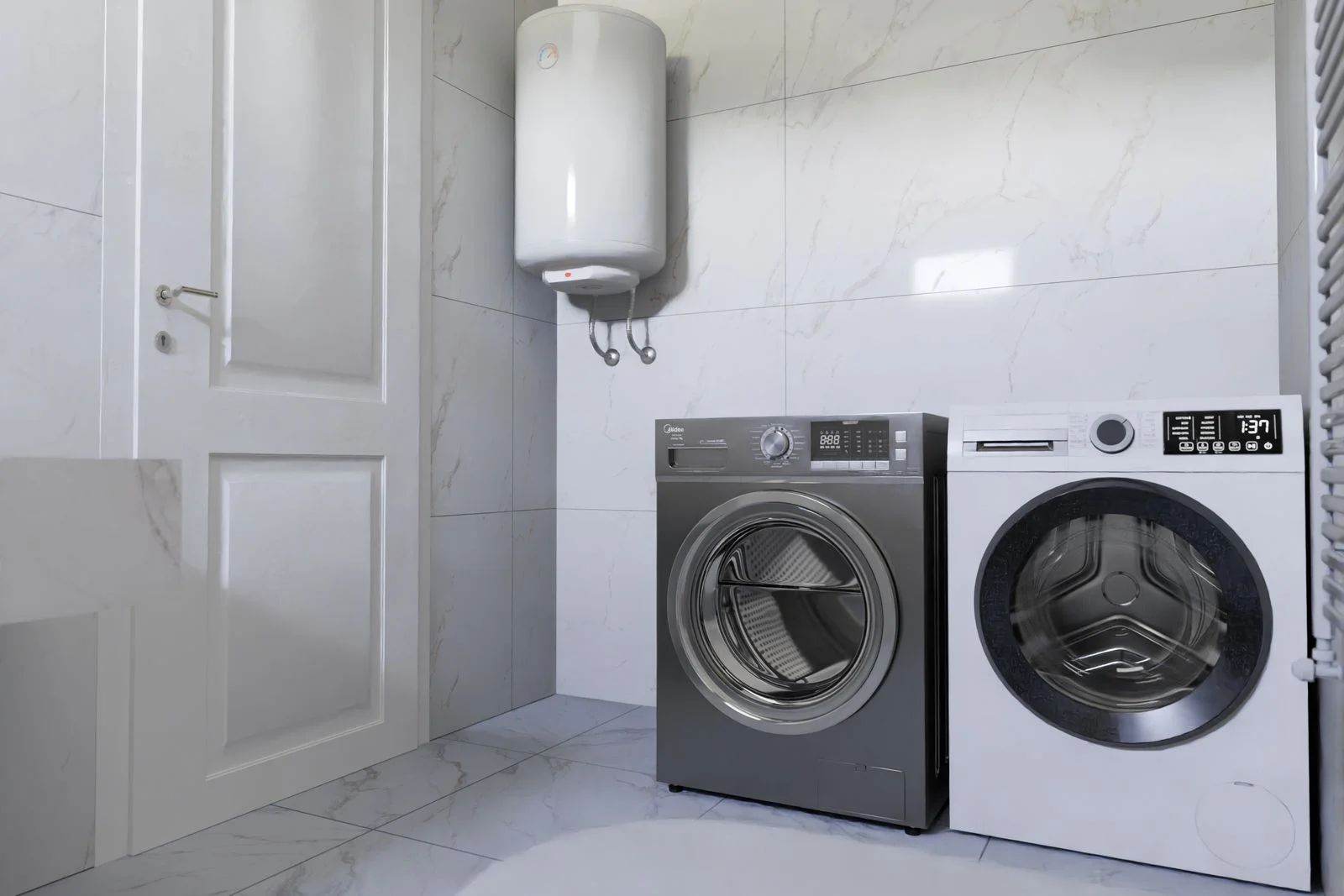
Once a year
The usual interval for a storage tank flush and check
Anode rod
The cheap part that decides how long the expensive part lasts
Electric Water Heater Troubleshooting You Can Do Safely
A fair number of no-hot-water calls end with a breaker or a reset button, and we would rather you found that out for free than paid somebody to press it. Work down this list in order. Everything on it is safe from outside the heater; nothing on it asks you to open anything live.
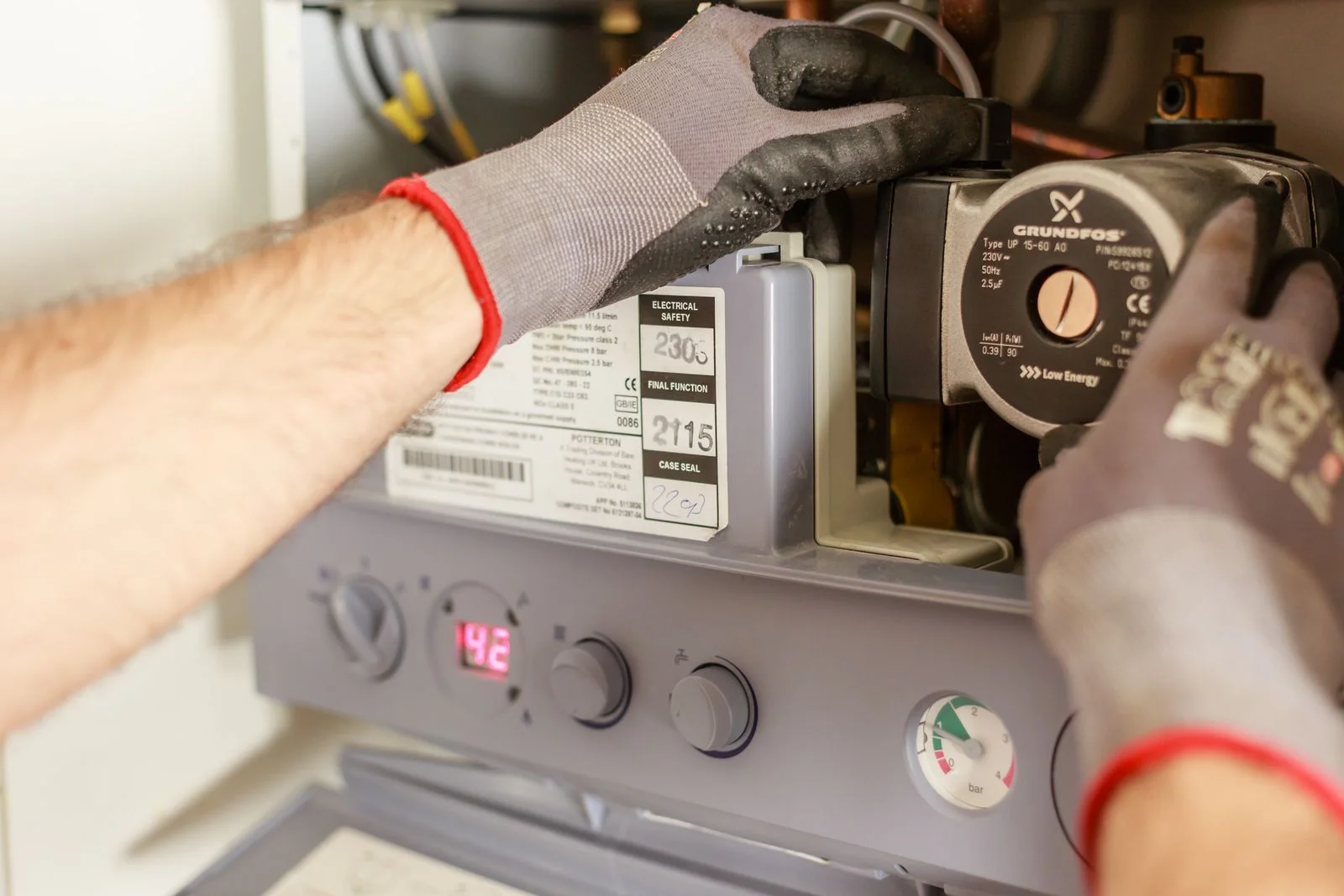
-
1
Work out which of the three symptoms you have
No hot water at all, hot water that runs out far too quickly, or water that is warm but never properly hot. Those three point in completely different directions, and telling the dispatcher which one it is saves a visit more often than any other single thing on this page. Warm-but-never-hot on an electric heater is very nearly a diagnosis on its own.
-
2
Check the breaker, properly
A water heater breaker that has tripped does not always sit obviously out of line. Push it firmly off and then back on rather than nudging it. If it trips again straight away, stop there and call — a breaker that will not stay in is telling you something is wrong on the heater side, and repeatedly resetting it is how a small fault becomes a burnt one.
-
3
Find the reset button on an electric unit
Behind the upper access panel there is a small red button, the high-limit cut-out. It trips when the water gets too hot and it is the single most common reason an electric heater goes stone cold overnight. Pressing it is safe. Having to press it twice is not — that means a thermostat or an element is failing, and it needs a technician rather than another press.
-
4
On a gas heater, look through the sight glass
Most modern gas heaters have a small window near the bottom and a status light that blinks a code. Note the pattern of the blinks and read what it means on the label before you touch anything. If you can smell gas, do not go looking for anything at all — leave the building, then call the gas company and us from outside.
-
5
Find out where the water is actually coming from
Dry everything, put a sheet of newspaper underneath, and come back in an hour. Water at the fittings on top, at the drain valve, or running down from the relief valve pipe is a part, and parts are repairable. A water heater leaking from the bottom with nothing wet above it is the tank itself, and no amount of sealant changes that. Either way, shut the cold valve on top of the heater first.
Please do not turn the thermostat up to compensate
When the hot water starts running short, the instinct is to wind the dial up, and it does work for a week or two. What it also does is put water hot enough to scald at every tap in the house, including the one a child reaches, and push a tank that is already struggling harder still. If the same setting used to be plenty and no longer is, something has changed inside the heater — usually sediment or a failing element — and raising the temperature is treating the symptom while making the risk worse. Leave it where it was and let us find out what changed.
Where a Plumber Stops and a Heating Contractor Starts
People searching for boiler installation near me in this part of Tennessee are usually asking one of two quite different questions, and it is worth separating them, because the answer to one of them is genuinely not us.
The water side of a hot water boiler
Circulators, expansion vessels, fill valves, pressure relief, air separators, indirect cylinders and all the pipework between them. Where a boiler also makes the domestic hot water, that is our work and we are happy to take it on.
Indirect and combination cylinders
An indirect tank heated by a boiler behaves nothing like a standalone heater when it goes wrong, and it is routinely misdiagnosed. If yours gives heat but no hot water, or the reverse, that split is usually the first clue.
The orphaned water heater
This one catches people out every winter. Replace an old furnace with a high-efficiency model that vents out through the wall in plastic, and the gas water heater that used to share the chimney with it is now alone in a flue sized for two appliances.
We do not do furnace installation, and we will tell you so
Searches for furnace installation in Cleveland TN and for heating installation services land on plumbing websites all the time, and plenty of those websites quietly take the booking. We would rather be straight with you: forced-air furnaces, air conditioning and ductwork are a mechanical contractor's trade, not ours, and we are not going to pretend otherwise to win a job. What we will do is take on the hot water side of a heating system, sort out the venting problem a furnace replacement leaves behind, and tell you honestly when the person you need is somebody else.
Why the orphaned flue matters
A chimney drafts on heat. Sized for a furnace and a water heater together, then left with only the water heater's small burner, it can draft too weakly to carry the combustion gases up and out. That means condensation inside the flue and, in the worst case, exhaust spilling back into the room.
The answer is usually a correctly sized liner, or moving the heater to a power-vented or sealed-combustion model. Cleveland has adopted the fuel gas code including its venting sizing appendix, so there is a right answer here rather than an opinion. If a furnace has been changed in your house and nobody mentioned the water heater, it is worth a look.
Water Heater Replacement Near You, Across Six Towns
Cleveland is home and where the vans start, but the same rate and the same stock reach every town below. Each has its own page, because what supplies the house genuinely changes the job — a street with a gas main and a street without one lead to two different conversations about the same broken heater.
Cleveland, TN
City water and power, gas on many streets, and the bulk of our heater work.
Cleveland plumberMcDonald, TN
Rural properties where propane and electric are the realistic choices.
McDonald plumberAthens, TN
McMinn County, where the utility board sells the gas as well as the power.
Athens plumberOoltewah, TN
Hamilton County, newer houses, and a lot of heaters reaching warranty age together.
Ooltewah plumberCharleston, TN
Low ground on the Hiwassee, where a heater in a basement needs a pan and a plan.
Charleston plumberDayton, TN
Rhea County, a city-run utility, and vacant properties that need winterizing.
Dayton plumberNot certain you are inside that footprint? Give us the address. Nobody is charged for asking, and we would rather tell you honestly that somebody else is closer than take a booking we cannot reach quickly.
What a Water Heater Company Should Do, and Usually Does Not
Both numbers, every time
The cost to repair and the cost to replace, side by side, before you decide. A technician who only ever quotes one of them is not giving you a choice.
Licensed, bonded and insured
Tennessee-licensed plumbers and background-checked technicians. Installing a water heater is exactly the work a plumbing licence exists to cover.
Permit pulled, code work included
Expansion control, relief discharge, pan and drain, seismic strapping and venting are part of the quoted job, not extras discovered halfway through.
A real person, at any hour
Not an answering service taking a message for the morning. Somebody who can tell you which valve to shut while a van is on its way.
The old one leaves with us
Floor protection down, the old heater carried out and taken away, and the packaging with it. Nothing is left propped against the side of the house.
We say when it is not our job
Furnaces, ducts and air conditioning belong to another trade. Telling you that costs us a booking and keeps you out of trouble.
Lifespan, Fuel, Flushing and What Changes the Price
The five questions people actually ask before they book, answered at the length they deserve rather than in one reassuring line.
Ask us directly
01
How long does a water heater last, and when should I stop repairing it?
Eight to twelve years is the usual working life of a storage tank, and the spread inside that range is almost entirely down to maintenance rather than to brand. The part that decides it is the anode rod, a sacrificial length of metal whose whole purpose is to corrode so the steel tank does not. Once it is gone the tank starts being the sacrifice, and sediment left sitting on the bottom year after year makes that happen faster. A heater that has been flushed annually and had its rod replaced when it needed it can comfortably outlive the one next door that was never touched. As for when to stop repairing, we use three tests. Is it more than about ten years old, is the repair a meaningful fraction of a new installation, and is this the second or third fault in a short space of time? One yes is usually still worth repairing. Two is a conversation. Three, and you are paying to keep a tank alive that is going to let go anyway, probably at an inconvenient hour. The exception that needs no arithmetic is a tank that is weeping from underneath: nobody repairs that, at any age.
02
Why is my water heater not heating, and what can I check myself?
Start by working out which of three things is actually happening, because they point in different directions. No hot water at all usually means the heater has lost power or fuel, or has shut itself down on a safety device. Hot water that runs out far sooner than it used to normally means sediment has taken up part of the tank, or on an electric unit that one of the two elements has failed and only the other is working. Water that is warm but never properly hot is the classic signature of a failed upper element or a thermostat that has drifted. The two checks worth doing yourself on an electric heater are the breaker and the red reset button behind the upper access panel, which is the high-limit cut-out and is by some distance the most common reason one goes cold overnight. Press it once. If it trips again, that is a fault rather than a glitch and it needs a technician, not another press. On a gas heater, read the status light through the sight glass and note the blink pattern before touching anything, and if you can smell gas at any point, leave the building first and make both calls from outside.
03
Tankless hot water heater, gas or electric — and are electric tankless water heaters good?
For a whole house, gas, in almost every case. Electric tankless units are genuinely good at what they are designed for, which is one fixture or a small run a long way from the heater, and they are a neat answer for a workshop sink or a bathroom over the garage. Asking one to supply a family is where the trouble starts, and the reason is electrical rather than anything to do with hot water. A 27 kilowatt whole-house electric unit on 240 volts draws 112.5 amps, usually split across three separate circuits taking six slots in the panel. That is more than half the capacity of a 200-amp service before the air conditioning, the range or the dryer has asked for anything, and a great many houses around here are not on 200 amps to begin with. Once a service upgrade goes into the quote, the sums almost never work. Gas tankless has its own conditions and they are fairer ones: the burner is much larger than a tank burner, so the gas line and sometimes the meter need to be able to feed it, and it needs its own sealed vent rather than the old chimney. Both are routine when they are priced at the start. The one thing we would say about either is that if your household rarely runs out of hot water now, tankless is being sold to you on efficiency rather than on solving a problem you have.
04
How often should you flush a water heater, and is a flush service worth paying for?
Once a year for a storage tank is the sensible default, and more often if you have noticed rumbling or popping noises when the burner runs, which is the sound of water boiling in pockets underneath a layer of sediment. A tankless unit is a different exercise and wants descaling rather than flushing, again roughly annually, because its heat exchanger has narrow waterways where even a thin layer of scale costs real performance. Whether it is worth paying for depends on what you mean by a flush. If it means opening the drain valve for two minutes and letting some water out, honestly no, and you can do that yourself. What we would charge for is the version that matters: fuel or power off, the tank allowed to cool, drained and agitated until the water runs clear rather than merely runs, then the anode rod pulled and inspected, the relief valve tested, the expansion tank checked for a lost charge, and the burner or elements looked over while everything is accessible. That hour is the difference between a heater that reaches eight years and one that reaches fifteen, and it is the cheapest thing on this page by a wide margin.
05
What does a water heater replacement cost depend on?
Five things, and anybody who quotes a water heater replacement over the phone without asking about them is guessing. First, what you are putting in: a like-for-like electric tank is the low end, a heat pump unit or a tankless installation the high one. Second, whether the fuel stays the same, because moving between electric and gas means new supply, new venting and a new circuit or a new gas run rather than a swap. Third, where it lives. A heater in an open garage is a straightforward morning; one in a closet, an attic or a crawl space costs more in labour before anybody has bought a part. Fourth, what the current installation is missing, since a replacement is expected to bring the job up to the code in force rather than to reproduce whatever was there, and that commonly means an expansion tank, a proper relief discharge, a pan and drain, or venting that was never right. Fifth, the permit, because plumbing work takes its own permit from the City of Cleveland Building Division and a contractor who does not mention one is telling you something. We give you the number in writing, with those items listed rather than bundled, and it does not change because the job turned out to be awkward.
Need a Water Heater Repaired or Replaced Today?
One number reaches a water heater plumber in Cleveland TN at any hour, any day of the year. No answering service, no callback queue, and no surcharge because it happens to be a Sunday — just somebody who can tell you which valve to shut while the van is on its way.