
Sewer Line Services in Cleveland, TN —
Scoped and Located Before Anyone Digs
The main sewer line is the one pipe in the building with nothing to fall back on. When it fails, every fixture in the house fails with it. We put a camera down it first, mark on the ground exactly where the trouble is and how deep, and then give you all three honest answers side by side — repair the one section, line the old pipe, or replace it. Nobody breaks ground on a guess.
- Camera and locate before a quote
- Repair, lining and replacement priced together
- Permits pulled and utilities located
- No after-hours surcharge
Backing up again?
We answer at 3am
Nights and weekends cost the same
Every Drain in the Building Ends Up in One Pipe
Sinks, tubs, showers, laundry and toilets all run into branch lines, those branch lines meet, and what leaves the building is a single pipe running out under the yard to the public main. That pipe is the main sewer line, and it is the only part of your plumbing with no alternative route. A branch line going wrong is an inconvenience in one room. This one going wrong takes the whole house out at once.
It is also the part nobody inspects. It is buried, it has no moving parts, and for decades it asks nothing of you. Then roots find a joint, or the ground settles and puts a dip in the run, or a length of old pipe finally gives way, and the first warning most people get is waste water arriving at the lowest opening in the house. What this page is about is the pipe itself — fixing sewer line faults, lining them and replacing them — rather than the stoppages that happen inside a healthy one.
That distinction decides which of us you need. If a line is stopped, gets cleared and then behaves itself for years, that was drain cleaning work rather than a sewer line repair, and it lives on our drain page. Sewer line work starts where cleaning stops holding: a line that blocks again on the same schedule, or a camera that comes back showing a crack, an open joint, a dip full of standing water or a root mass. Sewer line services are one of the seven things we do on our main services page, and the vans start the day in Cleveland itself.
24/7
Live dispatch, weekends and holidays
3
Options priced together: repair, line it, replace it
0
Surcharge for nights, Sundays or holidays
6
Towns covered at the same rate
Sewer lines almost never fail without warning
They give months of notice and the notice is easy to misread, because each individual episode looks like an ordinary stoppage. The pattern is the signal, not the event. If somebody has cleared the same line for you more than once in a year, the pipe is telling you something about itself and it is worth putting a camera down before the next one arrives at three in the morning.
Six Kinds of Sewer Line Work, and They Are Not Interchangeable
Most people ring us wanting the last one on this list and needing the first. An inspection costs a fraction of a replacement and it is the only thing that tells anybody which of the other five is actually the right job. We would rather sell you the small one and be right.
Sewer Line Inspection
A self-levelling camera pushed the length of the line, with the trouble marked on the ground above and its depth written down. Sewer line inspection is where every other job on this list begins, and it is the one we recommend to buyers before they close on a house.
Sewer Line Repair
A point repair on a sound line with one bad spot: a cracked length, an open or dropped joint, a crushed section where something heavy crossed it. Main sewer line repair in Cleveland TN is very often a few feet of pipe rather than the whole run, and we will say so when it is.
Sewer Pipe Relining
A resin-saturated liner drawn through the old pipe and cured hard, so a new jointless pipe forms inside the failing one. Sewer pipe relining leaves the driveway, the trees and the lawn where they are — when the host pipe is in good enough shape to take it, which is the whole question.
Sewer Line Replacement
When the old pipe is past saving, a new line goes in — either open cut, or pulled through by bursting the old one apart underground so the yard stays largely intact. Sewer line replacement in Cleveland TN is the answer for lines that have caved in, lost their fall or run out of life.
Roots, and Keeping Them Out
Cutting a root mass out restores the flow and does nothing about the opening that let it in, so it grows back. We cut, then camera the spot the roots came through, and deal with that joint. Anything else is a subscription rather than a repair, and we will tell you which one you are buying.
Cleanouts, Valves and Connections
An outside cleanout so nobody ever has to work through the house again, a backwater valve where fixtures sit low enough to be at risk, and new sewer connection work in Cleveland TN when a property is being tied into the public main for the first time.
Stop sending water down it, then call
If waste water is coming up at the lowest opening in the building, the line out is stopped and everything anybody runs upstairs is arriving on your floor. Stop using water completely — including the washing machine and the dishwasher, which will carry on by themselves if you let them. Keep people off the affected floor. Then ring us. A real dispatcher picks up, at any hour, and the rate at two in the morning is the rate at two in the afternoon.
How to Know If a Sewer Line Needs Replacement
No single one of these proves anything on its own. What matters is the pattern, and the pattern is usually obvious once somebody points it out. Read these four in order: the first is worth more than the other three put together.
It keeps coming back on a schedule
This is the one that actually tells you something. A healthy sewer line that gets blocked by something that should not have gone down it is stopped once, cleared, and then left alone for years. A damaged one goes again, and the interval tends to shorten — eighteen months, then a year, then the following spring. If you can predict roughly when you will next need somebody, the pipe has a defect that is catching material, and clearing it again only buys back the interval. That is the moment to put a camera down rather than a cable.
Several fixtures at once, starting at the lowest one
Run the taps upstairs and watch the ground floor. If flushing a toilet makes a downstairs shower gurgle or brings water up in a basement floor drain, the restriction is downstream of everything and it is on the main line, not in a branch. The lowest opening in the building is always where it shows first, because that is where the water finds its way out. One slow basin on its own, with everything else behaving, is a fixture problem and nothing to do with this page.
The yard tells on it before the house does
Walk the line between the building and the street and look at the ground. A patch of lawn that is greener and coarser than everything around it, a strip that stays soft days after the rain has gone, a shallow dip appearing over a run that used to be level, or a smell outdoors on a still, warm evening. A broken sewer line fertilises and waters the ground above it, and in bad cases it washes soil away and lets the surface settle. If you have mature trees anywhere near that route, treat all of this as significant.
Smells, sounds and visitors indoors
A drain smell that will not go away after the traps have been topped up means sewer gas is getting out somewhere it should not, and a crack in a buried line is one of the places it gets out. Gurgling from a fixture nobody is using is air being dragged back through the water seal. And a sudden interest from insects or rodents in one part of the house is worth taking seriously, because a broken sewer line underneath is a route in. None of these on their own is proof. Two of them together is worth an inspection.
Notice what is not on this list: a single slow drain, a toilet that flushes weakly, or a one-off stoppage after a heavy weekend. Those are ordinary, and they belong with drain cleaning. We would rather send the smaller van and be wrong than sell you a sewer line you did not need. And if what you are seeing is clean water rather than waste — a wet patch with no smell, or a meter that keeps turning with everything in the house shut off — then that is a water line rather than a sewer line, and it belongs with leak detection and repair instead.
A Sewer Line Inspection Is the Cheapest Thing on This Page
It is also the only one that produces facts. A self-levelling camera goes in at the cleanout, is pushed the length of the run, and comes back with a recording of the inside of your pipe from the building to the connection. You watch it with us. What we are reading is the shape of the pipe and the behaviour of the water in it: whether joints are still square, whether roots are through them, whether there is a length holding standing water where the fall has gone, and whether the wall is sound or broken.
The second half matters as much as the first, and plenty of people skip it. The camera head carries a transmitter, and a receiver above ground picks it up, so the trouble gets marked on your lawn with a flag or a spot of paint and its depth written on the report. Without that, a recording tells you something is wrong somewhere out there and nothing about where to dig. With it, a repair becomes a small hole in a known place rather than a trench across the whole yard on a hunch.
People search for sewer line inspection cost expecting one number, and it is a fair question badly served by the trade. What actually moves it is simple: whether there is already a cleanout to get in through, or whether we have to pull a toilet or open the ground to gain access; how long the run is; and whether the line has to be cleared enough for the camera to see anything at all, which on a heavily blocked line is a separate piece of work. Ring and describe the property and we will tell you what applies before anybody comes out.
What the camera settles
- Where the fault is, in feet
- How deep to dig
- What the pipe is made of
- Roots, and which joint
- Standing water and lost fall
- Whether lining is possible
- Where your line meets the main
- Whether it is yours at all
Buying a house in Bradley County? Scope the sewer before you close
A general home inspection does not put a camera in the sewer line, and the sewer line is one of the most expensive single items a house can hand you. On anything built before the modern plastic era, or on any property with mature trees between the building and the street, an inspection before closing is the cheapest insurance available. We will hand you the recording whichever way the sale goes.
See it yourself
You watch the screen with us and keep the recording. Nobody is asked to authorise a repair on the strength of a description.
Marked and measured
Distance from the building, depth below the surface, and a mark on the ground. That is what turns a diagnosis into a price.
Told plainly
Including when the answer is that the pipe is fine and you needed a cleaning after all. That happens, and we say so.
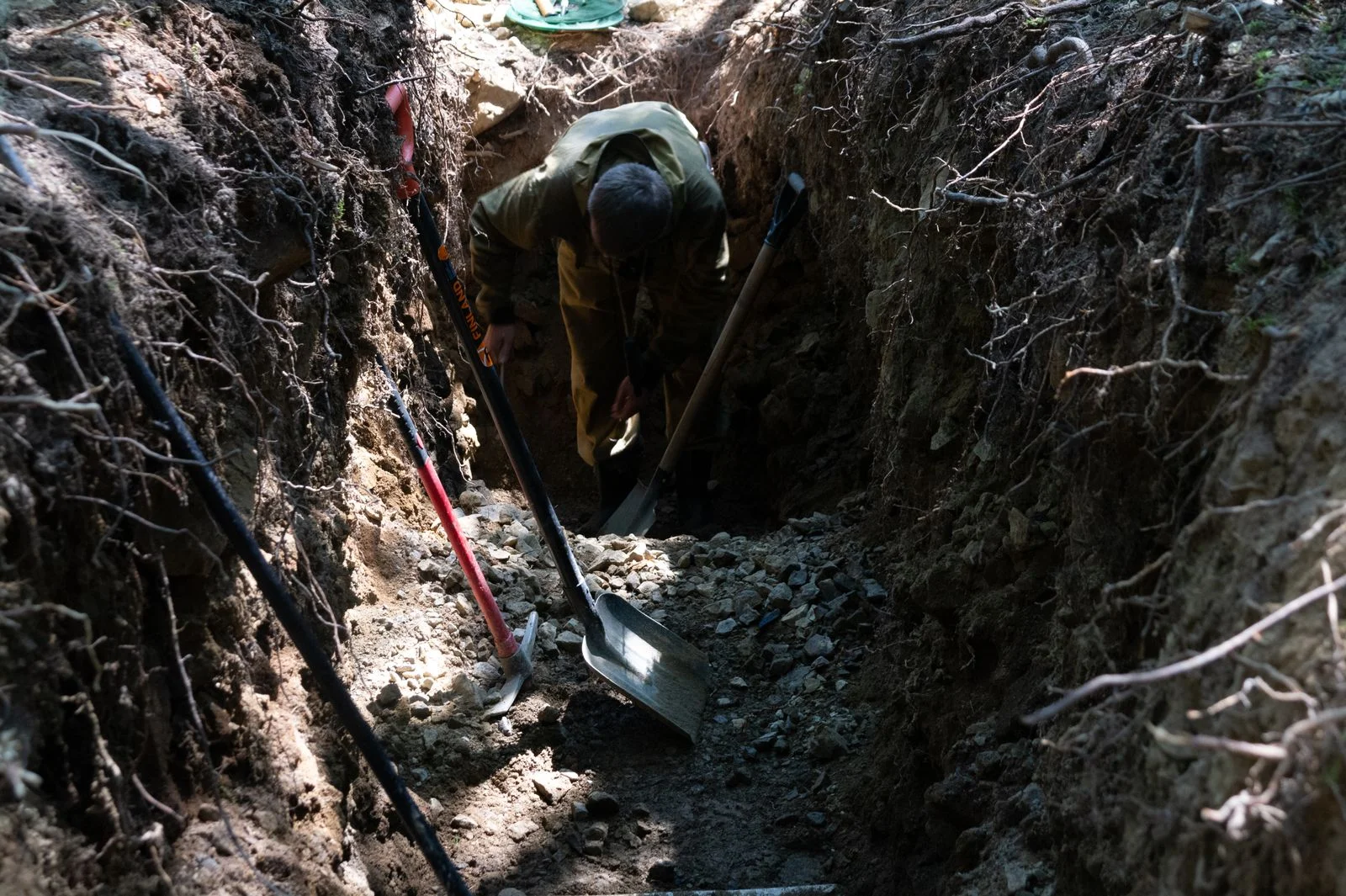
Roots do not break in. They find a gap.
A root cannot get through sound pipe wall. It gets in at a joint that has opened, a crack, or a bad connection, drawn by the moisture and the air. That is why cutting the root mass out is only ever half a repair: the flow comes back the same afternoon and the opening that admitted it is still there. Cut, then look at what the roots came through, then deal with that.
Most Lines Are Sound. It Is Usually a Few Feet of Them That Is Not.
The useful thing about a camera survey is how often it brings good news. A line that has been backing up for two years turns out to have one dropped joint eleven feet out, or a single length crushed where a driveway was widened, with everything either side of it in perfectly serviceable condition. That is a point repair: open a small hole in a known place, cut out the bad section, put in new pipe with proper couplings, bed it, and close the ground.
The faults we repair this way are nearly always one of four. An open or offset joint, where the ground has moved and the two lengths no longer line up, so waste catches on the step and roots have somewhere to enter. A crack or a shear, often where a heavy load crossed the line or where the bedding washed out from under it. A belly, meaning a length that has sagged so the fall is lost and water stands in it permanently. And crushing, which is what eventually happens to thin-walled pipe under a load it was never bedded to carry.
What decides whether a repair is honest is whether the rest of the pipe has life in it. One bad joint in a sound clay or cast iron run is worth repairing and we will happily do it. Half a dozen defects spread along a line that is failing everywhere is a repair you will be paying for again, and in that case we say so and price the replacement instead. That judgement is the whole job, and it is why we will not quote sewer line repair over the telephone.
Joint
Opened or stepped, catching waste and letting roots in. The commonest of all
Belly
A sag that holds water permanently, so solids settle out where they stop
Break
Cracked, sheared or crushed, with soil washing in through the opening
One honest note about bellies, because they get oversold. A shallow dip that holds a little water and has never caused a problem may be worth leaving alone and watching. A dip deep enough that solids settle out of the flow and build up every time the house is used is a real defect and will keep stopping the line. Repairing one means excavating and re-laying that length to the correct fall, so it is worth being certain which of the two you have. The recording answers it.
Get a sewer line repair looked atA New Pipe Formed Inside the Old One, Without Taking the Yard Apart
Sewer pipe relining is the trenchless option, and when a line is a candidate for it the result is genuinely good. A flexible tube saturated with resin is drawn or inverted through the existing pipe, pressed tight against the wall, and cured hard in place. What you end up with is a continuous jointless pipe inside the old one, with no open joints for roots to find and no seams for soil to wash through. The method is old enough to be properly standardised — the American Society for Testing and Materials has covered cured-in-place pipe under ASTM F1216 since 1989, for host pipes from two inches upwards.
The advantage is what does not happen. A driveway is not cut, a mature tree is not taken out, a retaining wall is not disturbed, and a lawn that took years to establish is not replaced with bare clay. On properties where the run passes under something expensive or irreplaceable, lining can cost less all in than a replacement whose real expense is putting the surface back.
The honest part is where it does not apply, and this is what people searching for sewer pipe relining vs replacement most need to hear. A liner takes the shape of what it is cured against. It cannot correct a belly — line a dip and you have a smooth new dip. It cannot restore a run that has lost its fall. It cannot bridge a section that has caved in or gone badly out of line, because there is no continuous host pipe left to line against. And it takes a little diameter out of the bore, which is usually irrelevant on a four-inch line and occasionally is not. Anybody who offers to line your sewer without having watched a camera go down it first is guessing.
- Cracked or root-damaged pipe that still holds its line and fall
- Open joints along an otherwise sound clay or cast iron run
- A route under a driveway, a slab, a wall or mature trees
- Deep lines where open excavation would be the largest cost
- A length that has caved in, so there is nothing to line against
- Joints so badly offset that the bore no longer runs true
- A belly or any length that has lost its fall — lining preserves it
- A line that needs rerouting, resizing or a new connection point
On sewer pipe relining cost, the same rule applies as everywhere else on this page: the length of the run, its diameter, how much preparation the old pipe needs before a liner will go in, and how many branch connections have to be reopened afterwards. A liner seals over every junction it passes, so each one has to be cut back open from the inside. That is ordinary work, but it is work, and it is the item most often left out of a cheap quote.
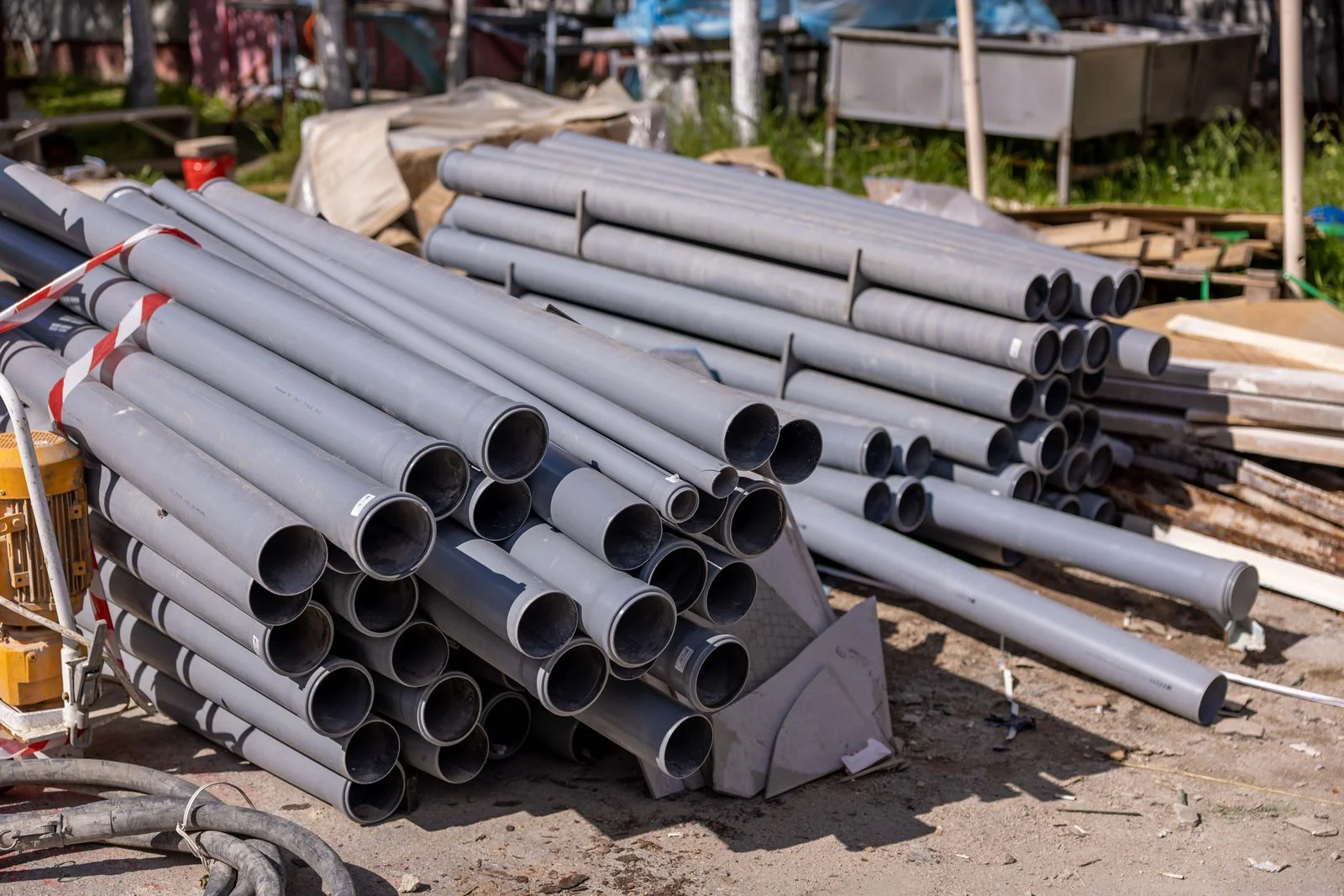
Is the old pipe still the right shape?
Not whether it is damaged — damaged is why you are lining it. Whether it still runs true and still falls the right way. If it does, a liner will give you decades. If it does not, a liner will faithfully reproduce the problem you paid to be rid of, and the money is better spent on new pipe.
When It Is Time to Replace a Sewer Line, and How It Actually Runs
Replacement is right when the pipe has run out of life rather than developed a fault: defects along the whole run, a length that has caved in, fall that has been lost over a long section, or a material that has reached the end of what it was ever going to give. It is also right when a line needs to be rerouted, upsized or reconnected somewhere new, none of which a liner can do.
There are two ways to do it. Open cut is the traditional one: a trench along the route, the old pipe out, new pipe laid on a properly graded gravel bed so it keeps its fall for good, then backfill and restoration. It is direct, it lets us see everything, and its real cost is what is on top of the route. Pipe bursting is the trenchless version. Two modest pits are dug, one at each end, a cable is run through the old line, and a conical head is pulled back through it — splitting the old pipe outward into the surrounding soil while towing a new fused polyethylene pipe into the space behind it. The lawn between the two pits is broadly left alone, and the new pipe arrives in one continuous jointless length with nothing for a root to get into.
Bursting is not universal either. It needs a reasonably straight route, a host pipe that will break apart rather than deform, room for the pits at both ends, and enough clearance from whatever else is buried nearby, because the ground around the old pipe gets displaced. Deciding between the two is the same exercise as everything else here: the recording, the locate, the depth, and what is sitting on the surface above the run.
One thing we will not skip, and neither should anybody you hire. Tennessee law requires notice to Tennessee 811 before earth is disturbed, and member utilities are given three working days to come out and mark what they own. That is not a formality on a sewer replacement, where the route frequently runs near the water service, a gas service and buried electric or communications lines. We place the notice, we wait out the period, and we work to the marks. A crew that offers to start tomorrow morning on a job like this is telling you something about how it will go.
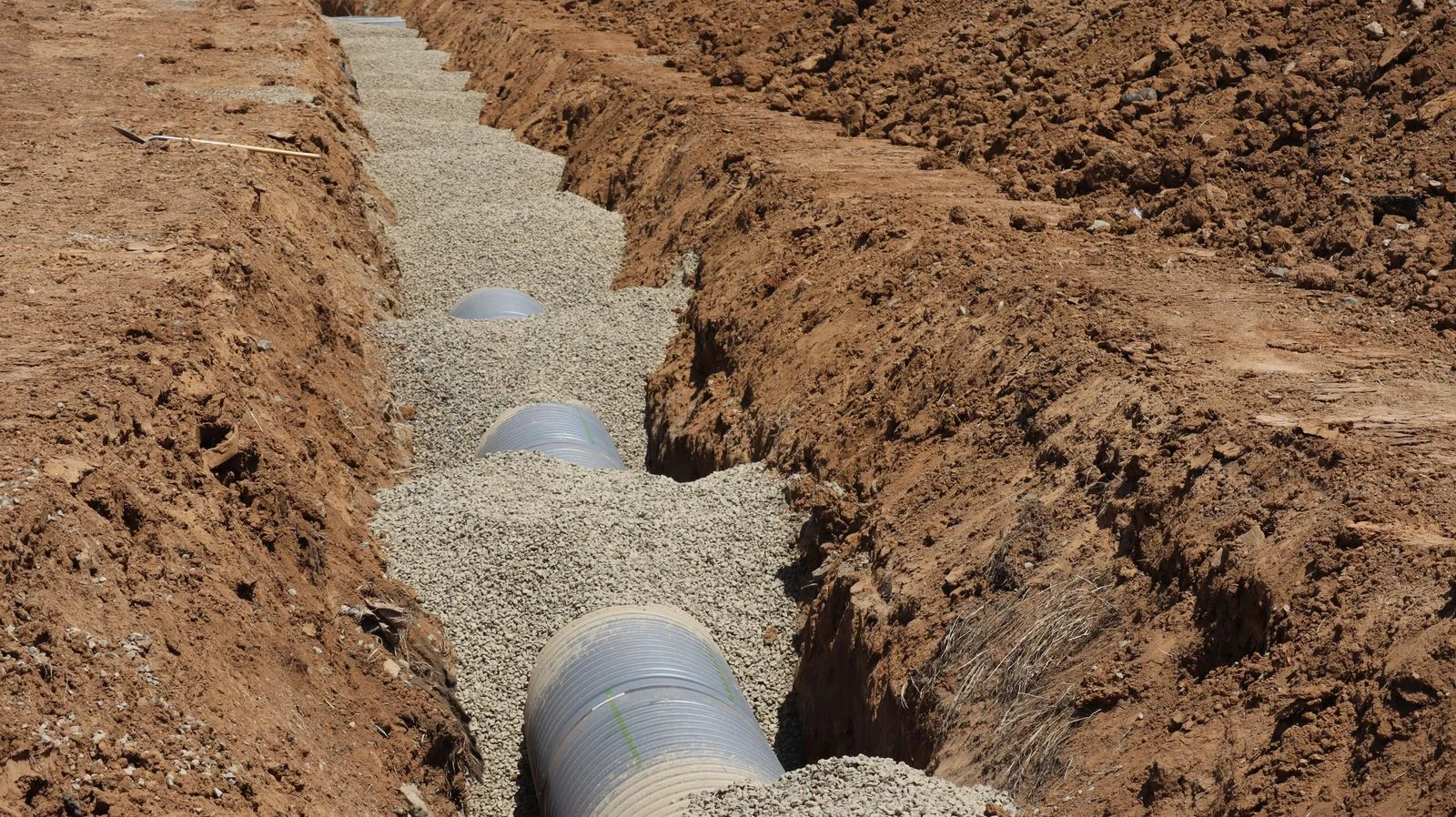
The bedding is not an optional extra
A new sewer line is only as good as what it is laid on. Pipe dropped into a rough trench and covered with the spoil that came out of it will settle unevenly, and an uneven settle is how a brand new line acquires a belly within a few years. Graded bedding under the whole length, haunched at the sides and covered before the spoil goes back, is what makes the difference between a repair and a repeat.
Five Stages, and Only One of Them Is Digging
People ask how long the work takes and are usually surprised by the answer, because the excavation itself is rarely the long part. A located point repair is commonly a single day. A full replacement on an ordinary residential run is often two or three days of work on site. The calendar time is longer than the working time, because of stage two.
Ask what restoration is included
This is where quotes differ most and where the surprises live. Backfilling and grading is one thing. Replacing a section of driveway, reinstating a sidewalk, repairing a lawn or putting back landscaping are all separate questions, and a price that looks better than everybody else's has usually answered them differently. Get it in writing from whoever you use, including us.
-
1
Camera, locate and mark
The survey, the transmitter locate, the depth, and a decision between repair, lining and replacement with all three priced. Usually a single visit, and the only stage that happens before you have committed to anything.
-
2
Permit, and the Tennessee 811 notice
A sewer lateral replacement is exactly the kind of work the local building and codes office expects a permit for, and we pull it. At the same time the 811 notice goes in, and member utilities have three working days to mark their buried services. This stage sets the start date, and it is the reason honest firms cannot begin the day after you ring.
-
3
Open the ground, or set the pits
Either a trench along the route, or the two access pits a bursting pull needs. Turf and topsoil come off and are kept separate from the subsoil, so what goes back on top afterwards is soil rather than clay. On a point repair this is a small hole in a marked place and it is the shortest stage of the five.
-
4
New pipe in, bedded, connected and inspected
The new line laid to a checked fall on graded bedding, tied into the building at one end and the existing connection at the other, with a cleanout put in if there was not one. Then it is inspected before it is covered, because once the ground is back nobody can verify anything.
-
5
Backfill, compact and put the surface back
Backfill in layers and compacted, rather than tipped in and left to find its own level over the next two winters — which is what produces the sunken scar across a lawn that says where somebody's sewer line went. Then the surface is reinstated to whatever was agreed in writing at stage one.
Sewer Line Repair Options, and What Actually Moves the Price
We quote all three so you can see the shape of the decision rather than take our word for it. Below is how we choose, and then the honest answer to the question everybody arrives with, which is what a sewer line repair cost depends on when nobody sensible will quote one over the phone.
Repair the section
Right when the survey shows one defect, or two close together, on a run that is otherwise in good order. Smallest hole, smallest number, least disruption. Wrong when it is being used to postpone a decision that the recording has already made for you.
Best for: one bad joint, a crushed length, a single break
Line the existing pipe
Right when the pipe is damaged along its length but still runs true and still falls correctly, and especially when the route passes under something you would rather not dig up. Wrong when the fall has gone, when a section has caved in, or when the line needs to move.
Best for: roots and open joints under a driveway or trees
Replace the line
Right when the material is finished, the defects are everywhere, the fall has been lost, or the route has to change. The largest job and the one that resets the clock completely, with new pipe, correct fall and a warranty that means something.
Best for: caved-in lines, lost fall, pipe at the end of its life
Because the pipe is the variable
Two houses on the same street, both with a stopped main line, can be a morning's work and a three-day job. Length, depth, material, what is on the surface and whether a machine can reach the route change the answer completely, and none of them can be established over the telephone.
So we do not publish a figure we would have to walk back. What we do instead is put a camera down first, and then give you the repair, the lining and the replacement as three separate written numbers on the same visit, with the reasoning for each. You choose with the same information we have.
Get the three numbersWhat a sewer line repair cost is actually made of
Length of the run
How far the building sits from the connection. A town lot and a property set well back off the road are different jobs before anybody picks up a shovel.
Depth
The single biggest driver on an open cut. A line four feet down and a line nine feet down need different excavation, different shoring and different machines.
What is on top of it
Grass is cheap. A concrete driveway, a paved patio, a sidewalk, a retaining wall or a tree you want to keep are the reason trenchless methods exist at all.
Access for a machine
A route a small excavator can reach is one price. A back garden behind a narrow gate, where the spoil has to be barrowed out, is another one entirely.
Method
Point repair, lining and bursting each carry their own setup. The cheapest method on paper is not always the cheapest job once restoration is counted in.
Permits and restoration
Permit and inspection, plus putting the surface back. If the route crosses into the public right of way, that carries its own requirements and its own paperwork.
One more thing worth knowing about what is under Cleveland. The public mains here are not one material and one age: Cleveland Utilities reports maintaining three hundred and seventy-eight miles of sanitary sewers and eight thousand four hundred and seventy-six manholes, in pipe running from six inches up to fifty-four, in clay, concrete, cast iron, ductile iron, high density polyethylene and PVC. Private lines follow the same pattern, because they were laid in the same decades as the streets they connect to. What your line is made of is one of the first things the camera tells us, and it changes both the method and the number.
Sewer Repair Near You, Across Six Towns
Cleveland is home and where the vans start, but the same rate and the same camera reach every town below. Each has its own page, because what is buried under a street decides a great deal about this particular job — the age of the system, who owns which end of the pipe, and whether there is a public main at that address at all.
Cleveland, TN
City sewer, a century of housing, and most of the lines we camera in a week.
Cleveland plumberMcDonald, TN
Where the line may run to a tank rather than a main, which changes everything.
McDonald plumberAthens, TN
McMinn County, its own utility board, and older laterals under older streets.
Athens plumberOoltewah, TN
Hamilton County sewer, hillside routes, and the question of whether sewer even reaches.
Ooltewah plumberCharleston, TN
Low ground by the Hiwassee, where a buried line sits closer to groundwater.
Charleston plumberDayton, TN
Rhea County, a city-run sewer system, and a rebuilt public network to tie into.
Dayton plumberWhile we are there: a sewer line is rarely the only thing a house wants looking at. We also do drain cleaning, leak detection and repair, water heater services and toilet, faucet and shower repairs. Not certain you are inside that footprint? Give us the address. Nobody is charged for asking.
This Is the Job Where Being Told the Truth Is Worth the Most
The camera goes down first
Every quote on this page follows a survey and a locate. Nobody is asked to authorise excavation on the strength of a guess, and you watch the screen with us.
Three numbers, not one
Repair, lining and replacement priced side by side in writing, with the reasoning for each. Including the times the right answer is the cheapest one on the sheet.
Permits pulled, utilities located
Tennessee-licensed plumbers, the permit taken out through the local codes office, and the 811 notice placed and waited out before a blade touches the ground.
We put the ground back
Topsoil kept separate, backfill compacted in layers, and the restoration agreed in writing before the job starts rather than discussed afterwards.
A real person, at any hour
Sewage in the house is not a Tuesday-morning problem. Somebody picks up at three in the morning and the rate does not change because of the hour.
We say when it is not a sewer line
Plenty of calls that arrive here turn out to be an ordinary stoppage or a single fixture. We tell you, charge for what we did, and send the right van instead.
Repair or Replace, What It Involves, and Whose Pipe It Is
The five questions people actually ask before they book, answered at the length they deserve rather than in one reassuring line.
Ask us directly
01
How do I know if my sewer line needs replacement rather than a repair?
Honestly, you do not, and neither does anybody else until a camera has been down it. What you can judge from inside the house is whether the problem is behaving like a fault or like a failure. A fault is a single event: the line stopped, somebody cleared it, and it then ran properly for years. A failure repeats on a shortening interval, affects several fixtures at once, and shows itself first at the lowest opening in the building. If somebody has cleared the same line for you more than once in a year, that is the point to stop paying for clearances and pay for a survey instead. What the survey then decides is quite simple. One defect, or two close together, on a run that is otherwise sound is a repair, and that is a small hole in a marked place. Defects along the whole length, a section that has caved in, or a run that has lost its fall means the pipe is finished rather than damaged, and replacing it is the cheaper answer over any sensible time frame. There is a third possibility people are rarely offered, which is lining the existing pipe, and it applies when the pipe is damaged but still runs true. We price all three from the same recording so the comparison is yours to make rather than ours to assert.
02
What does a sewer line inspection involve, and what changes the cost?
A self-levelling camera on a push rod goes in, usually at an outside cleanout, and travels the length of the line to the connection while you watch the screen. Two things come out of it. The first is the condition report: the material the pipe is made of, whether the joints are still square, whether roots are through any of them, whether a length is holding standing water because the fall has gone, and whether the wall is sound or broken. The second is a locate, and it is the half people forget to ask for. The camera head carries a transmitter, a receiver above ground follows it, and the trouble gets marked on your lawn with the depth written down. Without that you know something is wrong somewhere; with it, a repair becomes a small hole in a known place. As for what changes the price, it is mostly access. If there is already a cleanout we can get straight in. If there is not, somebody has to pull a toilet or open the ground to find a way in, and that is extra work before the survey even starts. Length of the run matters, and so does whether the line is blocked badly enough that it has to be cleared before a camera can see anything at all, which is a separate job with its own cost. Describe the property when you ring and we will tell you which of those apply to you before anybody drives out.
03
Is sewer pipe relining really as good as a new sewer line?
On the right pipe, yes, and the reason is joints. A cured liner forms one continuous tube inside the old pipe with nothing for a root to get into and no seams for soil to wash through, which removes the two things that kill buried sewer lines. The method is well established rather than novel: cured-in-place pipe has had an American Society for Testing and Materials standard, ASTM F1216, since 1989. On the wrong pipe it is money thrown away, and the distinction is not about how damaged the line is. It is about shape. A liner is cured against whatever it is pressed into, so it copies the geometry it finds. It cannot lift a sagging length back up to grade, it cannot restore fall that has been lost, and it cannot bridge a section that has caved in or gone so far out of line that the bore no longer runs true, because in those places there is nothing continuous left to line against. It also takes a small amount of diameter out, which is almost always irrelevant on a domestic line and occasionally is not. There is one cost item worth asking any contractor about directly: a liner seals over every branch connection it passes, and each one has to be cut back open from the inside afterwards. That work is ordinary and it is also the thing most often missing from a quote that looks unusually good.
04
How long does sewer line repair take, from the call to the grass growing back?
The working time and the calendar time are two different answers, and the gap between them surprises people. A located point repair is commonly a single day on site. A full replacement on an ordinary residential run is often two or three days, and a lining job frequently less than that because there is very little to excavate. What stretches the calendar is the stage before any of it. Tennessee law requires notice to Tennessee 811 before earth is disturbed, and the member utilities are given three working days to come out and mark what they own, so a job that starts the morning after you ring is a job where somebody has skipped that. A permit runs in parallel with it. Put together, that usually means about a week between agreeing the work and the machine arriving, unless raw sewage is actually entering the building, in which case we will make the line safe and usable immediately and let the permanent work follow the proper sequence. The one part nobody can shorten is the ground itself. Backfill compacted in layers settles far less than backfill tipped in, but a trench line shows across a lawn for a season whatever anybody does, and it is worth expecting that rather than being disappointed by it.
05
The break is out in the yard. Is that my sewer line to pay for, or the utility's?
For most properties the general rule is that the public main in the street belongs to the utility and the service line running from the building out to it is the property owner's to maintain, which is why a break in your own yard usually lands on you. Where the two meet is the part worth pinning down, because it is not always where people assume. Cleveland Utilities describes its own wastewater rehabilitation programme as rehabilitating sewer service lines from the sewer main in the street to the customer's property line, alongside point repairs on mains and manhole work, which tells you where that utility draws the boundary in practice. So the length across your own land is almost certainly yours, and the length between your property line and the main in the street may well not be. That is worth establishing before anybody quotes you for the whole run, and it is a question for the utility rather than for us. What we can do is settle the facts it turns on: a camera survey and a locate will tell you exactly how far out the trouble is, how deep, and whether it sits inside your boundary or beyond it. We will give you that in writing whether the answer sends the bill to you or not, because you cannot have a sensible conversation with anybody about a buried pipe until you know where the break is.
Find Out What the Pipe Is Doing Before It Decides for You
One number reaches a sewer specialist in Cleveland TN at any hour, any day of the year. No answering service, no callback queue, and no surcharge because it happens to be a Sunday — just a camera down the line and three honest numbers at the end of it.