
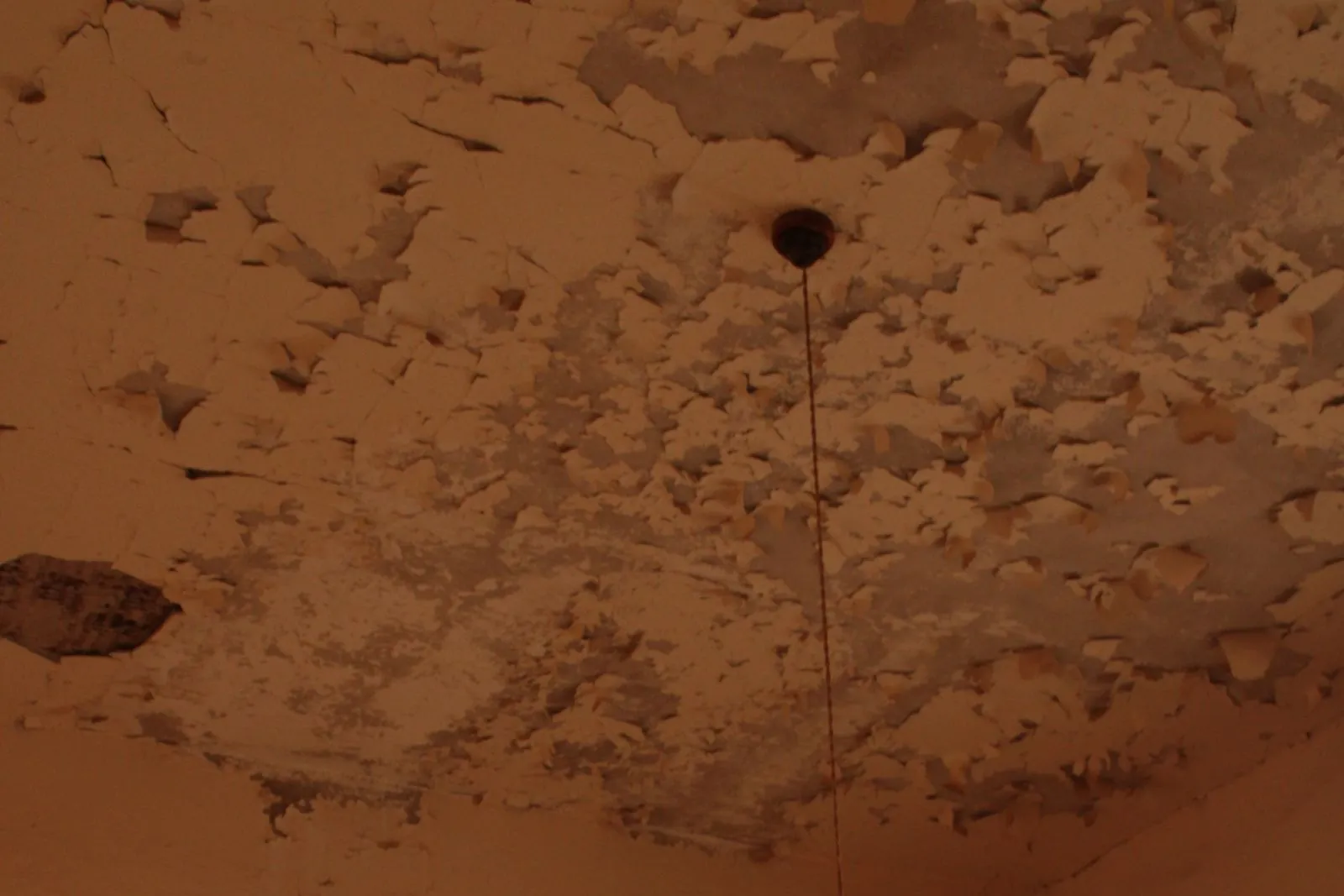
How to Find a Hidden Water Leak in Your House
To find a hidden water leak in your house, turn off every tap and every appliance that uses water, then watch the water meter. If it is still registering use, water is moving somewhere it should not be. Shutting the main valve where the line enters the house and repeating the test tells you whether that water is going somewhere inside or into the ground outside. Those two checks cost nothing and they halve the search. Neither of them tells you which length of pipe has failed.
That last sentence is the one worth holding on to, because it is where most homeowners lose a weekend. There are three separate jobs here and they are easy to run together: confirming that a leak exists, narrowing down roughly where it is, and locating the exact point of failure. A homeowner with no equipment can do the first two properly. The third is a different kind of work, and the honest advice is to stop before you start opening things on a guess.
This article is about finding a leak you cannot see — one behind a wall, under a floor, inside a concrete slab or out in the buried line between the meter and the house. It walks through the warning signs and what else causes each one, the meter test and how to read it on an older dial meter or a modern digital one, the checks that separate an interior leak from an underground leak, what professional plumbing leak detection actually involves, and the point at which carrying on alone starts costing more than it saves.
What Are the Signs of a Hidden Water Leak?
The common hidden water leak signs are a bill that climbs without a change in habits, a meter that keeps moving with the water off, damp or staining on walls and ceilings, a musty smell that keeps returning, a drop in pressure, the sound of water running when the house is quiet, and a patch of yard that stays wet in dry weather.
Every one of those has a duller explanation that is more likely than a leak, which is why the list below pairs each sign with what else it could be. Treat it as a set of things worth checking, not a checklist that adds up to a diagnosis. One sign on its own proves very little. Two or three of them together, pointing at the same part of the house, is worth taking seriously.
A water bill that climbs with no change in habits Sign 01
This is the sign that brings most people to this page, and it is a good one, because a leak runs around the clock and a household does not. A bill that steps up and then stays up — rather than spiking once and settling — is the pattern worth paying attention to. If your sewer charge is calculated from your water use, as it commonly is, a supply leak quietly raises both halves of the bill even though none of that water ever reaches a drain.
What else it could be. A rate change. A longer billing period. House guests, a new appliance, a teenager, filling a pool, a hot dry month with more watering than you remember doing, or an estimated reading on the previous bill that is now being corrected. Compare the same month across two or three years before you conclude anything.
The meter keeps moving with everything turned off Sign 02
This is the only sign on the list that comes close to proof, which is why the meter test gets a section of its own further down. With every tap closed and every water-using appliance idle, the meter should be completely still. Movement means water is passing through it and going somewhere.
What else it could be. Something in the house using water on a timer or a float without anybody touching it: an ice maker refilling, an irrigation controller that was not actually switched off, a water softener running a regeneration cycle, a humidifier, a hot water recirculation pump, or a toilet whose flapper is passing water silently into the bowl. A toilet is the commonest of these by a wide margin and there is a no-cost test for it below.
Damp, staining or peeling paint on a wall or ceiling Sign 03
Water behind a surface shows up as a stain that spreads slowly and comes back after you paint over it, as paint or wallpaper lifting away from the wall, as baseboards that have swollen or separated, or as a patch of drywall that feels soft under light pressure. A stain with a defined darker edge that keeps creeping outward is more interesting than an old mark that never changes.
What else it could be. Roof or flashing failures, a window or door seal, condensation on a cold pipe or a poorly ventilated bathroom, a blocked gutter overflowing against the wall, or a one-off spill from the room above that dried out years ago. A stain that only ever appears after heavy rain is almost certainly not a plumbing leak.
A musty smell that keeps coming back Sign 04
A persistent musty smell in one part of the house, with nothing in sight to explain it, is worth following up because mold needs sustained moisture and sustained moisture usually has a source. The US Environmental Protection Agency’s position is blunt: the key to mold control is moisture control, and cleaning mold without fixing the water problem simply means it returns. The EPA also notes that mold is often concealed, naming the back of drywall, wallpaper and paneling among the places it hides.
What else it could be. A bathroom or laundry room with poor ventilation, a crawl space with no ground cover, damp getting in at ground level, a long-closed cupboard, or something organic nobody has found yet. Smell narrows the room; it does not identify the cause.
Water pressure that has dropped off Sign 05
A leak large enough to matter bleeds pressure away before it reaches the fixture. The useful distinction is where the drop shows up. Pressure that has fallen at every outlet in the house, hot and cold, points at something shared: the incoming service line, the main valve, or a pressure regulator that has failed. Pressure that has only dropped at one tap is almost always that tap.
What else it could be. A clogged aerator or shower head, a partially closed valve, a failing pressure regulator, scale in older galvanized pipe, or work on the utility’s own main. Ask a neighbor whether theirs has changed too — it is a thirty-second check that rules out a surprising number of cases.
The sound of water running when the house is quiet Sign 06
Stand in a silent house late at night, with every tap closed, and listen. A faint continuous hiss, trickle or rushing sound that does not stop is a genuinely useful clue, and it is one of the few that gives you a rough direction to work in. Put an ear against a few walls and the floor in different rooms and see whether it gets louder anywhere.
What else it could be. A toilet refilling, a recirculation pump, a refrigerator or ice maker, an appliance mid-cycle, heating pipes, or a neighbor’s plumbing in a shared wall. Rule out everything that is supposed to make noise before you treat the sound as evidence.
A patch of yard that stays wet or unusually green Sign 07
An area of lawn that stays soft or green when everything around it is dry, a patch that never quite dries out after rain, sunken or eroded ground along the line between the meter and the house, or water seeping to the surface on a slope below it — these are the classic indicators of a buried supply line that has failed. On a driveway or a path, look for a damp strip that outlasts the rest of the surface.
What else it could be. Irrigation, a downspout discharging there, the natural low point of the yard, a septic system, a spring or a high groundwater level, poor drainage, or simply the shaded part of the lawn. A wet patch after three dry weeks is interesting. A wet patch after three days of rain is not.
Floors that are warm, lifting or cupping in one place Sign 08
Wood that has started to cup or lift, tile that has loosened, vinyl that has bubbled, or carpet that is damp with nothing above it, all in one defined area, say that water is reaching the floor from underneath rather than from the room. A patch that is noticeably warm underfoot points at the hot side specifically.
What else it could be. A spill, a pet, a humid room, an appliance that has been weeping quietly behind a kickboard, or underfloor heating. If your house sits on a concrete foundation, the warm-floor pattern in particular is covered properly in our article on the signs of a slab leak, which goes through what separates it from sunlight on a floor and from the duller explanations.
How to Find a Hidden Water Leak in Your House, Step by Step
Work through these in order. The whole sequence takes an afternoon, most of which is waiting, and it needs nothing but a phone camera and some food coloring. Each step says what it can and cannot tell you, because a check you misread is worse than a check you never ran.
-
Read your last few bills before you touch anything Step 1
Lay three or four bills side by side and compare them with the same months a year earlier, not just with last month. You are looking for a step up that has stayed up. Note the actual volume used rather than the amount charged, since rates change and volume does not lie.
What this cannot tell you. Nothing about location, and nothing conclusive about whether a leak exists — only whether something changed and roughly when. If your utility offers an online usage history, that is better than the paper bill, because it may show daily or hourly figures.
-
Shut down every water use in the house, properly Step 2
Every tap closed. Dishwasher and washing machine not mid-cycle. Ice maker switched off at the appliance, not just left alone. Irrigation controller moved to the off position rather than trusted not to be due. Water softener not in a regeneration window. Humidifier off. Hot water recirculation pump off if you have one. Nobody flushing anything.
What this cannot tell you. This step is not a test, it is the preparation for one, and it is the step people skip. An ice maker quietly refilling has ruined more meter tests than every other cause put together.
-
Read the meter, wait two hours, read it again Step 3
Find the meter, photograph every digit on the display, use no water at all for two hours, then photograph it again. The EPA’s WaterSense program recommends exactly this — checking the meter before and after a two-hour window with no water being used — and says that if the reading changes at all, you probably have a leak. Many meters also carry a small low-flow indicator that moves on flows too small to hear; if yours does, watch that too.
What this cannot tell you. Where the leak is. It is a yes-or-no answer about the whole property and nothing more. A very slow leak may not move a low-flow indicator visibly, which is why the photographs matter more than standing there watching.
-
Separate the house from the buried line outside Step 4
Close the main shutoff valve where the service line enters the house, then repeat the meter check. If the meter is still registering use with the house shut off, the water is escaping between the meter and that valve, which means the buried line. If it stops, the leak is somewhere inside.
What this cannot tell you. Anything more precise than “inside” or “outside”. It is still the single most useful piece of information you can hand to a plumber on the phone, and it is the one that most changes what happens next. Only do it if the valve turns freely — an old valve that has seized can be damaged by forcing it, and then you have a second problem.
-
Rule out the toilets, because it is often a toilet Step 5
Put a few drops of food coloring into the tank of each toilet, leave it without flushing, and look in the bowl afterwards. The EPA’s guidance is that color appearing in the bowl within about ten minutes means the toilet is leaking. Flush straight afterwards so the coloring does not stain anything.
What this cannot tell you. Whether that toilet is the only problem. A failed flapper can account for an astonishing share of a bill on its own, and it is an inexpensive part, so it is always worth repairing — but repair it and then run the meter test again rather than assuming you are done.
-
Walk the house and the yard looking for evidence Step 6
Now go looking, with the results above narrowing where you look. Open the cabinet under every sink and feel the back corners and the floor of the cabinet. Look behind and underneath the dishwasher, the washing machine, the refrigerator and the water heater. Check the ceiling below any upstairs bathroom. In a crawl space or basement, look at the ground under the pipework for damp patches that do not match the rest. Outside, walk the line between the meter and the house in bare feet or thin shoes.
What this cannot tell you. Where the water entered the system, as opposed to where it came out. Keep away from anything electrical that is wet, and do not move an appliance you are not confident about moving.
-
Write down everything you found Step 7
Dates and readings from the meter test, the before and after photographs, the result of the house-versus-yard check, which toilets took the dye, where the damp is and whether it changes with the weather, and when each thing started. Photograph the damp with something in the frame for scale and date it.
What this cannot tell you. It is not a diagnosis and should not be presented as one. What it does is turn an hour of a plumber’s time into ten minutes of it, and it stops the search starting from scratch.
How to Check Your Water Meter for a Hidden Leak
The meter is the only thing in this whole process that gives a straight answer, so it is worth doing carefully. It sits in a box at ground level, usually near the street edge of the property. Lift the lid with a screwdriver rather than your fingers and look before you reach in — meter boxes are popular with wasps, spiders and the occasional snake.
Establishing a baseline. Photograph the complete reading, every digit, before you start. Memory and handwriting both introduce errors here and a photograph does not. Then genuinely stop all water use for the two-hour window — see step 2 above for the list of things that use water without anyone asking them to.
Reading what you get. Any change at all over a two-hour window with nothing running means water passed through the meter. A low-flow indicator that turns slowly and never stops means the same thing, sooner. A completely unchanged reading means no leak was running during those two hours, which is not quite the same as no leak at all: an intermittent one, such as a toilet that only passes water after a flush, can sit out a two-hour test. If the symptoms persist and the test comes back clean, run it again overnight.
Older meters, digital meters and smart meters all differ. A traditional dial meter shows a row of digits, a large sweep hand and often a small triangle, star or toothed wheel that is geared to turn on very low flows. The large hand needs real flow to move, so people look at it, see it still, and wrongly conclude there is nothing wrong. A digital meter may show nothing until a flashlight wakes its display or you press the face, and many cycle between a total reading and a flow rate, with some showing a dedicated leak symbol when they detect continuous use. Smart meters record usage at intervals and send it back to the utility, which means the utility is holding a far better record of your water use than you can produce yourself.
One limitation matters more than all the others. The meter tells you that water is moving. It never tells you where. Everything after this point is about narrowing down an area, and there is a floor below which narrowing down by hand stops working. That is the gap professional detection exists to close — the same sequence run with instruments rather than by feel.
How to Find a Water Leak Behind a Wall or Under a Floor
Concealed spaces are where this gets genuinely difficult, for one reason that is worth understanding before you start measuring anything: water does not fall straight down. It runs along the outside of the pipe, then along the top of a joist or the underside of a subfloor, then down whatever it meets first — and it appears at the lowest point it can reach, which can easily be a different room from the failure. The stain on your ceiling marks where the water gave up, not where it got out.
What to look for in concealed spaces, then, is a pattern rather than a point. Damp that is worse at one end of a wall than the other. A baseboard that has swollen along a specific run. A floor that is cold and soft in one strip. Staining that returns in the same shape after decorating. Trim pulling away from the wall. A door that has started sticking in its frame when it never used to. Pair that with what the meter told you about inside versus outside, and whether the damp is on the hot or the cold side of the house.
Do not cut into a wall or a floor to go looking
This is the point at which a cheap problem becomes an expensive one. Behind drywall there is electrical wiring, there are gas lines in many houses, and there are the very pipes you are trying not to damage — and because water travels before it appears, the spot you would choose is usually the wrong one. We are regularly called to houses where two rooms of flooring have already come up, on a guess, and the leak was not there. Finding it afterwards costs the same as it would have cost before; the flooring does not come back.
The same goes outside. Do not break concrete, dig against the foundation or trench along the line of a buried pipe on the strength of a wet patch. Buried utilities are not always where you would expect, and in Tennessee you are required to have underground lines marked before you dig. If you suspect a leak behind a surface, the next step is someone who can narrow it down without opening anything.
Underground Water Leak Detection: Signs to Watch For
An underground leak is a different animal from an interior one, and step 4 above is what separates them. The pipe in question is the service line: the single buried run that carries water from the meter at the street to the point where it enters your house. Everything on your side of the meter is normally your responsibility rather than the utility’s, though exactly where that boundary falls is worth confirming — our leak detection and repair page goes into the ownership question in more detail.
The indicators are different too, because the evidence surfaces in the yard rather than on a wall:
- A soft, spongy or permanently damp strip of lawn, often running in a line rather than a circle.
- Grass that is greener and taller in one band while the rest of the lawn is dry.
- Ground that has sunk, washed out or eroded along the route between meter and house.
- Water seeping out at a lower point, such as the bottom of a slope or the edge of a driveway.
- Pressure that has dropped at every fixture in the house at once, rather than at one of them.
- Dirty or cloudy water after a pressure change, which can mean the line is drawing in ground material.
Every one of those has innocent explanations and they are common ones: irrigation, downspouts, the natural low point of a yard, a septic field, a spring, a high groundwater level after a wet season, or a neighbor’s runoff. Weather is the great confounder here. A patch that is wet in a dry spell is worth investigating; the same patch in a wet week tells you nothing.
How a professional narrows it down. Underground water leak detection generally starts with the same shut-off logic you have already used, then gets more precise with equipment designed for it. Pressurized water escaping from a buried pipe makes a characteristic noise, and ground microphones and electronic listening gear are built to pick that noise up through soil and paving. Where there is enough pipe to work with, correlation equipment listens at two points and uses the difference in arrival time to calculate the position between them. Where the line can be shut off and pressurized separately, a pressure hold confirms whether it is losing water at all before anybody commits to a route. Tracer gas is sometimes introduced into an empty line and detected at the surface where it escapes. Which of these is appropriate depends on the pipe material, the depth, what is on top of the route and how much noise the site is making, and that is a judgment call made on the day rather than a set procedure.
What Tools Are Used for Professional Plumbing Leak Detection?
It is worth knowing roughly what the equipment does, both so the process makes sense and so you can ask sensible questions of whoever you hire. None of these is magic and none of them works everywhere.
Moisture meters Mapping
Pin or pinless instruments that read how much moisture is in a building material. Used to map the wet area across a wall or floor and find where it is wettest, which narrows the search down. They tell you about the surface they are touching, not about the pipe behind it.
Acoustic listening equipment Pinpointing
Amplified ground microphones and contact probes that pick up the sound a pressurized leak makes. This is the main tool for buried lines and for pipework in a slab. It works less well on low pressure, on some plastic pipes, and on a noisy site.
Thermal imaging Narrowing
A camera that renders surface temperature as an image. Water moving where it should not be often shows as a temperature difference, which makes a hot-side leak particularly easy to see. It reads surfaces rather than seeing through them, and underfloor heating, sunlight and ductwork all produce patterns that can be misread.
Pressure testing Confirming
Shutting off a section of pipework, bringing it to a set pressure and watching whether it holds. This is how you prove which section is losing water before anybody opens anything, and it is the step that stops a search becoming guesswork.
Camera inspection Drainage side
A push camera for drains and sewers. Worth naming because a surprising number of suspected supply leaks turn out to be a drainage fault instead, which is sewer line work rather than leak detection. A camera reads the inside of a drain; it is no use on a pressurized supply pipe.
Two things are worth saying plainly about all of this. First, no single tool finds every leak — the reason a detection visit uses several is that each one answers a different question, and two independent methods agreeing is a far better basis for opening a floor than one method on its own. Second, detection does not always mean nothing gets opened. Sometimes a small access point has to be made to confirm a finding. The aim is that it is one small, chosen opening instead of several hopeful ones.
When Should You Call a Professional Plumber?
The rule of thumb is simple. Call when you have evidence of a leak but no safe way left to narrow it down — or when waiting is going to cost more than calling. That is the point at which professional leak detection earns its keep, because it replaces a guess with a finding. In practice that means:
- The meter keeps registering use after you have genuinely stopped all water use.
- The bill has risen and stayed risen with no explanation you can find.
- Damp, staining or a musty smell keeps coming back after you have dealt with it.
- The house-versus-yard check pointed outside, which means a buried line.
- Water is reaching structural material, flooring, insulation or a ceiling.
- The only way left to carry on yourself involves cutting, breaking or digging.
There is also a timing argument that has nothing to do with plumbing. The EPA’s guidance on mold is that water-damaged areas and materials should be dried within 24 to 48 hours, and that if they are, mold growth is unlikely in most cases. A slow leak behind a wall has been wet for far longer than that by the time you notice it, which is why a concealed leak is worth treating as more urgent than its drip rate suggests.
If water has reached anything electrical, that comes first
Water near outlets, switches, a panel, light fittings or an appliance is an electrical hazard before it is a plumbing problem, and it takes priority over everything else on this page. Do not enter the area and do not stand in the water. If you can reach the breaker or disconnect safely from somewhere dry, turn the power off; if you cannot, stay out and call an electrician or your power provider. Do not run extension cords through it and do not use a household vacuum on it.
Shut the water off at the main valve only if the shutoff is somewhere you can reach safely and dry. If you smell gas, or if there is sewage involved, leave the building and call the emergency number for your utility from outside. Once it is safe, we answer day and night on (423) 279-5228.
Common Mistakes to Avoid When Looking for a Hidden Water Leak
Assuming a high bill is always a leak
It is the most common cause of a sustained rise, but it is not the only one. Check the rate, the billing period, whether the previous reading was estimated, and what the weather did. Five minutes with three bills saves a lot of looking.
Running the meter test with something still drawing water
The ice maker, the irrigation controller and the softener are the three that catch people. A test run with any of them live produces a false positive and sends you hunting for a leak that is not there.
Treating one symptom as proof
A single damp patch, a single musty cupboard or a single high bill is a reason to check, not a diagnosis. Anybody who tells you what is wrong from one symptom down the phone is guessing.
Ignoring a small damp patch because it is small
Concealed leaks are usually slow, and slow is exactly what makes them expensive: they have time to soak structure, insulation and flooring before anyone notices. Small and persistent is more concerning than large and occasional.
Opening a wall or a floor at the damp patch
Water travels before it appears, so the damp patch is where it ended up. This is the single most expensive mistake on the list and it is the one we see most often.
Digging along the line of a buried pipe
A wet patch in a lawn is not a position fix, buried utilities are not always where you expect, and lines must be marked before anyone digs. A trench in the wrong place is a yard to put right on top of a repair still to do.
Pouring sealant into the system
Products that claim to seal a leak from the inside can block aerators, valves and appliances, and they do nothing about water already sitting in a structure. They also make the eventual diagnosis harder.
Waiting to see whether it gets worse
It costs money every day on the bill, it is soaking something, and a leak that has been reported late may fall outside what a utility assistance program will consider. Delay is the one decision here with no upside.
How to Help Prevent Hidden Water Leaks
You cannot prevent every hidden leak, and anybody who says otherwise is selling something. Pipes fail because of age, water chemistry, standing pressure, ground movement and simple bad luck, and none of those is fully in your control. What maintenance does is cut down the number of avoidable failures and — more importantly — shorten the time between a leak starting and somebody noticing.
- Read the bill properly each time and look at the volume used, not just the amount owed. This is the single cheapest early-warning system you have.
- Run the two-hour meter test once or twice a year even when nothing seems wrong, and before going away for any length of time.
- Look under the sinks and behind the appliances now and then. Supply connectors, angle stops and appliance hoses are the usual first failures and they are cheap to change.
- Know where your main shutoff is and check that it actually turns, before the night you need it.
- Have standing pressure checked if you have never had it measured. Pressure that sits too high shortens the life of every joint, valve and appliance in the house.
- Maintain appliances to the manufacturer’s instructions, and replace rubber washing machine hoses on schedule rather than when they fail.
- Deal with small things when they are small. A dripping tap, a running toilet or a weeping joint is cheap now and is a habit of ignoring water later.
Frequently Asked Questions About Hidden Water Leaks
How do I find a hidden water leak in my house?
Work in three stages and do not mix them up. First confirm that a leak exists: turn off every tap and every appliance that uses water, including the ice maker and any irrigation controller, then photograph the water meter, use nothing for two hours and photograph it again. Any change means water is moving. Second, narrow it down: close the main valve where the line enters the house and repeat the test. Still moving means the buried line outside; stopped means somewhere inside. Then run a dye test on every toilet, because a failed flapper is the commonest single cause. Third, locate it. That stage needs equipment, and it is where a homeowner should stop, because the usual way of carrying on alone is to open a wall or dig a trench at the damp patch, and the damp patch is almost never above the leak.
What are the first signs of a hidden water leak?
Usually the bill, because a leak runs around the clock and a household does not. The pattern worth noticing is a step up that then stays up, rather than a one-month spike. After that: a meter that keeps moving with everything off, damp or staining that spreads slowly and returns after you paint over it, a musty smell in one part of the house, water pressure that has dropped at every outlet at once, the sound of running water in a silent house, and a patch of yard that stays wet in dry weather. Every one of those has duller explanations that are more likely than a leak, so treat any single one as a reason to check rather than as an answer.
Can my water meter detect a hidden leak?
It can tell you that one exists, which is more than anything else in your house can do, but it cannot tell you where it is. With all water use genuinely stopped, any movement of the digits or of the small low-flow indicator means water is passing through the meter. The EPA recommends comparing readings across a two-hour window with no water being used and treating any change as a probable leak. Two cautions. An intermittent leak can sit out a two-hour test, so repeat it overnight if the symptoms persist and the test comes back clean. And meters differ: an older dial meter has a sweep hand plus a separate low-flow indicator, while a digital one may need a flashlight or a press to wake it, so follow your own utility’s instructions for your meter.
How do plumbers find leaks behind walls?
By narrowing the area down with instruments before anything is opened, rather than by guessing where to cut. A moisture meter maps how wet a wall is across its length and finds where it is wettest. A thermal camera shows temperature differences at the surface, which makes a hot-water leak stand out. Acoustic listening equipment picks up the noise pressurized water makes as it escapes. Pressure testing a section of pipework proves which run is actually losing water. In practice several of these are used together, because each answers a different question and two methods agreeing is a much safer basis for opening a wall than one. Sometimes a small access opening is still needed to confirm the finding, but it should be one chosen opening rather than several hopeful ones.
How does underground water leak detection work?
It starts with the same shut-off logic you can do yourself: closing the main valve at the house and showing that the meter is still turning, which proves the loss is in the buried service line. From there the line is normally brought to a set pressure and watched to confirm it is losing water. Pressurized water escaping underground makes a characteristic noise, so ground microphones and electronic listening gear are used to follow that noise along the route, and where there is enough pipe to work with, correlation equipment listens at two points and calculates the position between them from the difference in arrival time. Tracer gas is sometimes introduced into an emptied line and detected where it reaches the surface. Which approach suits depends on the pipe material, how deep it is, what is on top of the route and how noisy the site is.
Can a hidden water leak cause a high water bill?
Yes, and it is usually the first thing a homeowner notices. A leak runs continuously, so even a small one adds up over a billing period in a way that ordinary household use does not. The EPA’s WaterSense program puts the average household’s leaks at more than 9,300 gallons wasted a year and says household leaks nationwide come to nearly a trillion gallons annually; it also suggests that a family of four using more than 12,000 gallons in a winter month may have a serious leak. The sting is that many utilities calculate the sewer charge from metered water use, so a supply leak can raise both halves of the bill even though none of that water ever reaches a drain. If your bill has jumped, ask your utility what help is available and ask early, since assistance programs commonly exclude a leak that was already known about.
How do I know if a leak is underground?
One test settles it. Close the main shutoff valve where the service line enters the house, then check the meter again. If the meter is still registering use with the whole house shut off, water is escaping between the meter and that valve, which is the buried line. If it stops, the leak is inside. Supporting signs point the same way: a strip of lawn that stays soft or unusually green in dry weather, ground that has sunk or washed out along the route from the meter, water surfacing at a lower point such as the bottom of a slope, or pressure that has dropped at every fixture in the house rather than at one. Be careful with the yard signs on their own, because irrigation, downspouts, a septic system, a spring, a high groundwater level and ordinary rain all produce the same appearance.
Should I call a plumber if I suspect a hidden leak?
Call once you have evidence but no safe way left to narrow it down. In practice that means the meter keeps moving with everything off, or the bill has risen and stayed risen with no explanation, or damp and musty smells keep returning, or the house-versus-yard check pointed outside, or water is reaching flooring, insulation or structure, or the only way to carry on yourself would be to cut, break or dig. Do the no-cost checks first, because they genuinely shorten the job and they occasionally find a toilet flapper and save you the visit entirely. But do not let a suspected leak sit: it costs money every day, it is soaking something, and the EPA’s advice is that wet materials should be dried within 24 to 48 hours if mold growth is to be avoided.
Finding a Hidden Leak: What to Take Away
Learning how to find a hidden water leak is mostly about doing the no-cost checks in the right order and knowing what each one proves. Compare the bills. Shut everything down properly. Read the meter, wait two hours, read it again. Close the main valve and repeat it to separate the house from the buried line. Dye-test the toilets. Walk the house and the yard and write down what you see. That sequence costs nothing, takes an afternoon, and either clears the house or hands you the two facts that matter most: that there is a leak, and roughly which side of the wall it is on.
What it will not do is tell you which length of pipe has failed, and that is not a shortcoming of the method — it is the nature of the problem. Water moves before it shows itself, so the evidence you can see is downstream of the cause. That is exactly the point at which opening a floor on a hunch turns a contained repair into a repair plus a floor. If you have got that far and the picture still is not clear, bring somebody in who can narrow it down without breaking anything.
If you are in Cleveland, TN or one of the surrounding towns and the checks above have left you with a leak you cannot place, that is the job we do. Take a look at water leak detection and repair for how we approach it, or just call with what you found — the meter readings, the photographs and the room it keeps happening in are genuinely useful, and they are what we would have asked you for anyway. You can also send us the details, or read more guides on the blog. If it turns out the water has been coming from a drain rather than a supply line, we will tell you that too, and drain cleaning is a far cheaper afternoon.
Still cannot find where the water is going?
Bring us what you have — the meter readings, the before and after photographs, the room the damp keeps coming back in. Finding it comes before repairing it, because nobody should open a floor on a guess. We cover Cleveland and the towns around it and we answer day and night. For pricing, call (423) 279-5228 or contact us.
Call (423) 279-5228 Book an inspection