
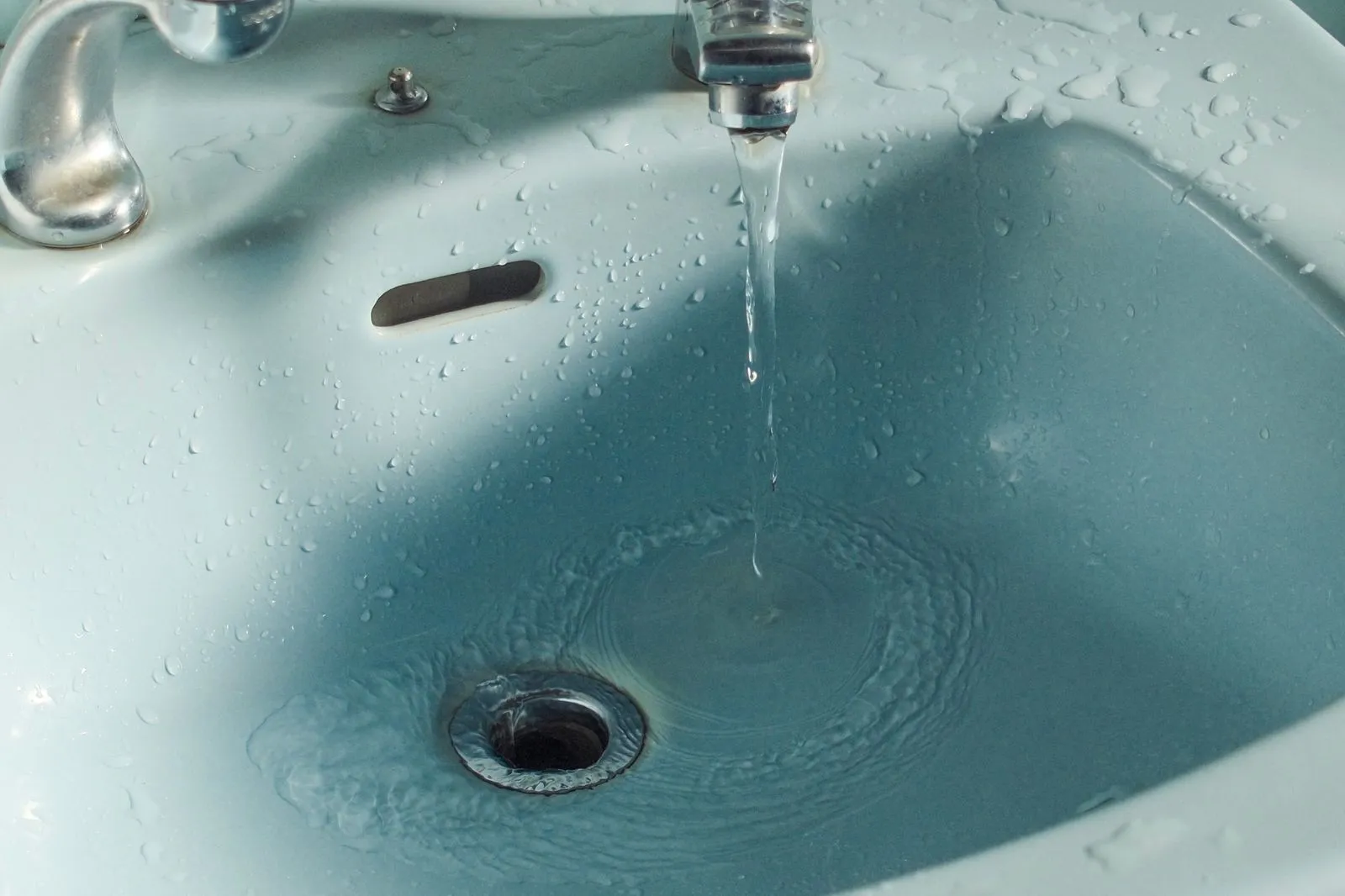
How to Unclog a Bathroom Sink
To unclog a bathroom sink, bail out the standing water, lift the stopper clear of the drain opening and hook the hair out of the drain body with a barbed plastic tool. If that does not free it, seal the overflow slot with a wet cloth and plunge. If the basin still holds water, put a bucket under the cabinet and unscrew the curved trap. If the trap comes off clean, the trouble is further along, and a small hand auger fed down the pipe behind it will reach it. Most basins are running again inside half an hour, and none of this needs a bottle of chemical.
A bathroom basin is the friendliest drain in the house to work on, and almost nobody treats it that way. The pipe is small, it is shallow, and the thing stopping it is nearly always sitting within the length of your hand from the drain opening. That is very different from a kitchen or a main line, where the trouble can be thirty feet away under a slab. On a basin you can usually reach it, see it, and pull it out — which is why the bottle of drain opener under the cabinet is both the first thing people try and the least likely thing to work.
First, Work Out Where It Is Stopped
This is the step people skip, and it is the one that saves the afternoon. Everything below behaves differently depending on how much of the house is affected, so spend two minutes finding out before you take anything apart. Run the tub, flush the toilet, and run the other basin if there is one. What you learn decides which of the next sections you actually need.
Only this one basin Most likely
Everything else in the house drains normally and this basin holds water. The obstruction is almost certainly between the drain opening and the outlet of the trap — a span of about eighteen inches, all of it reachable without tools you do not own. This is the ordinary case, and the step-by-step below is written for it.
This basin and the one beside it Shared branch
Two basins in the same vanity, or two on opposite sides of one wall, usually tee into a single branch pipe before it reaches the stack. If both are slow or stopped, the obstruction is past both traps, in that shared length. You can still reach it with a hand auger through either trap arm, but it is further away and you will need more cable.
The tub and the toilet are affected too Not a sink job
If more than one kind of fixture is slow, the problem is not in the basin and nothing in this article will clear it. A single pipe is serving all of them and the obstruction is in that pipe, past the point where you can reach. That is ordinary drain cleaning work for us and it wants a machine rather than a plunger.
Water comes back up somewhere lower Urgent
Running the basin pushes water up into the tub, or the lowest drain in the house starts to fill when you flush. That is the main line, not the basin. Stop using water in that bathroom and call — every further gallon has to go somewhere, and the lowest opening in the building is where it will choose. That is an emergency drain call rather than anything you can clear from the basin.
It drains, just slowly Different job
If the water goes down but takes its time, you have a narrowing rather than a stoppage, and the job is a clean rather than a rescue. Our companion guide to cleaning the drain in a bathroom sink walks through the stopper, the overflow channel and the trap in more detail than this page needs to, and it is the better starting point.

What You Need
None of this is specialist. The barbed plastic strip is the one item worth buying before you need it; it costs very little, it lives in a drawer, and it does more of the work on a basin than everything else combined.
Tools Five items
A barbed plastic drain tool, a cup plunger small enough to seal the drain opening, a bucket that fits under the cabinet, adjustable pliers for a seized slip nut, and a flashlight. A small hand auger with a quarter-inch cable is the only thing on the list you may have to borrow, and you will only want it at step six.
Supplies Nothing caustic
Rubber gloves, a wet cloth or rag for the overflow, old towels for the cabinet floor, and a bin bag for what comes out. Hot tap water is the only liquid this job needs. If you want the reasoning for leaving the bottle alone, it is further down the page and it is not a matter of taste.
How to Unclog a Bathroom Sink, Step by Step
Work in this order. Each step is quicker and less invasive than the one after it, and on most basins you will be finished long before the end of the list. If a step clears the water, stop there and go to step seven.
-
1. Bail the standing water out Start here
Scoop the basin as empty as you can with a cup or a jug and tip it into a bucket, not into the tub — if the two share a branch you have just moved the problem. Working in a dry bowl lets you see the drain opening, keeps the plunger honest, and means that anything you pull out stays out instead of floating back.
Lay the towels in the cabinet now rather than later. Everything from this point on involves water arriving somewhere you did not plan for.
-
2. Get the stopper out of the way Four kinds
A pop-up stopper is the commonest cause of a stopped basin, because the hair collects on the underside of it where nobody looks. Some lift straight out. Some turn a quarter and lift. Some are held by a pivot rod you unscrew from the back of the drain body under the basin, and some are push-button cartridges that unthread by hand.
The sibling guide to cleaning a bathroom sink drain covers all four types and how to tell them apart. For now, get it out, scrape it clean, and leave it out until the basin is running.
-
3. Hook the obstruction out with a barbed tool Does most of the work
Feed the barbed plastic strip down the open drain opening until it stops, give it a half-turn, and draw it back slowly. The barbs face up the way deliberately, so they slide past material going down and catch it coming back. Expect something unpleasant on the end of it, and expect to repeat the process four or five times before it comes back clean.
Run the tap. If the basin empties, the job is done and you can skip to step seven. On a basin that is stopped rather than merely slow, this step and the stopper above it account for the large majority of what we get called to.
-
4. Plunge it — but seal the overflow first Technique
Put enough water back in the basin to cover the cup of the plunger, press a wet cloth hard into the overflow slot near the rim, and hold it there with your spare hand. Seat the plunger squarely over the drain opening and work it with short, sharp strokes rather than long slow ones, keeping the seal the whole time.
If you have never done this with the overflow sealed, you have never really plunged a basin. The reason is worth a section of its own and it is the next one.
-
5. Open the trap into a bucket Messy but easy
The U-bend under the basin is held by two slip nuts, usually plastic and usually hand-tight. Position the bucket, loosen both by hand, and let the trap come away. It will be full of water and that water will not be clean. Wash it out, check the washers for splits while it is off, and look at what came out of it — if it is a plug of hair and gray paste, you have found your answer.
-
6. If the trap was clean, go past it Hand auger
A clean trap is useful information: it means the obstruction is downstream, in the horizontal pipe running back to the wall. With the trap still off, feed the cable of a small hand auger into that pipe, turning the handle steadily as you go rather than forcing it. When you feel it bite, keep turning and draw it back.
Stop if the cable will not pass a bend or you have run out of reach. Beyond that point you are into the branch the whole bathroom shares, and pushing harder is how people put a hole in a pipe they then have to pay for. That is ordinary drain cleaning work for us and it takes a machine, not muscle.
-
7. Reassemble and prove it Always
Put the trap back hand-tight, no more. Reinstall the stopper and the pivot rod if you removed one. Then fill the basin properly — not a trickle, a full bowl — and let it go all at once while you watch the joints underneath with the flashlight and a dry hand.
A basin that drains a dribble happily can still leak when a full bowl goes through it, and the only way to find that out is to send one through. Dry every joint, run it a second time, and check again after an hour.
Why a Plunger Usually Does Nothing on a Bathroom Sink
This is the single most useful thing on this page, and it explains why so many people decide a plunger “does not work” on a basin and reach for chemicals instead.
A plunger does not work by pushing water. It works by making a sealed column of water and shoving it, so that the pressure arrives at the obstruction. A bathroom basin has a second opening that a kitchen sink does not: the overflow slot near the rim, which is not a separate pipe at all. It is a channel molded into the basin that rejoins the drain body an inch or two below the drain opening — behind the obstruction you are trying to shift.
Leave it open and the pressure takes the easy route. Every stroke sends water and air straight up the overflow channel and back into the bowl in front of you, and almost nothing reaches the material you are aiming at. Seal that slot and the same stroke has nowhere to go but down the pipe.
Before You Reach for a Bottle
We are not squeamish about chemicals for the sake of it, and this is not a sales position — a basin we have to clear by hand is work for us either way. The case against them on this particular fixture is practical, and then it is about safety.
The practical half: a caustic or acid drain opener is designed to work on soft organic matter sitting in a column of liquid. The thing stopping your basin is usually a compacted mat of hair bound up with soap residue, wrapped around a stopper or packed into a drain body the product mostly flows past. Manufacturers’ own instructions generally tell you to clear standing water before use, which is exactly the condition you do not have. So it sits in the bowl, slowly, doing very little.
The part that genuinely matters
Never mix drain products, and never add a second one because the first did not work. Bleach combined with an acidic cleaner releases chlorine gas; the US Centers for Disease Control and Prevention has reported cases of exactly this happening in ordinary domestic cleaning. Bleach combined with an ammonia-based cleaner produces chloramine vapors instead. Both are dangerous in a small room with the door shut, which describes almost every bathroom.
Do not rely on your nose to tell you whether the air is safe. The CDC’s guidance on chlorine is blunt about it: the absence of odor is not a reliable indicator of safety. If you have already poured something in and the basin is still holding it, open a window, leave the room, and do not add anything else.
Treat that standing water as caustic, because it is. The safety data sheets for common sodium hydroxide and sulfuric acid drain openers classify them as causing severe skin burns and eye damage. Do not plunge it — plunging splashes. Do not put your hand in it. Do not open the trap with it sitting above you in the pipe. Pump or scoop it into a sealed bucket wearing gloves and eye protection, and keep it off your skin.
If anyone swallows it, or gets it on skin or in eyes, call Poison Control on 1-800-222-1222. If breathing is affected, call 911. Then ring us and say what went in, so whoever opens that pipe knows what is waiting behind it — we would far rather be told.
There is a heat limit worth knowing too, because the usual folk remedy is a kettle. PVC drain pipe is commonly rated by its manufacturers for continuous service up to around 140 degrees Fahrenheit, and water out of a kettle is far above that. Hot water from the tap is genuinely useful for softening soap residue. Boiling water poured into a plastic trap is a gamble with a joint you cannot see.
Mistakes That Turn a Blocked Basin Into a Repair
Nearly every basin we attend that has become a real repair started as a twenty-minute job that somebody pushed one step too far. These are the ones we see.
Straightening a wire coat hanger Scratches
It is the classic improvisation and it is a poor one. Bare wire has no barbs, so it pushes the mat further in rather than bringing it out, and the cut end scores the inside of the drain body — leaving a rough surface that catches the next lot of hair faster than the smooth one did. You are not clearing the basin, you are setting its next appointment.
Overtightening the slip nuts Cracks
Plastic slip nuts seal on a tapered washer, not on force. Hand-tight is the specification. Reaching for the pliers to stop a weep almost always splits the nut or deforms the washer, and the weep gets worse — at which point the trap needs replacing rather than reseating.
Forcing the pivot rod back in Linkage
The horizontal rod that lifts a pop-up passes through a ball joint with a nut behind it. If it does not want to seat, the stopper is not hooked onto it properly inside the drain body. Pushing harder bends the clevis strap and the stopper never seats fully afterwards, which means the basin never drains quite right again.
Augering through the trap Punctures
A cable driven down the drain opening and round a plastic U-bend under power is how a basin becomes a cabinet full of water. Take the trap off and feed the cable into the pipe at the wall instead. It is less work, it reaches further, and the cable goes where you can see it start.
Walking away without a full-bowl test Leaks
A trap that has been off and back on is the single likeliest place in a house to start weeping, and a trickle from the tap will not reveal it. Fill the bowl, pull the stopper, and watch. Then check again an hour later. A slow drip into a vanity is how a twenty-minute job becomes a swollen cabinet floor.
When It Is Not the Basin At All
Some of what gets reported to us as a blocked sink is not a sink problem. These are the signs that the basin is a symptom rather than the cause, and what each one usually turns out to be.
It gurgles, or a smell survives a proper clean Venting
A drain that gurgles is pulling air through the water seal in the trap because it cannot get it from the vent. Once that seal is broken, sewer gas has a clear route into the room, and no amount of cleaning will stop the smell while the cause is a restricted vent rather than a dirty pipe.
Anything is wet in the cabinet Leak
Water in the vanity after you have reassembled everything is a joint. Water in the vanity that was there before you started, or that appears with the basin unused, is something else — and if you cannot point at where it is coming from, that is leak detection work rather than drain work.
The same basin stops every few months Structural
A basin that needs clearing on a schedule is telling you something about the pipe rather than about your hair. A sagging run, a rough or corroded interior, or a fitting that was never quite right will all keep catching. If it is the buried pipe beyond the wall, that is sewer line work; if it is the supply and waste pipework inside the house, it falls under pipe repair and replacement.
The stopper or the faucet is the real problem Fixture
Sometimes the drain is clear and the fixture is at fault — a pop-up assembly that will not seat, a corroded drain body, a tailpiece that has rusted thin. That is fixture repair, and it is usually a parts job rather than a drain job.
It is an older house near the middle of town Worth knowing
Older basins around Cleveland often still have brass drain bodies and steel tailpieces. Brass corrodes from the inside and roughens as it goes, so a basin that has been cleaned properly and still slows down within weeks may simply have an outlet that has narrowed. It is not something a plunger reaches.
How to Stop It Happening Again
A basin that has just been cleared is the easiest one in the world to keep clear, and the routine is short. Most of the habit is simply not letting the stopper become the place where hair lives.
- Lift the stopper out once a month and wipe it. Thirty seconds, and it removes the thing that causes most stopped basins before it becomes one.
- Run the hot tap for a minute after shaving or after anything greasy goes down. Warm water keeps soap residue moving instead of letting it set on the pipe wall.
- Flush the overflow occasionally. It is a dead-ended channel that collects its own film, and it is the usual culprit when a basin smells but drains perfectly well.
- Keep the bottle out of the cabinet. Nothing in the routine above needs it, and having one to hand is the main reason people use one.
Frequently Asked Questions
Will a plunger unclog a bathroom sink?
Only if you seal the overflow slot first. The overflow is a channel molded into the basin that rejoins the drain just below the drain opening, so with it open every plunger stroke pushes water and air back into the bowl instead of down the pipe. Press a wet cloth firmly into the slot, hold it there, and use short sharp strokes. Even then, a plunger moves a soft obstruction along; it will not pull a mat of hair out of the drain body, which is why hooking it out with a barbed tool comes first.
Why is only my bathroom sink blocked when everything else drains fine?
Because the obstruction is in the short run of pipe that belongs to that basin alone — between the drain opening and the outlet of its trap, which is about eighteen inches in total. Hair, soap residue and toothpaste collect on the underside of the pop-up stopper and in the drain body just beneath it, and that material serves no other fixture. If the tub or the toilet were affected as well, the trouble would be in shared pipework instead, and that is a different and larger job.
Do I have to take the P-trap off to unclog a bathroom sink?
Usually not. Clearing the stopper and hooking the obstruction out through the drain opening resolves most stopped basins, and plunging with the overflow sealed handles a good share of the rest. Open the trap when those have failed, or when you want to know whether the obstruction is in the basin’s own pipework at all — a trap that comes off clean tells you the problem is further downstream. It is a hand-tight job over a bucket, not a specialist one.
I already poured drain cleaner in and the sink is still blocked. What now?
Do not add anything else, and do not add a different product — mixing drain chemicals can release chlorine gas or chloramine vapors in a small room. Open a window and leave it for a while. Treat the standing water as caustic, because the safety data sheets for these products describe severe skin burns and eye damage: wear gloves and eye protection and scoop or pump it into a sealed bucket rather than plunging it, which splashes. Do not open the trap with that liquid sitting above you. If anyone is exposed, call Poison Control on 1-800-222-1222, or 911 if breathing is affected. When you call a plumber, say exactly what went down there.
Can I use a drain snake in a bathroom sink without damaging the pipes?
Yes, if you use a small hand auger with a quarter-inch cable and you feed it in after removing the trap rather than down through it. Turn the handle steadily instead of forcing the cable, and stop if it will not pass a bend. Driving a cable round a plastic U-bend under power is the commonest way a basin turns into a leak, and a powered machine has no business on a basin’s own pipework at all. Once you are past your reach you are into pipework the whole bathroom shares, which needs proper equipment.
Still holding water?
If you have worked through the stopper, the plunger and the trap and the basin is still not running, that is genuinely useful to know — it means the obstruction is past the point a homeowner can reach, and it saves us a step when we arrive. We answer day and night, every day of the year. For pricing, call (423) 279-5228 or contact us.
Call (423) 279-5228 Request a visit